
MAX5464ESA vs MAX5528GTA+
| Part Number |
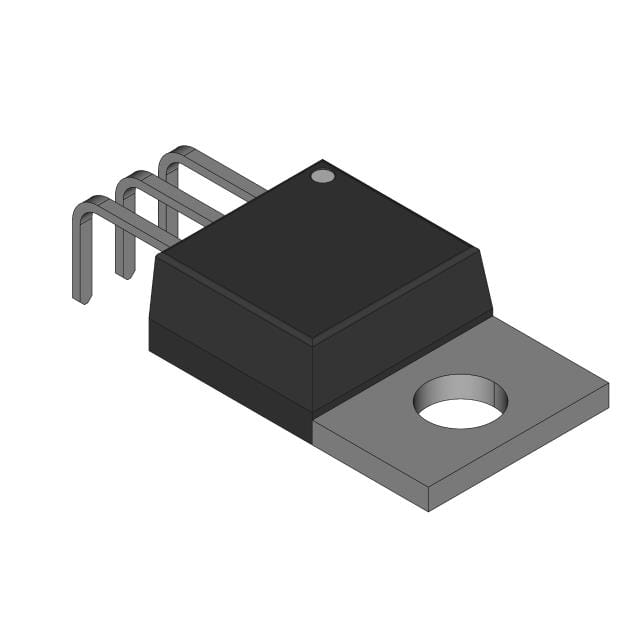
|
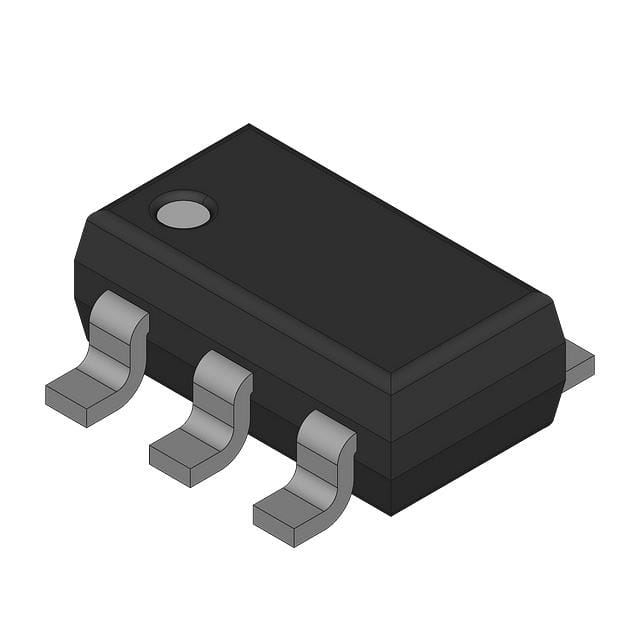
|
| Category | Digital Potentiometers ICs | Digital Potentiometers ICs |
| Manufacturer | Maxim Integrated | Maxim Integrated |
| Description | 32-TAP FLEAPOT, 2-WIRE DIGITAL P | OTP, LINEAR-TAPER DIGIPOT |
| Package | Bulk | Bulk |
| Series | - | - |
| Features | - | - |
| Interface | - | - |
| Voltage - Supply | - | - |
| Operating Temperature | - | - |
| Mounting Type | - | - |
| Package / Case | - | - |
| Supplier Device Package | - | - |
| Tolerance | - | - |
| Number of Circuits | - | - |
| Configuration | - | - |
| Memory Type | - | - |
| Taper | - | - |
| Number of Taps | - | - |
| Resistance (Ohms) | - | - |
| Temperature Coefficient (Typ) | - | - |
| Resistance - Wiper (Ohms) (Typ) | - | - |

-
1. What are the components of a digital potentiometer?
A digital potentiometer mainly consists of two parts: a voltage divider and a controller.
The voltage divider consists of a series of resistor elements that divide the input voltage according to a certain ratio. Each resistor element is connected to the input pin of the controller. The controller is responsible for reading the control signal and opening or closing the corresponding switch according to the level of the signal, thereby changing the total resistance. -
2. What is the difference between potentiometers and digital potentiometers?
The main difference between potentiometers and digital potentiometers is their working principle, structure and application scenarios.
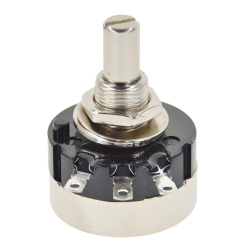
Potentiometer is a traditional electronic component that adjusts the resistance value mechanically. Potentiometers usually consist of a resistor and a movable brush. When the brush moves on the resistor, the resistance value can be changed, thereby adjusting the current or voltage in the circuit. The structure of the potentiometer is relatively simple. It mainly consists of a resistor and a rotating or sliding system. The resistance value is changed by manually adjusting the shaft or slider.
Digital potentiometer is a programmable electronic component that controls the resistance value through digital signals. It consists of a register unit and a digital isolator. The digital isolator can be a matrix, tree or serial type. Digital potentiometers do not require mechanical contacts and control the resistance value through a microprocessor and digital signals. They have high precision and flexibility. Digital potentiometers are more accurate and reliable when adjusting circuit parameters and are not easily affected by wear or environment. -
3. How to use digital potentiometers?
Digital potentiometers are a new type of CMOS digital and analog mixed signal processing integrated circuit that replaces traditional mechanical potentiometers. It is controlled by digital inputs, produces an analog output, and has precise resistance adjustment functions.
The basic components of digital potentiometers include voltage dividers and controllers. The voltage divider consists of a series of resistor elements that divide the input voltage according to a certain ratio; the controller is responsible for reading the control signal and opening or closing the corresponding switch according to the high or low signal, thereby changing the size of the total resistance.
When using a digital potentiometer, you first need to make a hardware connection. For example, connect the encoding mode of the EC11 digital potentiometer to a specific pin of the timer. Then, the mode of the encoder is controlled by software to adjust the digital potentiometer. The specific operations include entering the potentiometer mode, adjusting the value, and saving the setting. -
4. What is the principle of the digital potentiometer?
A digital potentiometer is a potentiometer that uses digital signals to control the resistance value. It switches between different resistance values through the input digital signal to adjust the circuit parameters. The digital potentiometer mainly consists of a voltage divider and a controller. The voltage divider consists of a series of resistor elements. The controller is responsible for reading the control signal and opening or closing the corresponding switch according to the high or low signal, thereby changing the size of the total resistance.
The working principle of the digital potentiometer is based on the resistor ladder structure. The internal resistor ladder structure is adopted. Each resistor element on the ladder is equipped with a switch to control whether the resistor is connected to the circuit. When the controller receives a binary signal, it will choose to open or close the corresponding switch according to the value of the signal. For example, when a certain bit in the binary signal is 1, the corresponding switch is opened and the resistor element is connected to the circuit; if the bit is 0, the switch is closed and the resistor element is disconnected. Through the combination of multiple binary signals, the total resistance value in the circuit can be accurately adjusted.
Digital potentiometers have many advantages, such as high accuracy and stability, and are insensitive to dust, dirt and moisture, which makes them more reliable than traditional mechanical potentiometers in many applications. In addition, digital potentiometers are available in two types: volatile and non-volatile, suitable for different application scenarios.
