
MB90347EPMC-GS-745E1 vs MB91F585LPMC-GTK5E1
| Part Number |

|
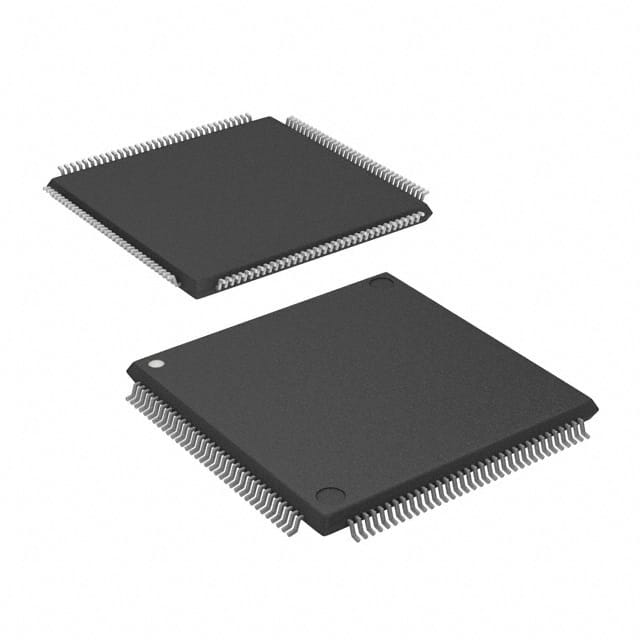
|
| Category | Embedded - Microcontrollers | Embedded - Microcontrollers |
| Manufacturer | Cypress Semiconductor Corp | Cypress Semiconductor Corp |
| Description | IC MCU 16BIT 128KB MROM 100LQFP | IC MCU 32BIT 576KB FLASH 144LQFP |
| Package | Tray | Tray |
| Series | F²MC-16LX MB90340E | FR MB91580 |
| Operating Temperature | -40°C ~ 105°C (TA) | -40°C ~ 125°C (TA) |
| Mounting Type | Surface Mount | Surface Mount |
| Package / Case | 100-LQFP | 144-LQFP |
| Supplier Device Package | 100-LQFP (14x14) | 144-LQFP (20x20) |
| Voltage - Supply (Vcc/Vdd) | 3.5V ~ 5.5V | 3.7V ~ 5.5V |
| Speed | 24MHz | 128MHz |
| Number of I/O | 80 | - |
| EEPROM Size | - | 64K x 8 |
| Core Processor | F²MC-16LX | FR81S |
| RAM Size | 6K x 8 | 56K x 8 |
| Core Size | 16-Bit | 32-Bit |
| Connectivity | CANbus, EBI/EMI, LINbus, SCI, UART/USART | CANbus, CSIO, I²C, LINbus, SPI, UART/USART |
| Peripherals | DMA, POR, WDT | DMA, LVD, POR, PWM, WDT |
| Program Memory Size | 128KB (128K x 8) | 576KB (576K x 8) |
| Program Memory Type | Mask ROM | FLASH |
| Data Converters | A/D 16x8/10b | A/D 24x12b; D/A 1x10b |
| Oscillator Type | External | External |
-
1. What is the most widely used microcontroller in embedded systems?
The most widely used microcontroller in embedded systems is the STM32 series. The STM32 series microcontroller is a chip series widely used in embedded system development, and is favored for its high performance, low power consumption and rich peripheral resources.
The STM32 series of microcontrollers has a variety of models and derivatives suitable for different application requirements. These microcontrollers usually integrate components such as CPU, ROM, RAM, IO ports, timers, interrupt controllers, etc., which can meet the needs of various application scenarios. The STM32 series of microcontrollers play an important role in the fields of household appliances, automotive electronics and medical equipment.
The wide application of the STM32 series of microcontrollers is due to its powerful functions and flexibility. It is not only suitable for controlling various electrical and electronic equipment, but also performs well in occasions requiring high-performance computing. In addition, the development tools and community support of the STM32 series of microcontrollers are also very complete, allowing developers to quickly get started and develop efficiently. -
2. What is an embedded system controller?
An embedded system controller is a microcomputer system designed specifically for a specific purpose. It integrates key components such as processors, memory, input and output interfaces, etc. to achieve real-time control and data processing of embedded systems. It is widely used in electronic products, automobiles, industrial automation and other fields, and is an important foundation for modern intelligent production.
Embedded system controllers have the following characteristics:
High performance: Embedded system controllers usually have high-performance processing capabilities and can handle complex computing tasks.
Low power consumption: Compared with personal computers or servers, embedded system controllers usually have lower power consumption and are suitable for long-term operation scenarios.
High reliability: Due to the particularity of the application scenario, the embedded system controller needs to have high reliability and be able to work stably in harsh environments.
Rich peripheral interfaces: In order to adapt to different application requirements, embedded system controllers usually provide rich peripheral interfaces to facilitate communication and data exchange with other devices.
The application fields of embedded system controllers are very wide, including:
Electronic products: such as smart watches, smart home devices, etc.
Automotive electronics: such as in-car entertainment systems, intelligent driving assistance systems, etc.
Industrial automation: such as industrial control systems, automated production lines, etc.
Medical equipment: such as medical imaging equipment, monitoring instruments, etc.
Communication equipment: such as base station equipment, wireless communication terminals, etc.
What is the difference between embedded microcontrollers and external microcontrollers?
The main difference between embedded microcontrollers and external microcontrollers lies in their application scenarios and integration. Embedded microcontrollers are computer systems designed specifically for embedding into object systems. They usually integrate necessary components such as microprocessor cores, memory, and peripheral interfaces, and are mainly used to control and execute specific tasks. External microcontrollers usually refer to independent microcontroller units. Although they also have similar components, they are mainly used for more complex computing and processing tasks.
Embedded microcontrollers are often used in embedded systems, which are usually composed of a series of electronic components and have specific functions. As the core component of the system, embedded microcontrollers are responsible for controlling, monitoring or assisting the operation of equipment, machines and workshops. They are widely used in various fields such as home appliances, automobiles, industrial control, medical equipment, etc., with the characteristics of low power consumption and high performance.
External microcontrollers are usually used in scenarios that require higher computing power and more complex processing. They can exist independently of embedded systems and perform a variety of tasks such as data processing and communication. External microcontrollers are widely used in personal computers, servers, industrial automation and other fields, and can handle more complex data and tasks. -
3. What is STM32 embedded?
STM32 is a microcontroller suitable for control applications. It comes with various commonly used communication interfaces, such as USART, I2C, SPI, etc., and can control a variety of devices. In real life, many electrical products we come into contact with have STM32, such as smart bracelets, micro quadcopters, balance cars, mobile POS machines, smart rice cookers, 3D printers, etc.
An embedded system is a special computer system centered on applications, based on computer technology, and with customizable software and hardware. It requires small size, high reliability, low power consumption, and stable performance. The embedded system is divided into hardware layer, driver layer, operating system layer, and application layer. The hardware layer is the foundation of the entire system. The driver layer needs to write a driver program to enable the hardware to communicate with the operating system. The operating system layer is responsible for task scheduling and management, and the application layer is the interface and function implementation for direct user interaction. -
4. What is the difference between an embedded MCU and a PLC MCU?
The main difference between an embedded MCU and a PLC MCU is that their application fields, system architectures, and programming methods are different.
Although both embedded MCUs and PLC MCUs involve MCU technology, their application fields are significantly different. Embedded MCUs are mainly used in non-industrial fields such as consumer electronics, automobiles, aerospace, etc. They emphasize high specificity and flexibility and can be customized according to specific needs. PLC MCUs are mainly used in industrial automation control fields, such as electricity, petroleum, chemical industry, machinery manufacturing, etc. The original design intention is to adapt to complex industrial environments and have strong stability and reliability.
In terms of system architecture, embedded MCUs usually have fixed hardware and software configurations, are designed and developed for specific applications, and hardware and software are tightly integrated to form a complete system. PLC MCUs are based on a modular architecture, and different modules can be added to achieve different functions. Both hardware and software are standardized, which is convenient for users to select and configure.
In terms of programming language, embedded MCUs are usually programmed in high-level programming languages such as C and C++. These programming languages have powerful functions and flexibility and can meet complex programming needs. PLC MCUs are mainly programmed in ladder diagram language. This graphical programming method is simple and easy to understand, which is convenient for users to get started quickly. In addition, it also supports some text programming languages, such as instruction lists and structured text.
