
MB90548GHDSPQC-G-390ERE2 vs AT91SAM7S256D-MU-999
| Part Number |
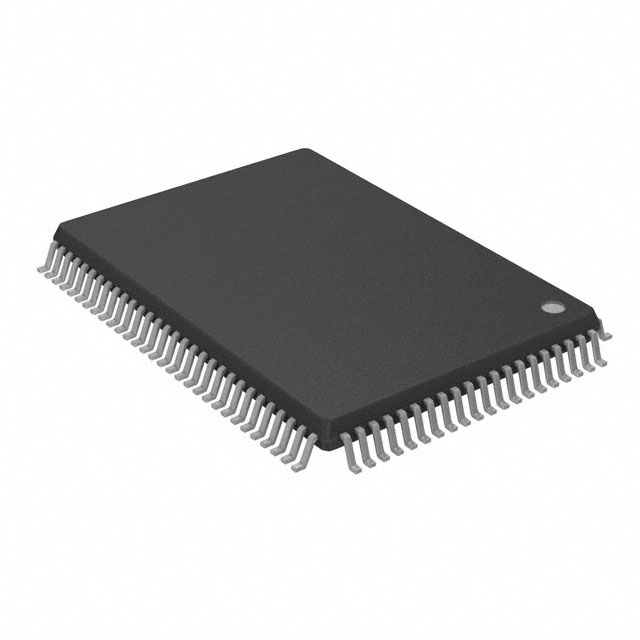
|
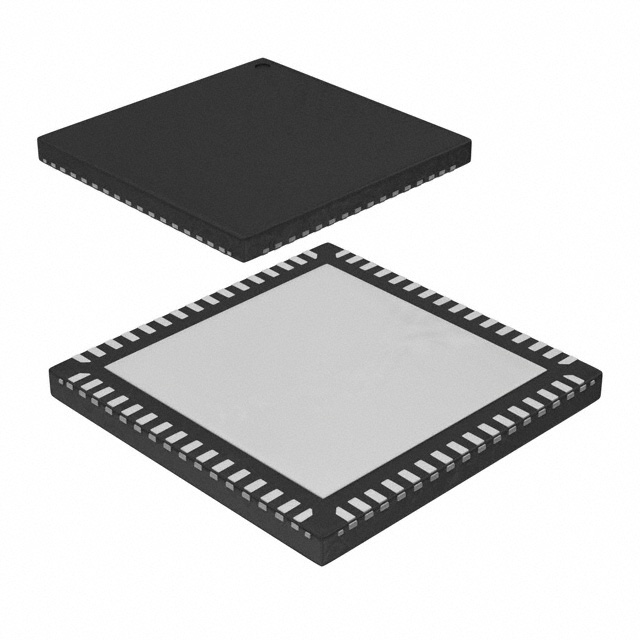
|
| Category | Embedded - Microcontrollers | Embedded - Microcontrollers |
| Manufacturer | Cypress Semiconductor Corp | Microchip Technology |
| Description | IC MCU 16BIT 128KB MROM 100PQFP | IC MCU 16/32BIT 256KB FLSH 64QFN |
| Package | Tape & Reel (TR) | Tape & Reel (TR) |
| Series | F²MC-16LX MB90545G | SAM7S |
| Operating Temperature | -40°C ~ 105°C (TA) | -40°C ~ 85°C (TA) |
| Mounting Type | Surface Mount | Surface Mount |
| Package / Case | 100-BQFP | 64-VFQFN Exposed Pad |
| Supplier Device Package | 100-PQFP (14x20) | 64-QFN (9x9) |
| Voltage - Supply (Vcc/Vdd) | 3.5V ~ 5.5V | 1.65V ~ 1.95V |
| Speed | 16MHz | 55MHz |
| Number of I/O | 81 | 32 |
| EEPROM Size | - | - |
| Core Processor | F²MC-16LX | ARM7® |
| RAM Size | 4K x 8 | 64K x 8 |
| Core Size | 16-Bit | 16/32-Bit |
| Connectivity | CANbus, EBI/EMI, SCI, Serial I/O, UART/USART | I²C, SPI, SSC, UART/USART, USB |
| Peripherals | POR, WDT | Brown-out Detect/Reset, DMA, POR, PWM, WDT |
| Program Memory Size | 128KB (128K x 8) | 256KB (256K x 8) |
| Program Memory Type | Mask ROM | FLASH |
| Data Converters | A/D 8x8/10b | A/D 8x10b |
| Oscillator Type | External | Internal |
-
1. What is an embedded microcontroller?
An embedded microcontroller is a device that integrates an entire computer system into a single chip. It usually includes functional modules such as a central processing unit, memory, input and output ports, and timers, all of which are integrated on a single chip. This design enables embedded microcontrollers to perform specific tasks with high flexibility and efficiency.
The main features of embedded microcontrollers include:
Highly integrated: multiple functions such as CPU, memory, and I/O interface are integrated on a single chip, reducing the number of components and system volume.
Strong specialization: Optimized for specific application scenarios, providing a specific combination of processing power, memory, and input and output interfaces.
Efficient and reliable: The integrated design makes the system more stable and reliable, reducing the connection of external components and signal interference.
High flexibility: According to different application requirements, embedded microcontrollers can have multiple derivative products, each with the same processor core, but different memory and peripheral configurations to adapt to different application scenarios. -
2. Is Arduino an embedded microcontroller?
Arduino is an embedded microcontroller platform based on open source hardware and software. It contains a microcontroller (MCU) and related modules that can interact with the external environment through hardware and software. The core board of Arduino consists of a microcontroller and related modules, with basic input and output connections and multiple communication interfaces, including serial ports, SPI and TWI, etc., which can communicate and transfer data with other devices.
Features of Arduino include:
Development environment: Arduino comes with a software development environment that can be programmed in C and C++ languages.
Libraries and functions: It has a rich hardware library and functions for rapid development.
Low cost: It is suitable for hardware development such as sensors, simple robots, thermostats and motion detectors, with low cost and simple operation.
Wide application: It is commonly used in projects such as IoT products, automation control and robots.
Compared with other microcontroller platforms, the advantage of Arduino is its simple and easy-to-use hardware and software tools, which enable electronic enthusiasts and general users to quickly realize various application projects. -
3. What is the difference between Arduino and Embedded C?
The main differences between Arduino and Embedded C are their application scenarios, development difficulty and hardware design. Arduino is more suitable for rapid prototyping and teaching, while Embedded C is suitable for scenarios that require high performance and professional applications.
Arduino is an open source hardware platform mainly used for rapid prototyping and teaching. It uses high-level programming languages such as C++ and provides an easy-to-use development environment, allowing beginners to quickly get started and implement projects. In contrast, embedded C is often used in high-performance and professional application scenarios, such as industrial control, automotive electronics and other fields. Embedded C programming usually involves low-level hardware knowledge and more complex programming skills. The language used may be C or C++, but memory and hardware resources need to be managed manually. -
4. What is STM32 embedded?
STM32 is a microcontroller suitable for control applications. It comes with various commonly used communication interfaces, such as USART, I2C, SPI, etc., and can control a variety of devices. In real life, many electrical products we come into contact with have STM32, such as smart bracelets, micro quadcopters, balance cars, mobile POS machines, smart rice cookers, 3D printers, etc.
An embedded system is a special computer system centered on applications, based on computer technology, and with customizable software and hardware. It requires small size, high reliability, low power consumption, and stable performance. The embedded system is divided into hardware layer, driver layer, operating system layer, and application layer. The hardware layer is the foundation of the entire system. The driver layer needs to write a driver program to enable the hardware to communicate with the operating system. The operating system layer is responsible for task scheduling and management, and the application layer is the interface and function implementation for direct user interaction.
