
MB91F585MGPMC-GTE1 vs M30302FCPGP#U5
| Part Number |

|
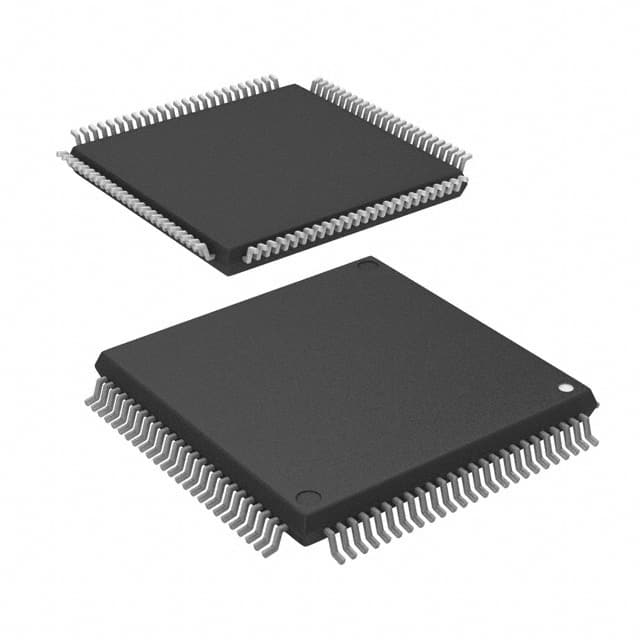
|
| Category | Embedded - Microcontrollers | Embedded - Microcontrollers |
| Manufacturer | Cypress Semiconductor Corp | Renesas Electronics America Inc |
| Description | IC MCU 32BIT 576KB FLASH 100LQFP | IC MCU 16BIT 128KB FLSH 100LFQFP |
| Package | Tray | Tray |
| Series | FR MB91580 | M16C™ M16C/30 |
| Operating Temperature | -40°C ~ 125°C (TA) | -20°C ~ 85°C (TA) |
| Mounting Type | Surface Mount | Surface Mount |
| Package / Case | 100-LQFP | 100-LQFP |
| Supplier Device Package | 100-LQFP (14x14) | 100-LFQFP (14x14) |
| Voltage - Supply (Vcc/Vdd) | 3.7V ~ 5.5V | 2.7V ~ 5.5V |
| Speed | 128MHz | 16MHz |
| Number of I/O | - | 85 |
| EEPROM Size | 64K x 8 | - |
| Core Processor | FR81S | M16C/60 |
| RAM Size | 56K x 8 | 5K x 8 |
| Core Size | 32-Bit | 16-Bit |
| Connectivity | CANbus, CSIO, I²C, LINbus, SPI, UART/USART | I²C, IEBus, UART/USART |
| Peripherals | DMA, LVD, POR, PWM, WDT | DMA, POR, PWM, WDT |
| Program Memory Size | 576KB (576K x 8) | 128KB (128K x 8) |
| Program Memory Type | FLASH | FLASH |
| Data Converters | A/D 23x12b; D/A 1x10b | A/D 18x10b |
| Oscillator Type | External | External |
-
1. What is an embedded microcontroller?
An embedded microcontroller is a device that integrates an entire computer system into a single chip. It usually includes functional modules such as a central processing unit, memory, input and output ports, and timers, all of which are integrated on a single chip. This design enables embedded microcontrollers to perform specific tasks with high flexibility and efficiency.
The main features of embedded microcontrollers include:
Highly integrated: multiple functions such as CPU, memory, and I/O interface are integrated on a single chip, reducing the number of components and system volume.
Strong specialization: Optimized for specific application scenarios, providing a specific combination of processing power, memory, and input and output interfaces.
Efficient and reliable: The integrated design makes the system more stable and reliable, reducing the connection of external components and signal interference.
High flexibility: According to different application requirements, embedded microcontrollers can have multiple derivative products, each with the same processor core, but different memory and peripheral configurations to adapt to different application scenarios. -
2. What is the most widely used microcontroller in embedded systems?
The most widely used microcontroller in embedded systems is the STM32 series. The STM32 series microcontroller is a chip series widely used in embedded system development, and is favored for its high performance, low power consumption and rich peripheral resources.
The STM32 series of microcontrollers has a variety of models and derivatives suitable for different application requirements. These microcontrollers usually integrate components such as CPU, ROM, RAM, IO ports, timers, interrupt controllers, etc., which can meet the needs of various application scenarios. The STM32 series of microcontrollers play an important role in the fields of household appliances, automotive electronics and medical equipment.
The wide application of the STM32 series of microcontrollers is due to its powerful functions and flexibility. It is not only suitable for controlling various electrical and electronic equipment, but also performs well in occasions requiring high-performance computing. In addition, the development tools and community support of the STM32 series of microcontrollers are also very complete, allowing developers to quickly get started and develop efficiently. -
3. Is Raspberry Pi an embedded system?
Raspberry Pi is an embedded system. Raspberry Pi is a single-board computer based on ARM architecture with rich input and output interfaces and powerful computing power. It can run the Linux operating system and support multiple programming languages such as Python and C++. Due to its compact size and powerful functions, Raspberry Pi is widely used in various embedded systems and robotics projects.
Features of Raspberry Pi include:
Based on ARM architecture: Raspberry Pi adopts ARM architecture, which is an architecture widely used in embedded systems with low power consumption and high efficiency.
Rich interfaces: It has USB interface, Fast Ethernet interface, SD slot, HDMI output interface, etc., and can connect a variety of peripherals.
Open source software support: It supports multiple programming languages and a large number of open source software libraries, which is convenient for development and expansion.
Wide application: It is often used to build routers, smart cars, smart homes, servers and other applications.
Disadvantages of Raspberry Pi include:
Single 5V power supply: The power supply design is simple, which may cause unstable operation of peripherals.
Bandwidth limitation: The USB interface has limited bandwidth and may encounter performance bottlenecks when transmitting large amounts of data. -
4. What is STM32 embedded?
STM32 is a microcontroller suitable for control applications. It comes with various commonly used communication interfaces, such as USART, I2C, SPI, etc., and can control a variety of devices. In real life, many electrical products we come into contact with have STM32, such as smart bracelets, micro quadcopters, balance cars, mobile POS machines, smart rice cookers, 3D printers, etc.
An embedded system is a special computer system centered on applications, based on computer technology, and with customizable software and hardware. It requires small size, high reliability, low power consumption, and stable performance. The embedded system is divided into hardware layer, driver layer, operating system layer, and application layer. The hardware layer is the foundation of the entire system. The driver layer needs to write a driver program to enable the hardware to communicate with the operating system. The operating system layer is responsible for task scheduling and management, and the application layer is the interface and function implementation for direct user interaction.
