
MKP1839075632G vs MKP1839082632R
| Part Number |
|
|
| Category | Film Capacitors | Film Capacitors |
| Manufacturer | Vishay Beyschlag/Draloric/BC Components | Vishay Beyschlag/Draloric/BC Components |
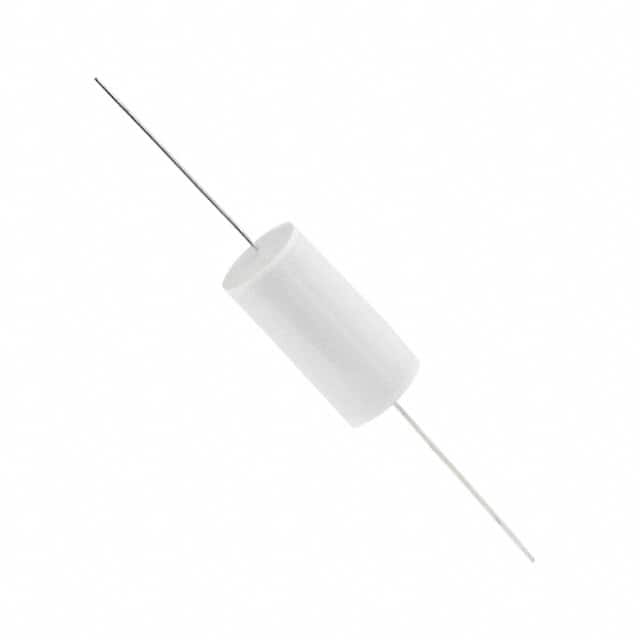
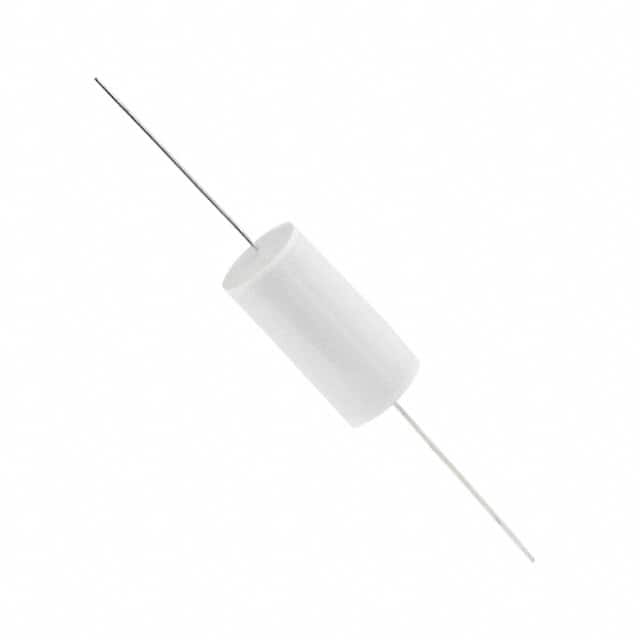
| Description | CAP FILM 75PF 2% 630VDC AXIAL | CAP FILM 82PF 2% 630VDC AXIAL |
| Package | Tape & Box (TB) | Tape & Reel (TR) |
| Series | MKP1839 | MKP1839 |
| Features | - | - |
| Operating Temperature | -55°C ~ 100°C | -55°C ~ 100°C |
| Mounting Type | Through Hole | Through Hole |
| Package / Case | Axial | Axial |
| Applications | DC Link, DC Filtering; High Pulse, DV/DT | DC Link, DC Filtering; High Pulse, DV/DT |
| Tolerance | ±2% | ±2% |
| Size / Dimension | 0.217" Dia x 0.433" L (5.50mm x 11.00mm) | 0.217" Dia x 0.433" L (5.50mm x 11.00mm) |
| Termination | PC Pins | PC Pins |
| Voltage Rating - AC | 250V | 250V |
| Voltage Rating - DC | 630V | 630V |
| Lead Spacing | - | - |
| Ratings | - | - |
| Height - Seated (Max) | - | - |
| Capacitance | 75 pF | 82 pF |
| ESR (Equivalent Series Resistance) | - | - |
| Dielectric Material | Polypropylene (PP), Metallized | Polypropylene (PP), Metallized |
-
1. What are the uses of film capacitors?
High-frequency filtering, power decoupling, power noise bypass
The main uses of film capacitors include high-frequency filtering, power decoupling, power noise bypass, etc. In electronic devices, film capacitors are widely used in various circuits due to their high insulation impedance, wide frequency response and self-healing properties.
Specific application scenarios
High-frequency filtering: Film capacitors have excellent high-frequency insulation performance, and the capacitance and loss angle are independent of frequency in a large frequency range and change little with temperature, so they are often used in high-frequency filtering circuits.
Power decoupling: In car audio systems, film capacitors are used for power decoupling to ensure stable power supply and avoid noise caused by feedback generated by the power supply.
Power noise bypass: Film capacitors are also widely used for power noise bypass (reverse cross-connection) to reduce the impact of power noise on the circuit.
Different types of applications
CBB film capacitors: widely used in circuit boards because of their high insulation impedance and wide frequency response.
Organic film capacitors: Made of materials such as polypropylene film and polyester film, they have excellent performance, a wide variety of varieties, and a wide range of applications. They are suitable for a variety of electronic devices.
-
2. What are the uses of power film capacitors?
Power film capacitors are widely used in power systems, communication equipment, automotive electronics and household appliances.
Power system
In power systems, power film capacitors are mainly used in high-voltage direct current transmission (HVDC) and reactive power compensation devices. HVDC transmission has the advantages of long transmission distance, low loss and small impact on the environment. Power film capacitors can effectively improve the voltage stability of the system, reduce voltage fluctuations and improve the quality of electric energy. In addition, power film capacitors can also be used in reactive power compensation devices. By adjusting the reactive power in the power grid, the power factor of the power grid can be improved, line loss can be reduced and the utilization rate of electric energy can be improved.
Communication equipment
In communication equipment, power film capacitors are mainly used in devices such as filters, couplers and isolators. Filters are key components in communication equipment, which are used to eliminate noise and interference in signals. Power film capacitors are small in size, light in weight and have good frequency characteristics, which can effectively improve the performance of filters. Couplers and isolators are used for signal transmission and isolation. Power film capacitors can achieve high-frequency and high-isolation coupling and isolation functions to meet the high-performance requirements of communication equipment.
Automotive electronics
In the field of automotive electronics, power film capacitors are used in electronic control units (ECUs), motor controllers, and battery management systems. ECUs are the core components of automotive electronic systems and are responsible for controlling various functions of the car. Power film capacitors can improve their reliability and stability. Motor controllers are key components of electric vehicles and are responsible for controlling the speed and torque of the motor. Power film capacitors can achieve efficient and high-precision motor control functions. Battery management systems are responsible for monitoring and managing battery status. Power film capacitors can improve their accuracy and stability.
Household appliances
In the field of household appliances, power film capacitors are mainly used in home appliances such as air conditioners, refrigerators, and washing machines. These home appliances usually require high power and high-frequency applications. The high-frequency filtering and bypass characteristics of power film capacitors make them perform well in these applications. -
3. Will the performance of film capacitors degrade?
Yes
The performance of film capacitors will degrade. The performance degradation of film capacitors is mainly due to their internal structure and material properties.
Reasons for performance degradation
Metal plating oxidation: During the capacitor manufacturing process, there is a trace amount of air between the film layers, which may be ionized under the action of the electric field to produce ozone. Ozone is a strong oxidant that oxidizes the metal plating to produce non-conductive metal oxides, resulting in a reduction in the plate area and a decrease in the capacitor capacity.
Humid air: During the winding process of film capacitors, if the workshop environment is not properly controlled, there will be a large amount of humid air. These humid air will produce air ionization reactions when the capacitor is working, generating ozone, which further causes the capacitor capacity to decay.
Poor quality materials: The film materials used are of poor quality, such as uneven evaporation and defects on the film, which will cause the capacitor capacity to decay.
-
4. What is the difference between foil capacitors and film capacitors?
Electrode materials, structure, and application areas
The main difference between foil capacitors and film capacitors lies in electrode materials, structures, and application areas.
Electrode materials and structures
Foil capacitors: Foil capacitors usually use metal foil as electrodes. This electrode is formed on a plastic film by vacuum evaporation, which is called a metallized film. This structure can save the thickness of the electrode foil, thereby reducing the volume of the capacitor and making it more miniaturized.
Film capacitors: Film capacitors use plastic films as dielectrics. Common plastic films include polyethylene, polypropylene, polystyrene or polycarbonate. These films overlap at both ends and are rolled into a cylinder to form a capacitor.
