
MKP1839091632R vs MKP1839075632G
| Part Number |
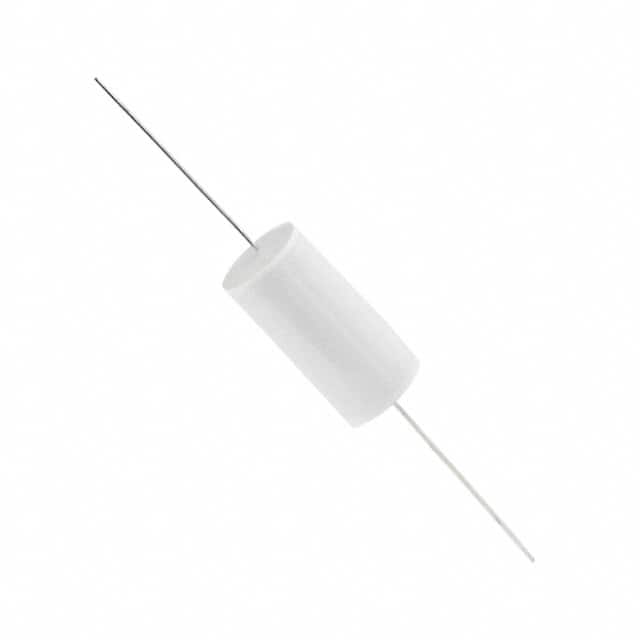
|
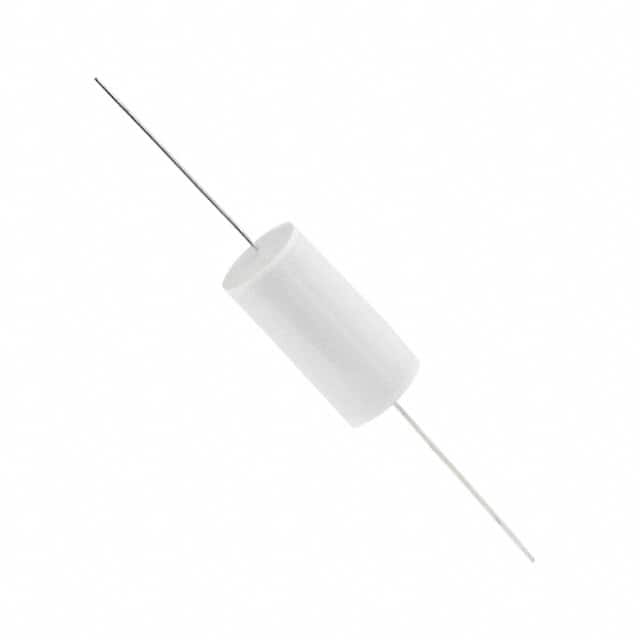
|
| Category | Film Capacitors | Film Capacitors |
| Manufacturer | Vishay Beyschlag/Draloric/BC Components | Vishay Beyschlag/Draloric/BC Components |
| Description | CAP FILM 91PF 2% 630VDC AXIAL | CAP FILM 75PF 2% 630VDC AXIAL |
| Package | Tape & Reel (TR) | Tape & Box (TB) |
| Series | MKP1839 | MKP1839 |
| Features | - | - |
| Operating Temperature | -55°C ~ 100°C | -55°C ~ 100°C |
| Mounting Type | Through Hole | Through Hole |
| Package / Case | Axial | Axial |
| Applications | DC Link, DC Filtering; High Pulse, DV/DT | DC Link, DC Filtering; High Pulse, DV/DT |
| Tolerance | ±2% | ±2% |
| Size / Dimension | 0.217" Dia x 0.433" L (5.50mm x 11.00mm) | 0.217" Dia x 0.433" L (5.50mm x 11.00mm) |
| Termination | PC Pins | PC Pins |
| Voltage Rating - AC | 250V | 250V |
| Voltage Rating - DC | 630V | 630V |
| Lead Spacing | - | - |
| Ratings | - | - |
| Height - Seated (Max) | - | - |
| Capacitance | 91 pF | 75 pF |
| ESR (Equivalent Series Resistance) | - | - |
| Dielectric Material | Polypropylene (PP), Metallized | Polypropylene (PP), Metallized |
-
1. Is a film capacitor AC or DC?
AC, DC
Film capacitors can be used in both AC and DC circuits. According to the current type, film capacitors can be divided into DC film capacitors and AC film capacitors.
DC film capacitors
DC film capacitors are mainly used in DC circuits and have the following characteristics:
Large capacity: has a higher capacitance.
Low withstand voltage: the withstand voltage value is relatively low.
Polarity: has positive and negative poles.
Application scenarios: commonly used in motor drives, uninterruptible power supplies (UPS), solar inverters, electronic ballasts, small automotive motors, household appliances, etc.
AC film capacitors
AC film capacitors are mainly used in AC circuits and have the following characteristics:
Small capacity: relatively small capacitance.
High withstand voltage: high withstand voltage value.
Pass AC, block DC: conduct electricity in AC circuits, equivalent to open circuits in DC circuits.
Application scenarios: widely used in industrial AC power supplies, asynchronous motor starting and operation, uninterruptible power supplies (UPS) and output filters of photovoltaic inverters, etc. -
2. Are film capacitors suitable for audio?
Suitable
Film capacitors are very suitable for audio applications. Film capacitors perform well in audio circuits and have the following advantages:
Non-polarity: Film capacitors have no positive or negative poles, which gives them greater flexibility in circuit design.
High insulation impedance: The insulation impedance of film capacitors is very high, which can effectively reduce leakage current in the circuit and improve the stability of the circuit.
Excellent frequency characteristics: Film capacitors have a wide frequency response and can provide stable capacitance performance in the high and low frequency ranges, which is suitable for various frequency changes in audio circuits.
Low dielectric loss: The dielectric loss of film capacitors is very small, which means that during the transmission of audio signals, less energy is lost and the integrity of the signal is maintained.
Self-healing properties: Film capacitors have self-healing properties and can automatically repair internal defects when they occur, extending their service life. -
3. Are film capacitors better than electrolytic capacitors?
Not necessarily
Film capacitors and electrolytic capacitors each have their own advantages and disadvantages, and the specific choice depends on the application scenario.
Advantages of film capacitors
Non-polarity: Film capacitors are non-polar, and there is no need to distinguish between positive and negative poles, avoiding the risk of capacitor explosion due to reverse connection.
Long life: Film capacitors have significantly longer life and better stability.
Wide temperature range: Film capacitors have a wide operating temperature range, generally -40℃~+105℃/110℃, suitable for various ambient temperatures.
High withstand voltage: Film capacitors can withstand overvoltages higher than 1.5 times the rated voltage in a short period of time, and have strong withstand voltage.
Low loss: Film capacitors have low loss and are suitable for high-frequency circuits, especially for occasions requiring low loss and high-frequency applications.
Advantages of electrolytic capacitors
Large capacity: Electrolytic capacitors usually have large capacitance and are suitable for occasions requiring large amounts of energy storage.
Low cost: The cost of electrolytic capacitors is relatively low, suitable for occasions with strict cost requirements.
High energy density: Electrolytic capacitors are a strong choice when cost-effective, high-capacity energy storage is required, especially when maintaining DC output voltage during power outages.
-
4. Can film capacitors be used for AC?
Yes
Film capacitors can be used for AC. Film capacitors can work normally in AC circuits and have specific application scenarios and advantages.
Structure and working principle of film capacitors
Film capacitors are mainly composed of metal foil (or foil obtained by metallizing plastic) as electrode plates and plastic film as dielectric. Common plastic films include polyethylene, polypropylene, polystyrene or polycarbonate. These capacitors are usually made by winding or stacking processes to form a cylindrical structure.
