
OPA2202IDGKT vs MCP6V77-E/MS
| Part Number |

|
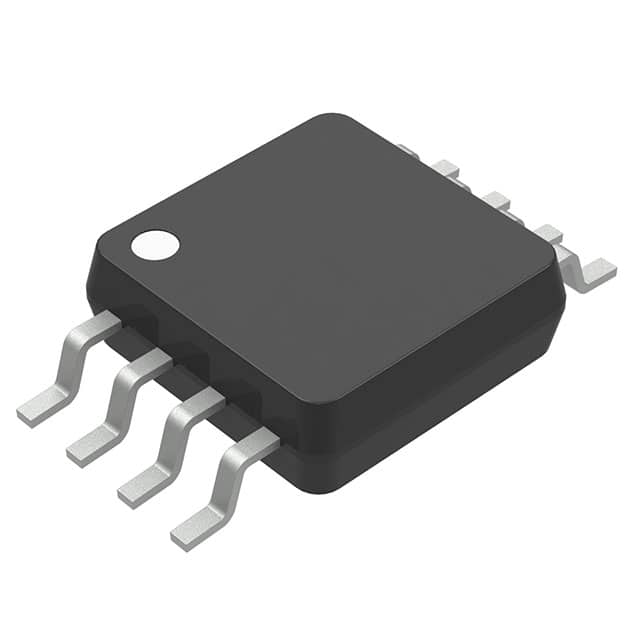
|
| Category | Linear - Amplifiers - Instrumentation, OP Amps, Buffer Amps | Linear - Amplifiers - Instrumentation, OP Amps, Buffer Amps |
| Manufacturer | Texas Instruments | Microchip Technology |
| Description | IC OPAMP GP 2 CIRCUIT 8VSSOP | IC OPAMP ZERO-DRIFT 2 CIRC 8MSOP |
| Package | Tape & Reel (TR) | Cut Tape (CT) |
| Series | - | Zero-Drift |
| Operating Temperature | -40°C ~ 105°C (TA) | -40°C ~ 125°C (TA) |
| Mounting Type | Surface Mount | Surface Mount |
| Package / Case | 8-TSSOP, 8-MSOP (0.118\", 3.00mm Width) | 8-TSSOP, 8-MSOP (0.118\", 3.00mm Width) |
| Supplier Device Package | 8-VSSOP | 8-MSOP |
| Current - Supply | 580µA (x2 Channels) | 170µA (x2 Channels) |
| Output Type | - | Rail-to-Rail |
| Number of Circuits | 2 | 2 |
| Voltage - Supply, Single/Dual (±) | 4.5V ~ 36V, ±2.25V ~ 18V | 2V ~ 5.5V |
| Current - Output / Channel | 35 mA | 26 mA |
| -3db Bandwidth | - | - |
| Amplifier Type | General Purpose | Zero-Drift |
| Current - Input Bias | 250 pA | 1 pA |
| Voltage - Input Offset | 20 µV | 25 µV |
| Slew Rate | 0.35V/µs | 1V/µs |
| Gain Bandwidth Product | 1 MHz | 2 MHz |
-
1. What is the difference between an instrumentation amplifier and an operational amplifier?
Instrumentation amplifiers integrate multi-stage operational amplifiers for precise amplification of differential signals, while operational amplifiers are more versatile and can perform a wide range of analog signal processing tasks. Instrumentation amplifiers have higher input impedance and better common mode rejection.
-
2. What are the main application scenarios of Op Amps?
Operational amplifiers are widely used in signal conditioning, voltage follower, filter, comparator, integrator, differentiator, precision level shifter and other circuits, which are widely used in consumer electronics, industrial automation, and instrumentation.
-
3. How to choose the right operational amplifier?
Parameters such as input offset voltage, input bias current, gain bandwidth product, slew rate, noise characteristics, supply voltage, and power consumption should be considered when selecting an operational amplifier to meet the needs of a particular application.
-
4. Why do buffer amplifiers have high input impedance and low output impedance?
A high input impedance ensures that no load is applied to the preamplifier circuitry, preventing signal degradation, while a low output impedance provides a large driving capacity, ensuring that the signal can be passed on to subsequent circuits without loss.
