
PC87591S-VPCI00 vs S80C188-20
| Part Number |
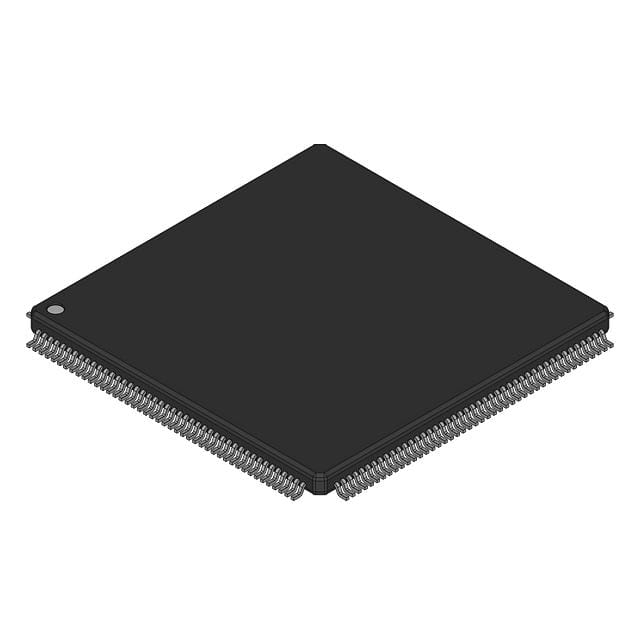
|
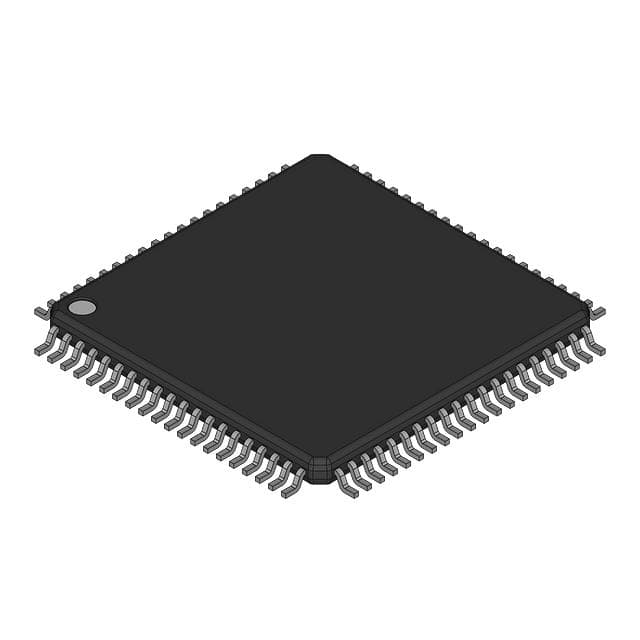
|
| Category | Embedded - Microprocessors | Embedded - Microprocessors |
| Manufacturer | National Semiconductor | Advanced Micro Devices |
| Description | RISC MPU, 16-BIT, 20MHZ PQFP176 | 80C186 - 16-BIT MICROPROCESSOR |
| Package | Bulk | Bulk |
| Series | - | i186 |
| Operating Temperature | - | 0°C ~ 70°C (TA) |
| Package / Case | - | - |
| Supplier Device Package | - | - |
| Speed | - | 20MHz |
| Voltage - I/O | - | 5.0V |
| Core Processor | - | 80C186 |
| Number of Cores/Bus Width | - | 1 Core, 16-Bit |
| RAM Controllers | - | DRAM |
| Graphics Acceleration | - | No |
| Display & Interface Controllers | - | - |
| Ethernet | - | - |
| USB | - | - |
| Security Features | - | - |
| Co-Processors/DSP | - | - |
| SATA | - | - |
-
1. Is an embedded microprocessor a computer?
An embedded microprocessor is a computer. An embedded microprocessor is a computer chip designed specifically for embedded systems and used in a variety of devices and equipment to provide additional functions. It is the core component of an embedded system and is responsible for executing instructions, processing data, and controlling other hardware devices.
Embedded microprocessors have similarities with CPUs in general-purpose computers, but there are also significant differences. Embedded microprocessors evolved from CPUs in general-purpose computers, with processors above 32 bits and high performance, but their design focuses on specific applications such as networking, communications, audio, video, or industrial control. In actual applications, embedded microprocessors only retain functional hardware that is closely related to embedded applications, and remove other redundant functional parts to achieve the lowest power consumption and resource utilization. -
2. What is the difference between embedded and microcontroller?
The main difference between embedded systems and microcontrollers lies in their design purpose and application scenarios. An embedded system is a device composed of hardware and software that can operate independently. It is usually used in a larger system or process and has a specific function 1. A microcontroller (MCU) integrates the entire computer system into a chip, which is mainly used to complete specific control tasks. It has the characteristics of small size, low cost, low power consumption and high reliability.
Embedded systems are usually composed of hardware such as signal processors, memory, and communication modules, and their software part uses API programming interfaces as the core of the development platform. Embedded systems can flexibly tailor software and hardware modules according to user needs to adapt to different application scenarios. A microcontroller is a device that integrates a computer system into a single chip, which integrates CPU, ROM, RAM, bus interface, and various peripheral functions such as timers, counters, I/O interfaces, etc. -
3. What is the difference between a general-purpose processor and an embedded processor?
Similarities: The basic design principles are the same, and both are chips that provide computing power.
The differences are as follows:
A. Different references
1. General-purpose processor: refers to CPU chips for servers and desktop computing.
2. Embedded processor: It is the core of the embedded system and is a hardware unit that controls and assists the operation of the system.
B. Different characteristics
1. General-purpose processor: The workload is mainly non-numerical and irregular scalar applications (this load is also the workload characteristic of current transaction processing and Web service servers). The method to achieve high performance is mainly to develop instruction-level parallelism.
2. Embedded processor: It has a very powerful storage area protection function. This is because the software structure of the embedded system has been modularized. In order to avoid the cross-interaction of errors between software modules, it is necessary to design a powerful storage area protection function, which is also conducive to software diagnosis.
C. Different functions
1. General-purpose processor: The superscalar structure is used as the main means to improve the performance of the processor. This structure maintains compatibility with the RISC structure on the instruction interface, but is dynamically scheduled by hardware internally to achieve parallel execution of multiple operations.
2. Embedded processor: It has strong support for real-time multitasking, can complete multitasking and has a short interrupt response time, thereby reducing the execution time of internal code and real-time core to a minimum.
-
4. Is A chip an embedded system?
A chip is part of an embedded system. A chip usually refers to a microprocessor or controller used in a specific device or system. These devices can be smartphones, tablets, smart home devices, etc. The A chip in these devices is the core component of the embedded system, responsible for processing and executing specific tasks and control functions.
An embedded system is a computer system designed for a specific application, usually consisting of hardware and software. The hardware part includes processors, sensors, actuators, etc., while the software part includes operating systems, applications, etc. Embedded systems are usually small in size, compact in structure, and low in power consumption, and are widely used in industrial control, consumer electronics, automotive electronics, and other fields.
