
PI49FCT3803LEX vs SI53321-B-GQ
| Part Number |

|
|
| Category | Clock/Timing - Clock Buffers, Drivers | Clock/Timing - Clock Buffers, Drivers |
| Manufacturer | Diodes Incorporated | Skyworks Solutions Inc. |
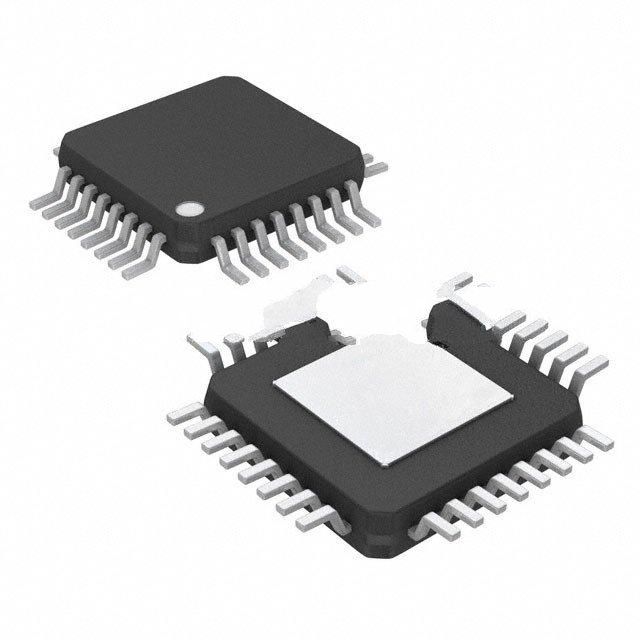
| Description | IC CLK BUFFER 1:7 156MHZ 16TSSOP | IC BUFFER 1:10 LVPECL 32ELQFP |
| Package | Tape & Reel (TR) | Tube |
| Series | 49FCT | - |
| Type | Fanout Buffer (Distribution) | Fanout Buffer (Distribution), Multiplexer |
| Voltage - Supply | 3V ~ 3.6V | 2.375V ~ 3.63V |
| Operating Temperature | 0°C ~ 70°C | -40°C ~ 85°C |
| Mounting Type | Surface Mount | Surface Mount |
| Package / Case | 16-TSSOP (0.173\", 4.40mm Width) | 32-LQFP Exposed Pad |
| Supplier Device Package | 16-TSSOP | 32-LQFP (7x7) |
| Output | CMOS, TTL | LVPECL |
| Frequency - Max | 156 MHz | 1.25 GHz |
| Number of Circuits | 1 | 1 |
| Input | CMOS, TTL | CML, HCSL, LVCMOS, LVDS, LVPECL |
| Ratio - Input:Output | 1:7 | 2:10 |
| Differential - Input:Output | No/No | Yes/Yes |
-
1. What is the difference between a clock buffer and a clock driver?
The main function of a clock buffer is to distribute clock signals, while a clock driver is used to enhance signal strength to drive higher loads. Buffer is usually used for branching and synchronizing multiple clock signals, while driver is used to increase signal transmission distance and load capacity.
-
2. How can clock buffers reduce jitter?
High quality clock buffers are typically designed with low jitter characteristics to ensure phase consistency of output signals and reduce phase noise during transmission. This is crucial for high-precision clock allocation, such as in communication and data transmission applications.
-
3. Does the clock driver support differential signals?
Yes, many clock drivers support differential signaling, such as LVDS, CML, and HCSL, which can provide higher anti-interference capabilities, especially in high-speed signal transmission applications.
-
4. How to evaluate the performance of clock drivers?
When evaluating clock drivers, several key parameters need to be considered:
Driving capability (load capacity)
Output signal integrity
Phase noise and jitter
Power noise suppression
Power supply voltage range and power consumption
