
R5F212BCSNLG#U0 vs STM32F407VGT7TR
| Part Number |
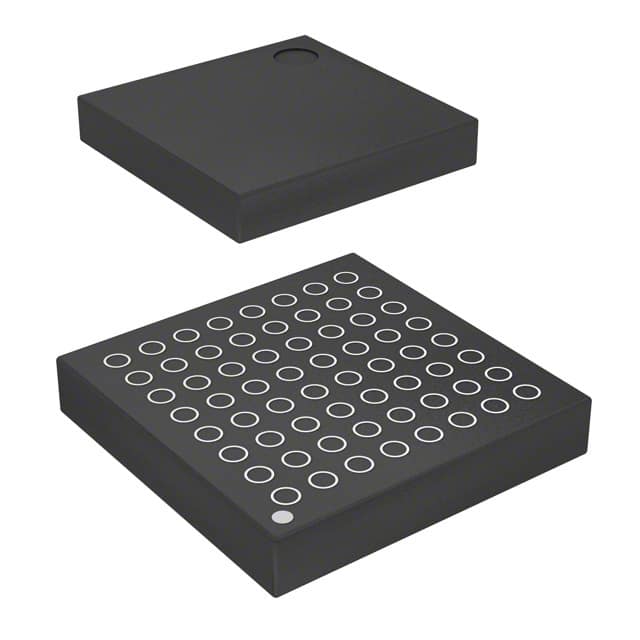
|

|
| Category | Embedded - Microcontrollers | Embedded - Microcontrollers |
| Manufacturer | Renesas Electronics America Inc | STMicroelectronics |
| Description | IC MCU 16BIT 128KB FLASH 64TFLGA | IC MCU 32BIT 1MB FLASH 100LQFP |
| Package | Tray | Cut Tape (CT) |
| Series | R8C/2x/2B | STM32F4 |
| Operating Temperature | -20°C ~ 85°C (TA) | -40°C ~ 105°C (TA) |
| Mounting Type | Surface Mount | Surface Mount |
| Package / Case | 64-TFLGA | 100-LQFP |
| Supplier Device Package | 64-TFLGA (6x6) | 100-LQFP (14x14) |
| Voltage - Supply (Vcc/Vdd) | 2.2V ~ 5.5V | 1.8V ~ 3.6V |
| Speed | 20MHz | 168MHz |
| Number of I/O | 55 | 82 |
| EEPROM Size | - | - |
| Core Processor | R8C | ARM® Cortex®-M4 |
| RAM Size | 7.5K x 8 | 192K x 8 |
| Core Size | 16-Bit | 32-Bit |
| Connectivity | I²C, LINbus, SIO, SSU, UART/USART | CANbus, DCMI, EBI/EMI, Ethernet, I²C, IrDA, LINbus, SPI, UART/USART, USB OTG |
| Peripherals | POR, PWM, Voltage Detect, WDT | Brown-out Detect/Reset, DMA, I²S, LCD, POR, PWM, WDT |
| Program Memory Size | 128KB (128K x 8) | 1MB (1M x 8) |
| Program Memory Type | FLASH | FLASH |
| Data Converters | A/D 12x10b; D/A 2x8b | A/D 16x12b; D/A 2x12b |
| Oscillator Type | Internal | Internal |
-
1. What is an embedded microcontroller?
An embedded microcontroller is a device that integrates an entire computer system into a single chip. It usually includes functional modules such as a central processing unit, memory, input and output ports, and timers, all of which are integrated on a single chip. This design enables embedded microcontrollers to perform specific tasks with high flexibility and efficiency.
The main features of embedded microcontrollers include:
Highly integrated: multiple functions such as CPU, memory, and I/O interface are integrated on a single chip, reducing the number of components and system volume.
Strong specialization: Optimized for specific application scenarios, providing a specific combination of processing power, memory, and input and output interfaces.
Efficient and reliable: The integrated design makes the system more stable and reliable, reducing the connection of external components and signal interference.
High flexibility: According to different application requirements, embedded microcontrollers can have multiple derivative products, each with the same processor core, but different memory and peripheral configurations to adapt to different application scenarios. -
2. What is an embedded system controller?
An embedded system controller is a microcomputer system designed specifically for a specific purpose. It integrates key components such as processors, memory, input and output interfaces, etc. to achieve real-time control and data processing of embedded systems. It is widely used in electronic products, automobiles, industrial automation and other fields, and is an important foundation for modern intelligent production.
Embedded system controllers have the following characteristics:
High performance: Embedded system controllers usually have high-performance processing capabilities and can handle complex computing tasks.
Low power consumption: Compared with personal computers or servers, embedded system controllers usually have lower power consumption and are suitable for long-term operation scenarios.
High reliability: Due to the particularity of the application scenario, the embedded system controller needs to have high reliability and be able to work stably in harsh environments.
Rich peripheral interfaces: In order to adapt to different application requirements, embedded system controllers usually provide rich peripheral interfaces to facilitate communication and data exchange with other devices.
The application fields of embedded system controllers are very wide, including:
Electronic products: such as smart watches, smart home devices, etc.
Automotive electronics: such as in-car entertainment systems, intelligent driving assistance systems, etc.
Industrial automation: such as industrial control systems, automated production lines, etc.
Medical equipment: such as medical imaging equipment, monitoring instruments, etc.
Communication equipment: such as base station equipment, wireless communication terminals, etc.
What is the difference between embedded microcontrollers and external microcontrollers?
The main difference between embedded microcontrollers and external microcontrollers lies in their application scenarios and integration. Embedded microcontrollers are computer systems designed specifically for embedding into object systems. They usually integrate necessary components such as microprocessor cores, memory, and peripheral interfaces, and are mainly used to control and execute specific tasks. External microcontrollers usually refer to independent microcontroller units. Although they also have similar components, they are mainly used for more complex computing and processing tasks.
Embedded microcontrollers are often used in embedded systems, which are usually composed of a series of electronic components and have specific functions. As the core component of the system, embedded microcontrollers are responsible for controlling, monitoring or assisting the operation of equipment, machines and workshops. They are widely used in various fields such as home appliances, automobiles, industrial control, medical equipment, etc., with the characteristics of low power consumption and high performance.
External microcontrollers are usually used in scenarios that require higher computing power and more complex processing. They can exist independently of embedded systems and perform a variety of tasks such as data processing and communication. External microcontrollers are widely used in personal computers, servers, industrial automation and other fields, and can handle more complex data and tasks. -
3. What is the difference between Arduino and Embedded C?
The main differences between Arduino and Embedded C are their application scenarios, development difficulty and hardware design. Arduino is more suitable for rapid prototyping and teaching, while Embedded C is suitable for scenarios that require high performance and professional applications.
Arduino is an open source hardware platform mainly used for rapid prototyping and teaching. It uses high-level programming languages such as C++ and provides an easy-to-use development environment, allowing beginners to quickly get started and implement projects. In contrast, embedded C is often used in high-performance and professional application scenarios, such as industrial control, automotive electronics and other fields. Embedded C programming usually involves low-level hardware knowledge and more complex programming skills. The language used may be C or C++, but memory and hardware resources need to be managed manually. -
4. What language is used for embedded microcontroller programming?
The main languages used for embedded microcontroller programming include C, C++, assembly language, Python and Rust. These languages have their own characteristics and are suitable for different development needs and scenarios.
C is one of the most commonly used languages in embedded development. It has the advantages of high efficiency, flexibility, and strong portability. It can directly operate hardware and is suitable for low-level driver development, kernel programming, etc. C++ is used in complex embedded systems and adds object-oriented features, which is suitable for the development of large applications. Although assembly language is difficult to learn and write, it is indispensable in scenarios that require high optimization and direct control of hardware. Python is easy to learn and use, and is often used in data processing, prototype development, and rapid testing. Rust is gradually gaining attention in the embedded field due to its memory safety and high performance, especially in applications with high security requirements.
