
S-1740C18-A6T2U4 vs BU30JA2DG-CTR
| Part Number |
|

|
| Category | PMIC - Voltage Regulators - Linear | PMIC - Voltage Regulators - Linear |
| Manufacturer | ABLIC U.S.A. Inc. | Rohm Semiconductor |
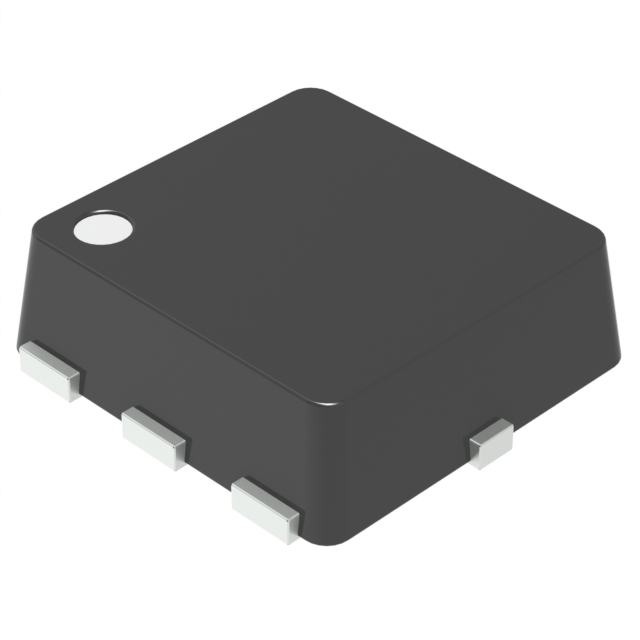
| Description | IC REG LINEAR 1.8V 100MA HSNT6-B | IC REG LINEAR 3V 100MA 5SSOP |
| Package | Tape & Reel (TR) | Cut Tape (CT) |
| Series | S-1740 | Automotive, AEC-Q100 |
| Operating Temperature | -40°C ~ 85°C (TA) | -40°C ~ 125°C (TA) |
| Mounting Type | Surface Mount | Surface Mount |
| Package / Case | 6-SMD, Flat Lead Exposed Pad | SC-74A, SOT-753 |
| Supplier Device Package | HSNT-6-B | 5-SSOP |
| Output Type | Fixed | Fixed |
| Voltage - Output (Min/Fixed) | 1.8V | 3V |
| Voltage - Output (Max) | - | - |
| Current - Output | 100mA | 100mA |
| Output Configuration | Positive | Positive |
| Control Features | Enable | Enable |
| Voltage - Input (Max) | 5.5V | 6V |
| Number of Regulators | 1 | 1 |
| Voltage Dropout (Max) | 0.05V @ 10mA | 0.155V @ 100mA |
| Current - Quiescent (Iq) | 530 nA | 80 µA |
| Current - Supply (Max) | - | - |
| PSRR | - | 68dB (1kHz) |
| Protection Features | Over Current | Over Current, Over Temperature |
-
1. What is the difference between linear regulators and switching regulators?
There are significant differences between linear regulators and switching regulators in terms of working principles, efficiency, stability, cost and application range.
Working principle:
Linear regulators achieve the function of stabilizing the output at a set value by adjusting the voltage difference between the output voltage and the input voltage. It achieves stable output voltage by controlling the conductivity state of the power transistor.
The switching regulator converts the input voltage into a pulse signal transmission and smoothes the output through a filter by quickly switching between the input and output ends to achieve the function of stabilizing the output at the set value. The switching regulator uses PWM (pulse width modulation) control to control the output voltage by adjusting the time duty ratio of the high and low levels within a cycle.
Efficiency:
The efficiency of the linear regulator is relatively low, usually between 60% and 70%. When the voltage differenc -
2. What problems will linear regulators bring to the circuit?
The problems that linear regulators bring to the circuit mainly include low efficiency and a lot of heat.
Linear The main working principle of the voltage regulator is to control the output voltage of the transistor through a current amplifier to keep the output voltage stable. This working mode causes the linear regulator to control the regulating tube through a differential voltage when adjusting the output voltage. The control tube needs to absorb part of the input voltage, which makes the efficiency of the linear regulator relatively low. In practical applications, this means that the linear regulator will convert the difference between the input voltage and the output voltage into heat energy, causing serious heating of the device, especially when the input and output voltage difference is large, this power loss will further increase, causing the device to heat up. -
3. Can a linear regulator be up?
Linear regulators cannot be boost.
The main function of a linear regulator is to stabilize the output voltage, protecting the electrical equipment from high or unstable voltage effects. It realizes a stable output voltage by adjusting the gap between the output voltage and the input voltage, but this process is limited to lowering the voltage, not including the voltage. The working principle of a linear regulator is to regulate the voltage by converting excess voltage into heat loss, thereby realizing the voltage regulation. This feature determines that it does not have the voltage function. -
4. What are the two main categories of linear and switching stabilizers?
The two main categories of linear and switching stabilizers are linear voltage voltage power and switching voltage power supply.
Linear voltage voltage power has achieved the advantages of transformer, rectification, filtering, and voltage voltage. It has the advantages of good stability, fast transient response speed, high reliability, and high output voltage accuracy. However, its transformation efficiency is low, especially when the output voltage difference is large, if the output current is also large, there will be obvious fever and hot phenomenon, and may even burn the regulator. The linear voltage voltage power supply includes two types: fixed output voltage and adjustable output voltage. According to the selection of the output current and the difference in the input output voltage difference, the design of the linear regulator needs to pay attention to the heat dissipation problem and the choice of bypass capacitors.
The switching voltage voltage power supply, also known as
