
S-1740C18-A6T2U4 vs S-1740A21-A6T2U4
| Part Number |
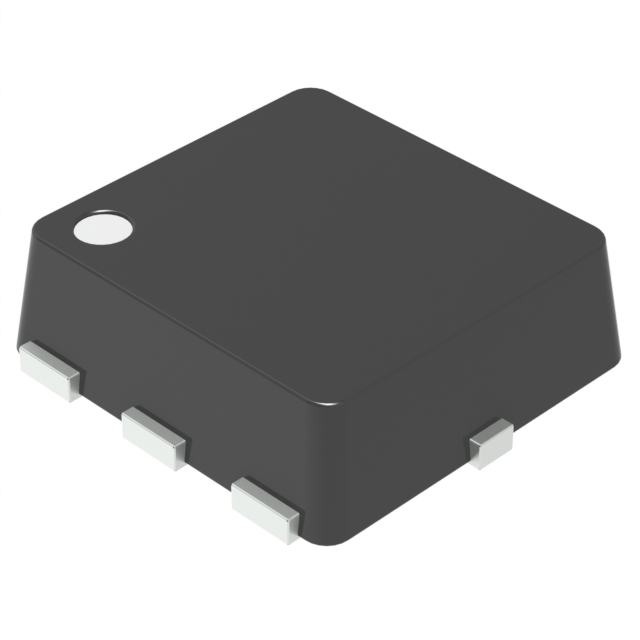
|

|
| Category | PMIC - Voltage Regulators - Linear | PMIC - Voltage Regulators - Linear |
| Manufacturer | ABLIC U.S.A. Inc. | ABLIC U.S.A. Inc. |
| Description | IC REG LINEAR 1.8V 100MA HSNT6-B | IC REG LINEAR 2.1V 100MA HSNT6-B |
| Package | Tape & Reel (TR) | Tape & Reel (TR) |
| Series | S-1740 | S-1740 |
| Operating Temperature | -40°C ~ 85°C (TA) | -40°C ~ 85°C (TA) |
| Mounting Type | Surface Mount | Surface Mount |
| Package / Case | 6-SMD, Flat Lead Exposed Pad | 6-SMD, Flat Lead Exposed Pad |
| Supplier Device Package | HSNT-6-B | HSNT-6-B |
| Output Type | Fixed | Fixed |
| Voltage - Output (Min/Fixed) | 1.8V | 2.1V |
| Voltage - Output (Max) | - | - |
| Current - Output | 100mA | 100mA |
| Output Configuration | Positive | Positive |
| Control Features | Enable | Enable |
| Voltage - Input (Max) | 5.5V | 5.5V |
| Number of Regulators | 1 | 1 |
| Voltage Dropout (Max) | 0.05V @ 10mA | 0.04V @ 10mA |
| Current - Quiescent (Iq) | 530 nA | 530 nA |
| Current - Supply (Max) | - | - |
| PSRR | - | - |
| Protection Features | Over Current | Over Current |
-
1. What problems will linear regulators bring to the circuit?
The problems that linear regulators bring to the circuit mainly include low efficiency and a lot of heat.
Linear The main working principle of the voltage regulator is to control the output voltage of the transistor through a current amplifier to keep the output voltage stable. This working mode causes the linear regulator to control the regulating tube through a differential voltage when adjusting the output voltage. The control tube needs to absorb part of the input voltage, which makes the efficiency of the linear regulator relatively low. In practical applications, this means that the linear regulator will convert the difference between the input voltage and the output voltage into heat energy, causing serious heating of the device, especially when the input and output voltage difference is large, this power loss will further increase, causing the device to heat up. -
2. Do linear regulators need capacitors?
Linear regulators usually require capacitors.
The working principle and design requirements of linear regulators determine that they usually require capacitors to ensure stable operation. These capacitors are mainly used to filter and stabilize the output voltage, help reduce output ripple and noise, and thus improve the stability and reliability of the power supply.
Specifically:
1. Input and output capacitors: Linear regulators usually require one or more input capacitors and one output capacitor. These capacitors help smooth the input and output voltages, reduce voltage fluctuations, and thus provide a stable output voltage.
2. Power supply rejection capability: The power supply rejection capability of a linear regulator is an important indicator, which is related to whether it can effectively suppress unwanted signals and avoid interference with the output voltage. If the power supply rejection capability is poor, unnecessary signals may be left behind, affecting the purity of -
3. What is the difference between a linear regulator and a resistor?
Linear regulators and resistors have significant differences in function, working principle and application scenarios.
Function and working principle:
A linear regulator is an electronic device that achieves a stable voltage output by adjusting linear elements (such as resistors, transistors, etc.) in the circuit. It uses the negative feedback principle. When the input voltage changes, the regulator senses this change and adjusts the parameters of the circuit elements (such as the resistance value or the conduction state of the transistor) accordingly to keep the output voltage stable within the required range. Linear regulators can provide lower output noise and fluctuations, and have better responsiveness to load changes.
Resistors are a basic electronic component used to limit current and divide voltage. It works by hindering the flow of current, has a fixed resistance value, and does not have the function of adjusting the output voltage.
Application scenarios:
Linear regulator -
4. What are the two main categories of linear and switching stabilizers?
The two main categories of linear and switching stabilizers are linear voltage voltage power and switching voltage power supply.
Linear voltage voltage power has achieved the advantages of transformer, rectification, filtering, and voltage voltage. It has the advantages of good stability, fast transient response speed, high reliability, and high output voltage accuracy. However, its transformation efficiency is low, especially when the output voltage difference is large, if the output current is also large, there will be obvious fever and hot phenomenon, and may even burn the regulator. The linear voltage voltage power supply includes two types: fixed output voltage and adjustable output voltage. According to the selection of the output current and the difference in the input output voltage difference, the design of the linear regulator needs to pay attention to the heat dissipation problem and the choice of bypass capacitors.
The switching voltage voltage power supply, also known as
