
SMCJ5.0CA vs SMDA12C-4TR
| Part Number |
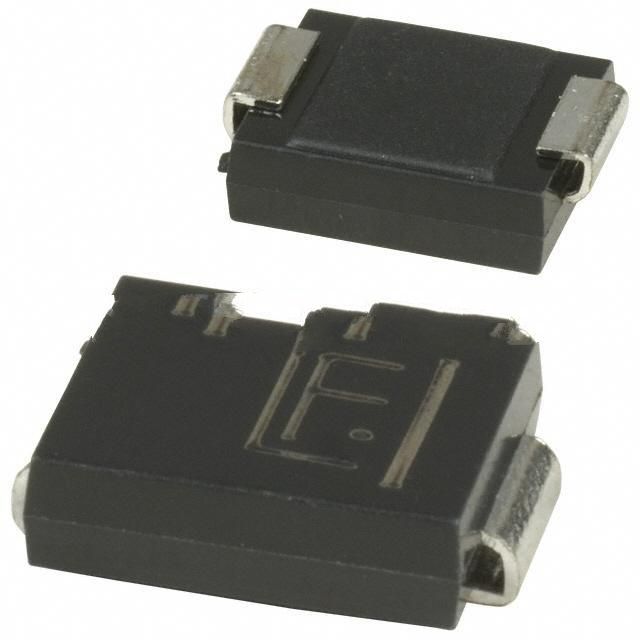
|

|
| Category | TVS - Diodes | TVS - Diodes |
| Manufacturer | KYOCERA AVX | SMC Diode Solutions |
| Description | TVS DIODE 5VWM 9.2VC SMC | TVS DIODE 12VWM 19VC 8SO |
| Package | DO-214AB, SMC | 8-SOIC (0.154", 3.90mm Width) |
| Series | - | - |
| Type | Zener | Zener |
| Operating Temperature | -55°C ~ 150°C (TJ) | -55°C ~ 125°C (TJ) |
| Mounting Type | Surface Mount | Surface Mount |
| Package / Case | DO-214AB, SMC | 8-SOIC (0.154", 3.90mm Width) |
| Supplier Device Package | DO-214AB (SMC) | 8-SO |
| Applications | General Purpose | General Purpose |
| Voltage - Reverse Standoff (Typ) | 5V | 12V (Max) |
| Voltage - Breakdown (Min) | 6.4V | 13.3V |
| Voltage - Clamping (Max) @ Ipp | 9.2V | 19V |
| Current - Peak Pulse (10/1000µs) | 163A | 1A (8/20µs) |
| Power - Peak Pulse | 1500W (1.5kW) | 300W |
| Power Line Protection | No | No |
| Bidirectional Channels | 1 | 4 |
| Capacitance @ Frequency | - | 185pF @ 1MHz |
-
1. What does a TVS diode do?
The main function of TVS diodes (Transient Voltage Suppression Diodes) is to protect electronic equipment from voltage spikes and surge voltages. When the two poles of the TVS diode are impacted by reverse transient high energy, it can change the high impedance between the two poles into low impedance within 10^-12 seconds, while absorbing surge power up to several kilowatts, causing the gap between the two poles to The voltage is clamped to a safe value, thereby effectively protecting precision components in electronic circuits.
The specific working principle of TVS diodes is as follows:
Absorb surge power: TVS diodes can, under reverse application conditions, when subjected to a high-energy large pulse, their working impedance immediately drops to a lower conduction state, allowing large current to pass while clamping the voltage at predetermined level. Its response time is only 10^-12 seconds.
Protection circuit: TVS diodes are used in parallel with the protected circuit. When the circuit is working normally, the TVS diode is in a high impedance state and does not affect the circuit; when there is a surge voltage impact, the TVS diode conducts quickly, absorbs the surge energy, and protects the subsequent circuit.
-
2. What is the difference between TVS and ESD diodes?
The main difference between TVS diodes and ESD diodes is their working principle, application scenarios and characteristics.
Working principle and application scenarios
TVS diodes (Transient Voltage Suppressors): TVS diodes are mainly used to suppress transient voltages and prevent components in the circuit from being damaged by surge voltages. When the two poles of the TVS diode are impacted by reverse transient high energy, it can change the high impedance to low impedance in a very short time, absorb the surge power, and protect the precision components in the circuit1. TVS diodes are suitable for protection against various surge pulses, such as lightning strikes, large-capacity load switching, etc.
ESD diode (Electro-Static discharge): ESD diode is mainly used to prevent static electricity and prevent damage to electronic equipment caused by electrostatic discharge. ESD diodes have low capacitance values, typically between 1 and 3.5 picofarad (PF), to accommodate the rapid changes in electrostatic discharge. ESD diodes are suitable for board-level protection, especially in high-speed USB and I/O interfaces, which have higher requirements for electrostatic discharge.
-
3. How do TVS diodes fail?
The failure modes of TVS diodes mainly include short circuit failure, open circuit failure and performance degradation. These failure modes can have a serious impact on the normal operation and protection functions of the circuit.
short circuit fault
Short circuit failure is one of the most common failure modes of TVS diodes. When a TVS diode is short-circuited, it changes to a low-impedance state, allowing a large amount of current to pass through, which may cause the circuit to not function properly and may even damage other circuit components. Causes of short circuit faults include:
Thermal breakdown: In a high temperature environment or when subjected to excessive transient energy impact, the PN junction of the TVS diode may undergo thermal breakdown, resulting in a short circuit.
Over-electrical stress: When the transient pulse energy exceeds the energy that the TVS can withstand, it will cause over-electrical stress damage and even directly cause burnout.
Manufacturing process issues: Such as chip bonding interface voids, mesa defects, strong accumulation layer or strong inversion layer on the surface, chip cracks, uneven impurity diffusion, etc., which may cause short circuit failures of TVS diodes during manufacturing or use.
-
4. What is the difference between TVS diodes and MOVs?
The main differences between TVS diodes and MOV varistors lie in their working principles, application scenarios and performance parameters.
Working principle
TVS diode: TVS diode (Transient Voltage Suppressor) is a semiconductor device with a high-sensitivity N/P junction. When the reverse voltage exceeds its breakdown voltage, the TVS diode will conduct quickly and introduce the surge current into the ground, thereby protecting the subsequent circuit. The response speed of TVS diodes is very fast, usually within nanoseconds.
MOV varistor: MOV varistor (Metal-Oxide Varistor) is a multi-layer varistor made of multi-layer zinc oxide material. When the voltage exceeds its varistor voltage, the MOV will conduct, absorb the surge energy, and clamp the voltage within a safe range. MOV has a long response time, usually completing the response within microseconds.
