
SN74AHC245DBR vs SN74AHCT240NSR
| Part Number |
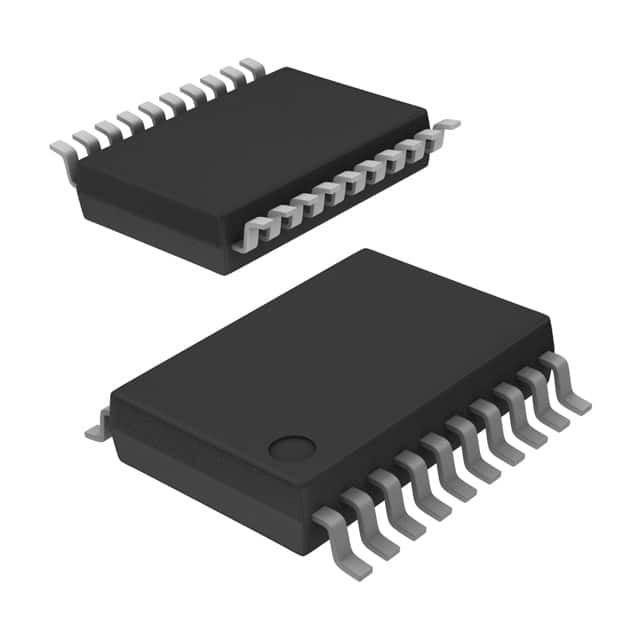
|
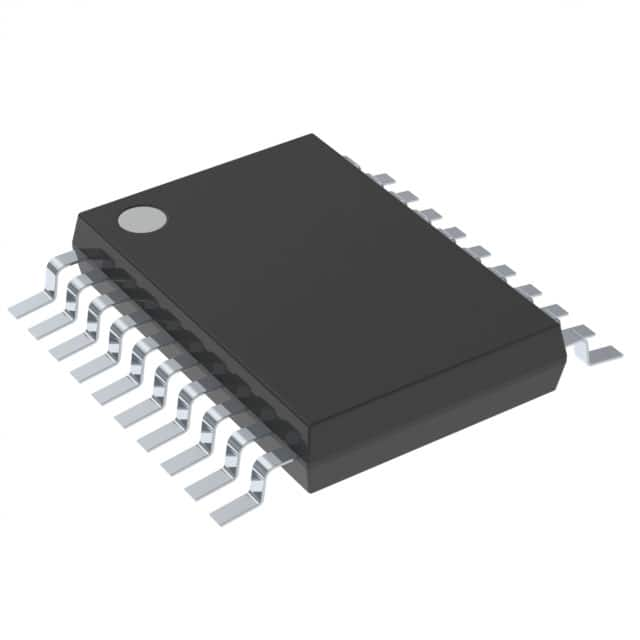
|
| Category | Logic - Buffers, Drivers, Receivers, Transceivers | Logic - Buffers, Drivers, Receivers, Transceivers |
| Manufacturer | Texas Instruments | Texas Instruments |
| Description | IC TXRX NON-INVERT 5.5V 20SSOP | IC BUFFER INVERT 5.5V 20SO |
| Package | Tape & Reel (TR) | Bulk |
| Series | 74AHC | 74AHCT |
| Voltage - Supply | 2V ~ 5.5V | 4.5V ~ 5.5V |
| Operating Temperature | -40°C ~ 125°C (TA) | -40°C ~ 125°C (TA) |
| Mounting Type | Surface Mount | Surface Mount |
| Package / Case | 20-SSOP (0.209\", 5.30mm Width) | 20-SOIC (0.209\", 5.30mm Width) |
| Supplier Device Package | 20-SSOP | 20-SO |
| Output Type | 3-State | 3-State |
| Input Type | - | - |
| Number of Elements | 1 | 2 |
| Current - Output High, Low | 8mA, 8mA | 8mA, 8mA |
| Logic Type | Transceiver, Non-Inverting | Buffer, Inverting |
| Number of Bits per Element | 8 | 4 |
-
1. What are the most common logic ICs?
The most common logic IC is CMOS logic IC. CMOS logic IC is widely used in various electronic systems due to its low power consumption and low cost.
CMOS logic IC (complementary metal oxide semiconductor logic integrated circuit) combines p-channel and n-channel MOSFETs to achieve lower power consumption than traditional TTL (transistor-transistor logic). Although CMOS logic IC was slow at first, with the advancement of wafer manufacturing process, CMOS logic IC now provides higher operating speed and relatively low cost due to its improved manufacturing process.
In addition to CMOS logic IC, other common logic ICs include TTL, BiCMOS, etc. TTL logic IC was originally widely used because it provides higher current driving capability and operating speed, but with higher power consumption. BiCMOS logic IC combines the low power consumption of CMOS and the high current driving capability of bipolar transistors, but the manufacturing process is complex and the cost is high. -
2. What is the logic function of IC7400?
IC7400 is an integrated circuit containing 4 independent 2-input NAND gates. Its logic function is: when all inputs are "1", the output is "0"; as long as there is "0" at the input, the output is "1". The logical expression is: y=—AB.
IC7400 is the first logic chip launched by Texas Instruments in 1964 and belongs to the TTL (transistor-transistor logic) series. This series of chips quickly occupied more than 50% of the logic chip market and has undergone multiple pin-compatible generational updates, supporting low-power supply voltage and surface mount packaging.
IC7400 is not only widely used in industrial and commercial applications, but also commonly used in education and prototyping. It provides a traditional DIP pin layout and an abstract logic circuit view, which is suitable for helping students understand the working principle of basic logic units, and is also suitable for engineers to perform rapid prototyping and logic verification. -
3. What is the difference between a driver and a transceiver?
The main difference between a driver and a transceiver is that they have different roles and functions in the system. The driver is mainly responsible for amplifying the signal to drive the load, while the transceiver is responsible for sending and receiving the signal, including converting the digital signal into a format suitable for transmission.
The role of the driver is to convert the control signal into the driving signal required by the load and provide enough current or power to drive the load.
The transceiver is responsible for sending and receiving data in bidirectional communication. It includes a buffer and a direction control circuit for receiving data from the data bus and sending data to the data bus. The transceiver converts the digital signal into an appropriate waveform at the electrical level and improves the signal integrity. -
4. What is the difference between a transmitter and a receiver?
1. Definition of transmitter and receiver
A transmitter is a device used to convert electrical signals into wireless signals and transmit them to a receiver, while a receiver is a device that receives wireless signals and converts them into electrical signals for output.
2. Differences between transmitters and receivers
A. Different functions
The main function of a transmitter is to convert electrical signals into wireless signals and transmit them to a distant place, while the main function of a receiver is to convert received wireless signals into electrical signals for output.
B. Different structures
A transmitter is usually composed of an oscillator, a power amplifier, and an antenna, while a receiver is usually composed of an antenna, a low-noise amplifier, an intermediate frequency amplifier, and a demodulator.
C. Different parameters
Both transmitters and receivers have specific parameter ranges, such as frequency, power, antenna gain, etc. The parameters of the transmitter are mainly related to the output signal, while the parameters of the receiver are mainly related to the quality of the received signal.
3. Application of transmitters and receivers in wireless communication
Transmitters and receivers play a very important role in wireless communication. Wireless communication usually transmits information through electromagnetic waves transmitted through the air. In this process, the transmitter is used to convert information into wireless signals and transmit them, while the receiver is used to receive wireless signals and return the information to the receiving end.
In short, both transmitters and receivers are indispensable devices in wireless communication. Although their functions and structures are different, they both play an important role in wireless communication.
