
SN74AUP2G34DRYR vs SN74AUP1G240DSFR
| Part Number |
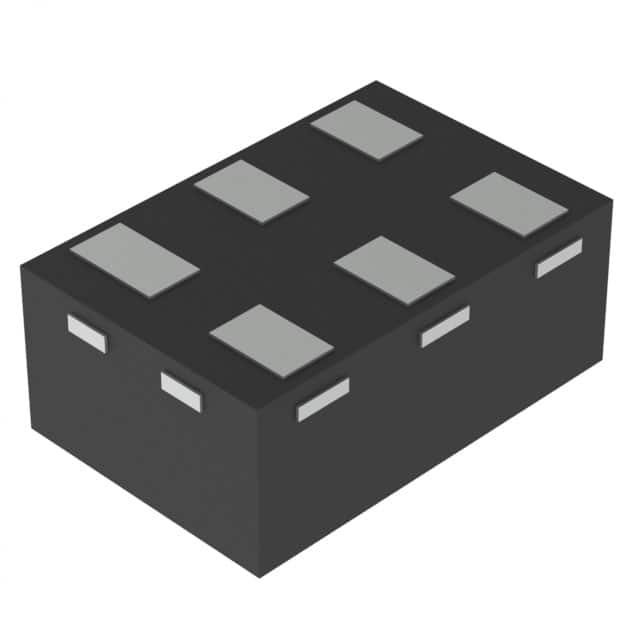
|
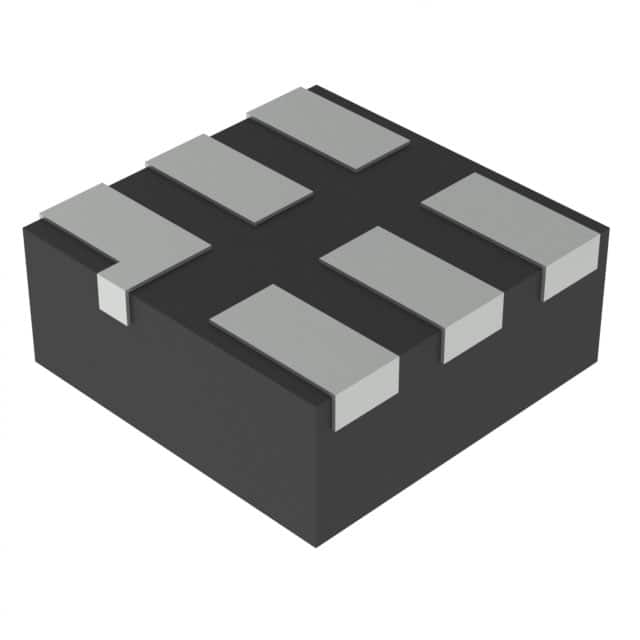
|
| Category | Logic - Buffers, Drivers, Receivers, Transceivers | Logic - Buffers, Drivers, Receivers, Transceivers |
| Manufacturer | Texas Instruments | Texas Instruments |
| Description | IC BUFFER NON-INVERT 3.6V 6SON | IC BUFFER INVERT 3.6V 6SON |
| Package | Tape & Reel (TR) | Cut Tape (CT) |
| Series | 74AUP | 74AUP |
| Voltage - Supply | 0.8V ~ 3.6V | 0.8V ~ 3.6V |
| Operating Temperature | -40°C ~ 85°C (TA) | -40°C ~ 85°C (TA) |
| Mounting Type | Surface Mount | Surface Mount |
| Package / Case | 6-UFDFN | 6-XFDFN |
| Supplier Device Package | 6-SON (1.45x1) | 6-SON (1x1) |
| Output Type | Push-Pull | 3-State |
| Input Type | - | - |
| Number of Elements | 2 | 1 |
| Current - Output High, Low | 4mA, 4mA | 4mA, 4mA |
| Logic Type | Buffer, Non-Inverting | Buffer, Inverting |
| Number of Bits per Element | 1 | 1 |
-
1. What is a logic Integrated Circuits((IC)?
Logic IC (Logic Integrated Circuit) is an integrated circuit, an electronic component that integrates multiple logic gates (such as AND gates, OR gates, NOT gates, etc.). They are able to perform Boolean logic operations and are used to implement various logic functions, and are the basis of digital circuit design.
Logic ICs are mainly composed of logic gates, registers, counters and other components, which are connected together by wires to form complex logic circuits. Logic ICs can be divided into two types: combinational logic circuits and sequential logic circuits.
Logic ICs are widely used in computers, communication equipment, consumer electronics and other fields, responsible for processing digital signals, converting input signals into output signals, and thus realizing specific logic functions. -
2. What is the logic function of IC7400?
IC7400 is an integrated circuit containing 4 independent 2-input NAND gates. Its logic function is: when all inputs are "1", the output is "0"; as long as there is "0" at the input, the output is "1". The logical expression is: y=—AB.
IC7400 is the first logic chip launched by Texas Instruments in 1964 and belongs to the TTL (transistor-transistor logic) series. This series of chips quickly occupied more than 50% of the logic chip market and has undergone multiple pin-compatible generational updates, supporting low-power supply voltage and surface mount packaging.
IC7400 is not only widely used in industrial and commercial applications, but also commonly used in education and prototyping. It provides a traditional DIP pin layout and an abstract logic circuit view, which is suitable for helping students understand the working principle of basic logic units, and is also suitable for engineers to perform rapid prototyping and logic verification. -
3. What is the difference between a buffer and a transceiver?
The main difference between a buffer and a transceiver is that they have different functions and application scenarios. The buffer is mainly used for signal buffering and transmission, while the transceiver has a bidirectional data transmission function and contains a direction control circuit.
A buffer is an electronic component that is mainly used for signal buffering and transmission. It has high input impedance and low output impedance, which can ensure the integrity and stability of the signal. Buffers are often used in digital circuits to temporarily store data for processor processing or to coordinate between high-speed and low-speed devices.
A transceiver is a bidirectional device that allows data to flow in both directions. It not only has buffering and driving functions, but also contains direction control circuits so that data can be transmitted in either direction as needed. Transceivers are often used in applications that require bidirectional communication, such as backplanes and ribbon cables, where the signal is weak or needs to be transmitted over long distances.
-
4. What is the difference between a receiver and a transceiver?
The main difference between a receiver and a transceiver lies in their functions and composition. The receiver is mainly responsible for receiving signals and converting them into usable electrical signals, while the transceiver has both sending and receiving functions, including the transmitter converting electrical signals into optical signals or wireless signals, and the receiver converting received optical signals or wireless signals into electrical signals.
A receiver is a signal receiving device whose main function is to receive signals from the channel and transform them into information in the same physical form as when they were sent, and then pass them to the destination. The basic requirement of the receiver is to be able to extract the information output by the source from the interfered signal to the maximum extent and reproduce the output of the source as much as possible.
A transceiver (TRX for short) is a device that integrates sending and receiving functions. It can convert electronic signals into optical signals or wireless signals for transmission, and can convert received optical signals or wireless signals back into electronic signals. Transceivers are widely used in communication systems such as Ethernet, LAN, WAN, Bluetooth, Wi-Fi, etc., supporting long-distance, high-speed communication.
