
SS5P3HM3_A/I vs AS1PD-M3/84A
| Part Number |
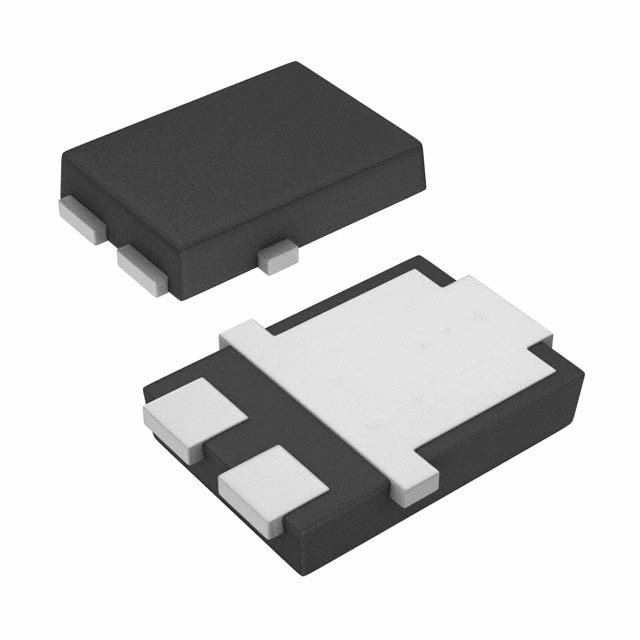
|

|
| Category | Diodes - Rectifiers - Single | Diodes - Rectifiers - Single |
| Manufacturer | Vishay Semiconductor - Diodes Division | Vishay Semiconductor - Diodes Division |
| Description | DIODE SCHOTTKY 30V 5A TO277A | DIODE AVALANCHE 200V 1.5A DO220 |
| Package | Tape & Reel (TR) | Tape & Box (TB) |
| Series | Automotive, AEC-Q101 | eSMP® |
| Mounting Type | Surface Mount | Surface Mount |
| Package / Case | TO-277, 3-PowerDFN | DO-220AA |
| Supplier Device Package | TO-277A (SMPC) | DO-220AA (SMP) |
| Diode Type | Schottky | Avalanche |
| Current - Average Rectified (Io) | 5A | 1.5A (DC) |
| Voltage - Forward (Vf) (Max) @ If | 520 mV @ 5 A | 1.15 V @ 1.5 A |
| Current - Reverse Leakage @ Vr | 250 µA @ 30 V | 5 µA @ 200 V |
| Capacitance @ Vr, F | - | 10.4pF @ 4V, 1MHz |
| Voltage - DC Reverse (Vr) (Max) | 30 V | 200 V |
| Speed | Fast Recovery =< 500ns, > 200mA (Io) | Standard Recovery >500ns, > 200mA (Io) |
| Reverse Recovery Time (trr) | - | 1.5 µs |
| Operating Temperature - Junction | -55°C ~ 150°C | -55°C ~ 175°C |
-
1. What is a single rectifier diode?
A single rectifier diode is an electronic component used to convert alternating current (AC) to direct current (DC), typically used in power supplies, chargers, and other circuits that require DC power.
-
2. What are the common applications of a single rectifier diode?
They are commonly used in power circuits, chargers, AC to DC converters, motor drives, circuit protection, and other electronic devices to convert AC power to DC power or protect circuits from reverse current.
-
3. What is the maximum reverse voltage (PIV) of a rectifier diode?
The Peak Inverse Voltage (PIV) is the maximum reverse voltage that a diode can withstand. When selecting a diode, the PIV must be higher than the maximum reverse voltage in the circuit, usually twice or more the input voltage.
-
4. What is the difference between Schottky diodes and traditional silicon rectifier diodes?
Schottky diodes have a lower forward voltage drop (typically 0.2V to 0.3V) and faster switching speed, making them suitable for high-frequency applications. However, their reverse voltage is relatively low and is typically used in circuits with lower voltages.
