
STM32F207VFT6 vs MK40DN512VLL10
| Part Number |
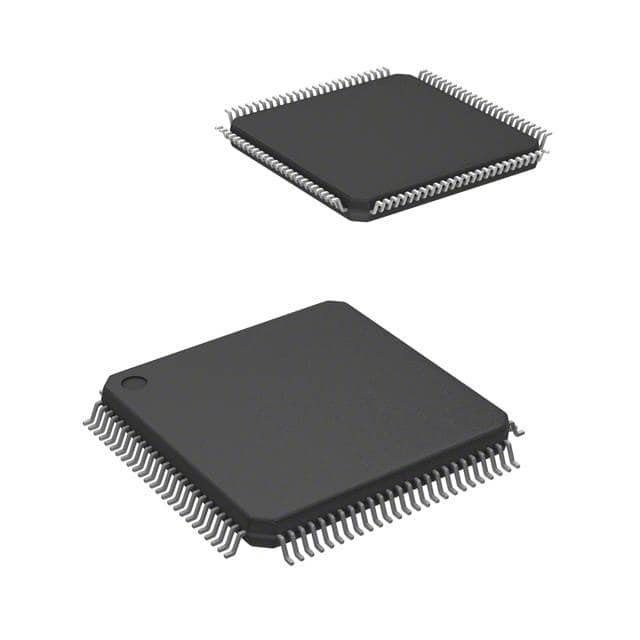
|

|
| Category | Embedded - Microcontrollers | Embedded - Microcontrollers |
| Manufacturer | STMicroelectronics | NXP USA Inc. |
| Description | IC MCU 32BIT 768KB FLASH 100LQFP | IC MCU 32BIT 512KB FLASH 100LQFP |
| Package | Tray | Tray |
| Series | STM32F2 | Kinetis K40 |
| Operating Temperature | -40°C ~ 85°C (TA) | -40°C ~ 105°C (TA) |
| Mounting Type | Surface Mount | Surface Mount |
| Package / Case | 100-LQFP | 100-LQFP |
| Supplier Device Package | 100-LQFP (14x14) | 100-LQFP (14x14) |
| Voltage - Supply (Vcc/Vdd) | 1.8V ~ 3.6V | 1.71V ~ 3.6V |
| Speed | 120MHz | 100MHz |
| Number of I/O | 82 | 64 |
| EEPROM Size | - | - |
| Core Processor | ARM® Cortex®-M3 | ARM® Cortex®-M4 |
| RAM Size | 132K x 8 | 128K x 8 |
| Core Size | 32-Bit | 32-Bit |
| Connectivity | CANbus, Ethernet, I²C, IrDA, LINbus, Memory Card, SPI, UART/USART, USB OTG | CANbus, I²C, IrDA, SD, SPI, UART/USART, USB, USB OTG |
| Peripherals | Brown-out Detect/Reset, DMA, I²S, LCD, POR, PWM, WDT | DMA, I²S, LCD, LVD, POR, PWM, WDT |
| Program Memory Size | 768KB (768K x 8) | 512KB (512K x 8) |
| Program Memory Type | FLASH | FLASH |
| Data Converters | A/D 16x12b; D/A 2x12b | A/D 34x16b; D/A 1x12b |
| Oscillator Type | Internal | Internal |
-
1. What is an embedded microcontroller?
An embedded microcontroller is a device that integrates an entire computer system into a single chip. It usually includes functional modules such as a central processing unit, memory, input and output ports, and timers, all of which are integrated on a single chip. This design enables embedded microcontrollers to perform specific tasks with high flexibility and efficiency.
The main features of embedded microcontrollers include:
Highly integrated: multiple functions such as CPU, memory, and I/O interface are integrated on a single chip, reducing the number of components and system volume.
Strong specialization: Optimized for specific application scenarios, providing a specific combination of processing power, memory, and input and output interfaces.
Efficient and reliable: The integrated design makes the system more stable and reliable, reducing the connection of external components and signal interference.
High flexibility: According to different application requirements, embedded microcontrollers can have multiple derivative products, each with the same processor core, but different memory and peripheral configurations to adapt to different application scenarios. -
2. Is Arduino an embedded microcontroller?
Arduino is an embedded microcontroller platform based on open source hardware and software. It contains a microcontroller (MCU) and related modules that can interact with the external environment through hardware and software. The core board of Arduino consists of a microcontroller and related modules, with basic input and output connections and multiple communication interfaces, including serial ports, SPI and TWI, etc., which can communicate and transfer data with other devices.
Features of Arduino include:
Development environment: Arduino comes with a software development environment that can be programmed in C and C++ languages.
Libraries and functions: It has a rich hardware library and functions for rapid development.
Low cost: It is suitable for hardware development such as sensors, simple robots, thermostats and motion detectors, with low cost and simple operation.
Wide application: It is commonly used in projects such as IoT products, automation control and robots.
Compared with other microcontroller platforms, the advantage of Arduino is its simple and easy-to-use hardware and software tools, which enable electronic enthusiasts and general users to quickly realize various application projects. -
3. Is Raspberry Pi a microcontroller?
Raspberry Pi is not a microcontroller in the traditional sense. Raspberry Pi is a microcomputer, often called a single-board computer, which has more powerful computing power and more functions, including writing code directly on the device and running multiple programming languages.
Raspberry Pi has some features of a microcontroller, such as it also has GPIO (general input and output) pins, which can control external devices through these pins. In addition, Raspberry Pi can also be used for the development of embedded systems, especially in application scenarios that require higher computing power. -
4. What language is used for embedded microcontroller programming?
The main languages used for embedded microcontroller programming include C, C++, assembly language, Python and Rust. These languages have their own characteristics and are suitable for different development needs and scenarios.
C is one of the most commonly used languages in embedded development. It has the advantages of high efficiency, flexibility, and strong portability. It can directly operate hardware and is suitable for low-level driver development, kernel programming, etc. C++ is used in complex embedded systems and adds object-oriented features, which is suitable for the development of large applications. Although assembly language is difficult to learn and write, it is indispensable in scenarios that require high optimization and direct control of hardware. Python is easy to learn and use, and is often used in data processing, prototype development, and rapid testing. Rust is gradually gaining attention in the embedded field due to its memory safety and high performance, especially in applications with high security requirements.
