
T491A335K006AT vs T540B107M003DH8710
| Part Number |
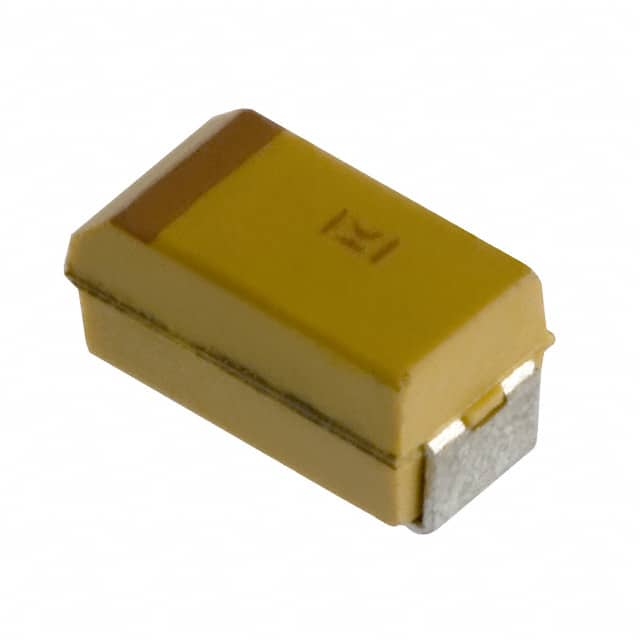
|
|
| Category | Tantalum Capacitors | Tantalum - Polymer Capacitors |
| Manufacturer | KEMET | KEMET |
| Description | CAP TANT 3.3UF 10% 6.3V 1206 | CAP TANT POLY 100UF 3V 1411 |
| Package | Tape & Reel (TR) | Tape & Reel (TR) |
| Series | T491 | KO-CAP® T540 |
| Type | Molded | Molded |
| Features | General Purpose | High Reliability |
| Operating Temperature | -55°C ~ 125°C | -55°C ~ 125°C |
| Mounting Type | Surface Mount | Surface Mount |
| Package / Case | 1206 (3216 Metric) | 1411 (3528 Metric) |
| Tolerance | ±10% | ±20% |
| Size / Dimension | 0.126" L x 0.063" W (3.20mm x 1.60mm) | 0.138" L x 0.110" W (3.50mm x 2.80mm) |
| Voltage - Rated | 6.3 V | 3 V |
| Lead Spacing | - | - |
| Ratings | - | COTS |
| Height - Seated (Max) | 0.071\" (1.80mm) | 0.083\" (2.10mm) |
| Capacitance | 3.3 µF | 100 µF |
| ESR (Equivalent Series Resistance) | 8Ohm | 80mOhm @ 100kHz |
| Lifetime @ Temp. | 2000 Hrs @ 125°C | 2000 Hrs @ 125°C |
| Failure Rate | - | - |
| Manufacturer Size Code | A | B |
-
1. Why are tantalum capacitors so expensive?
Tantalum ore resources are scarce and the mining cost is high.
The manufacturing process is complex and the yield is relatively low.
It has excellent electrical characteristics, making it indispensable in high-end applications. -
2. Can I use ceramic capacitors instead of tantalum capacitors?
It depends on the specific situation. If the size, ESR requirements are not high and a specific capacitance value is not required, you can consider replacing it.
But be aware that there are differences in physical properties between the two, and direct replacement may affect the working state of the circuit. -
3. Is tantalum better than tungsten?
It depends on the application. For capacitors, tantalum is preferred due to its unique properties; while in some other industrial uses, such as making filaments, tungsten is preferred.
-
4. What special precautions must be taken when installing tantalum capacitors?
Ensure the correct polarity connection.
Be careful not to exceed the rated voltage.
Use appropriate fuses or other protective devices to prevent overcurrent.
Consider heat dissipation design to avoid local overheating.
