
T540D227K006CH8505 vs T540D337K006CH8510
| Part Number |
|
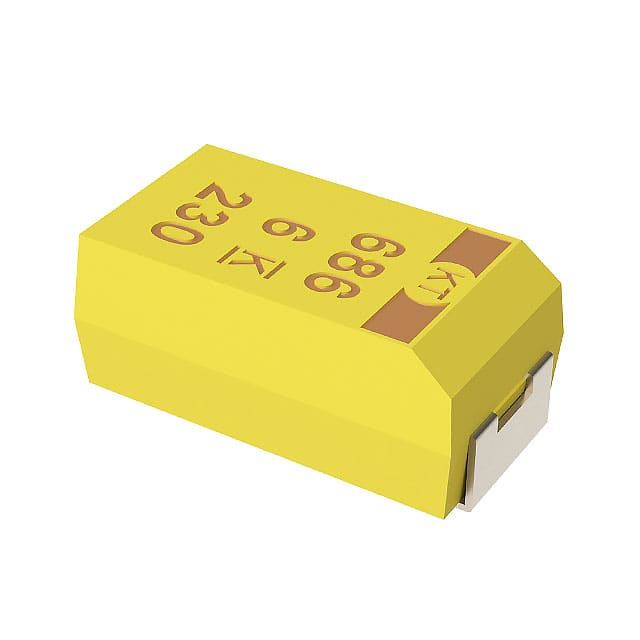
|
| Category | Tantalum - Polymer Capacitors | Tantalum - Polymer Capacitors |
| Manufacturer | KEMET | KEMET |
| Description | CAP TANT POLY 220UF 6.3V 2917 | CAP TANT POLY 330UF 6.3V 2917 |
| Package | Tape & Reel (TR) | Tape & Reel (TR) |
| Series | KO-CAP® T540 | KO-CAP® T540 |
| Type | Molded | Molded |
| Features | High Reliability | High Reliability |
| Operating Temperature | -55°C ~ 125°C | -55°C ~ 125°C |
| Mounting Type | Surface Mount | Surface Mount |
| Package / Case | 2917 (7343 Metric) | 2917 (7343 Metric) |
| Tolerance | ±10% | ±10% |
| Size / Dimension | 0.287" L x 0.169" W (7.30mm x 4.30mm) | 0.287" L x 0.169" W (7.30mm x 4.30mm) |
| Voltage - Rated | 6.3 V | 6.3 V |
| Lead Spacing | - | - |
| Ratings | COTS | COTS |
| Height - Seated (Max) | 0.122\" (3.10mm) | 0.122\" (3.10mm) |
| Capacitance | 220 µF | 330 µF |
| ESR (Equivalent Series Resistance) | 40mOhm @ 100kHz | 40mOhm @ 100kHz |
| Lifetime @ Temp. | 2000 Hrs @ 125°C | 2000 Hrs @ 125°C |
| Manufacturer Size Code | D | D |
-
1. What is the difference between regular capacitors and tantalum polymer capacitors?
Construction: Regular capacitors can be non-polar (such as ceramic capacitors) or polar (such as aluminum electrolytic capacitors). Tantalum polymer capacitors are always polar and use a solid conductive polymer as the electrolyte.
Performance: Tantalum polymer capacitors generally have lower ESR, better frequency characteristics, and higher stability.
Applications: Due to their high performance characteristics, tantalum polymer capacitors are often used in electronic devices with high performance requirements. -
2. Will tantalum polymer capacitors deteriorate?
All types of capacitors will experience a certain degree of aging over time. For tantalum polymer capacitors, although the aging rate is relatively slow, they may still experience problems such as capacity loss after long-term use. In addition, improper storage conditions or excessive operating temperatures can also accelerate this process.
-
3. How do you know that a capacitor is tantalum polymer?
Appearance markings: Usually the word "Polymer" is marked, along with the capacitance value, operating voltage, and positive and negative pole identification.
Packaging information: Check the
Technical specifications or data sheet on the product packaging. -
4. What is the difference between aluminum and tantalum capacitors?
Material: Aluminum capacitors use aluminum foil as the electrode material; tantalum capacitors use tantalum metal.
Performance: Tantalum capacitors generally have better high temperature performance, higher capacitance density per unit volume, and lower ESR.
Price: In general, tantalum capacitors cost more than aluminum capacitors.
