
T540D337K006CH8510 vs T491A155K010AT
| Part Number |
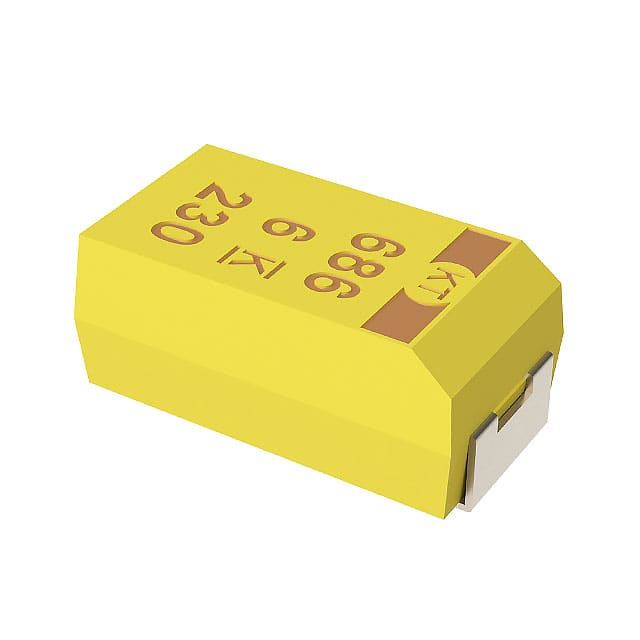
|
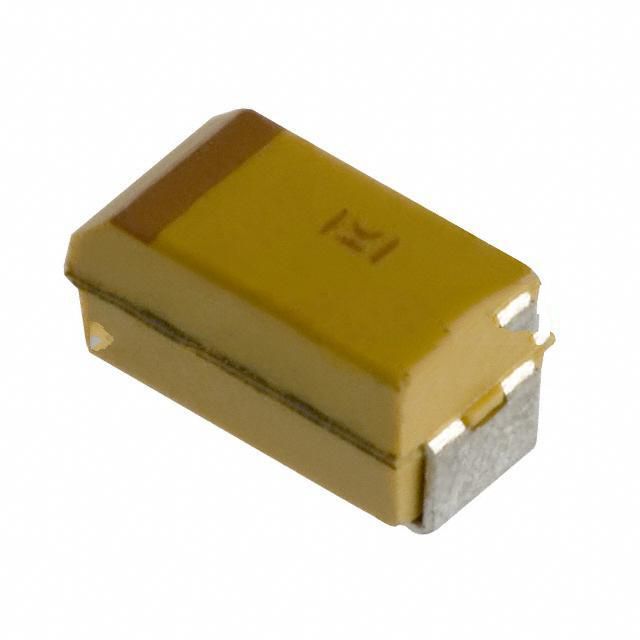
|
| Category | Tantalum - Polymer Capacitors | Tantalum Capacitors |
| Manufacturer | KEMET | KEMET |
| Description | CAP TANT POLY 330UF 6.3V 2917 | CAP TANT 1.5UF 10% 10V 1206 |
| Package | Tape & Reel (TR) | Tape & Reel (TR) |
| Series | KO-CAP® T540 | T491 |
| Type | Molded | Molded |
| Features | High Reliability | General Purpose |
| Operating Temperature | -55°C ~ 125°C | -55°C ~ 125°C |
| Mounting Type | Surface Mount | Surface Mount |
| Package / Case | 2917 (7343 Metric) | 1206 (3216 Metric) |
| Tolerance | ±10% | ±10% |
| Size / Dimension | 0.287" L x 0.169" W (7.30mm x 4.30mm) | 0.126" L x 0.063" W (3.20mm x 1.60mm) |
| Voltage - Rated | 6.3 V | 10 V |
| Lead Spacing | - | - |
| Ratings | COTS | - |
| Height - Seated (Max) | 0.122\" (3.10mm) | 0.071\" (1.80mm) |
| Capacitance | 330 µF | 1.5 µF |
| ESR (Equivalent Series Resistance) | 40mOhm @ 100kHz | 8Ohm |
| Lifetime @ Temp. | 2000 Hrs @ 125°C | 2000 Hrs @ 125°C |
| Manufacturer Size Code | D | A |
| Failure Rate | - | - |
-
1. What is special about tantalum polymer capacitors?
Low ESR (equivalent series resistance): They are suitable for use in circuits that require fast response.
Long life: There is no liquid electrolyte, so it will not dry out and has a longer service life.
High reliability: They perform well in long-term operation.
Self-healing ability: When a local short circuit occurs, the polymer can reform the insulating layer to prevent further damage.
Volumetric efficiency: They have a high capacitance density and can provide large capacitance values in a smaller package. -
2. What is the difference between regular capacitors and tantalum polymer capacitors?
Construction: Regular capacitors can be non-polar (such as ceramic capacitors) or polar (such as aluminum electrolytic capacitors). Tantalum polymer capacitors are always polar and use a solid conductive polymer as the electrolyte.
Performance: Tantalum polymer capacitors generally have lower ESR, better frequency characteristics, and higher stability.
Applications: Due to their high performance characteristics, tantalum polymer capacitors are often used in electronic devices with high performance requirements. -
3. What are the alternatives to tantalum polymer capacitors?
Aluminum electrolytic capacitors: For applications that do not require extremely high stability and low ESR.
Solid aluminum capacitors: Provide performance between traditional aluminum electrolytic capacitors and tantalum polymer capacitors.
Other solid capacitors: Choose the right alternative based on your specific needs. -
4. What is the difference between wet and dry tantalum capacitors?
Wet: An early type of tantalum capacitor that contains a liquid electrolyte, which is less common now.
Dry: A modern version that uses a solid electrolyte (such as manganese dioxide or conductive polymer) for better stability and safety.
