
TLV2186IDSGT vs HA3-2850-5
| Part Number |

|
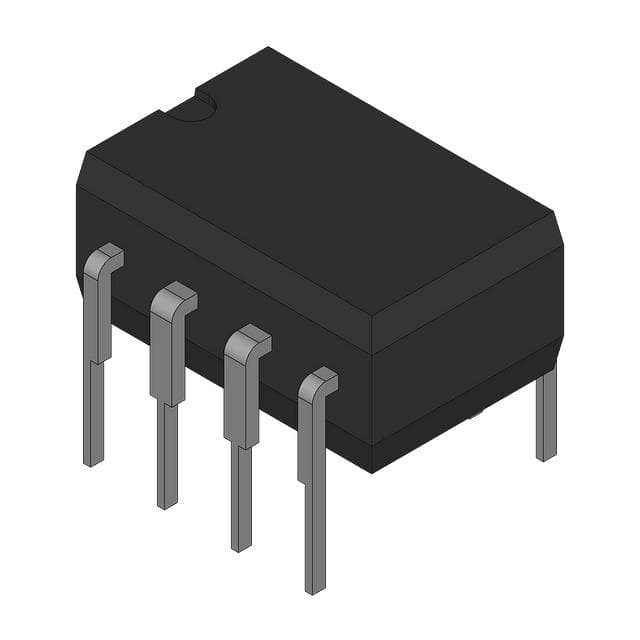
|
| Category | Linear - Amplifiers - Instrumentation, OP Amps, Buffer Amps | Linear - Amplifiers - Instrumentation, OP Amps, Buffer Amps |
| Manufacturer | Texas Instruments | Harris Corporation |
| Description | LOW POWER, RAIL-TO-RAIL INPUT AN | IC GP OPAMP 1 CIRCUIT 8DIP |
| Package | Cut Tape (CT) | Bulk |
| Series | Zero-Drift | - |
| Operating Temperature | -40°C ~ 125°C (TA) | 0°C ~ 70°C |
| Mounting Type | Surface Mount | Through Hole |
| Package / Case | 8-WFDFN Exposed Pad | 8-DIP (0.300\", 7.62mm) |
| Supplier Device Package | 8-WSON (2x2) | 8-PDIP |
| Current - Supply | 90µA | - |
| Output Type | Rail-to-Rail | - |
| Number of Circuits | 2 | 1 |
| Voltage - Supply, Single/Dual (±) | 4.5V ~ 24V, ±2.25V ~ 12V | - |
| Current - Output / Channel | 20 mA | - |
| -3db Bandwidth | - | - |
| Amplifier Type | Zero-Drift | General Purpose |
| Current - Input Bias | 100 pA | - |
| Voltage - Input Offset | 10 µV | - |
| Slew Rate | 0.35V/µs | 340V/µs |
| Gain Bandwidth Product | 750 kHz | 470 MHz |
-
1. What is an operational amplifier and how does it work?
An operational amplifier (Op Amp) is a high-gain voltage amplifier with differential input and single-ended output, which is commonly used for analog signal processing functions such as amplification, filtering, integration, and differentiation.
-
2. What is the effect of the op amp's out-of-range voltage on accuracy?
An out-of-phase voltage is the difference in voltage at which the output is not zero when the signal at the input is zero. A large out-of-phase voltage reduces the accuracy of a system, especially in high-gain applications, and selecting an op amp with a low out-of-phase voltage can improve accuracy.
-
3. What is Slew Rate and how does it affect op amp performance?
Slew rate is the maximum rate of change of an operational amplifier's output voltage over time. Higher slew rates are good for fast-changing signals and can handle higher frequency inputs, while lower slew rates can cause signal distortion.
-
4. Why do buffer amplifiers have high input impedance and low output impedance?
A high input impedance ensures that no load is applied to the preamplifier circuitry, preventing signal degradation, while a low output impedance provides a large driving capacity, ensuring that the signal can be passed on to subsequent circuits without loss.
