
TLV2186IDSGT vs INA185A3IDRLT
| Part Number |

|
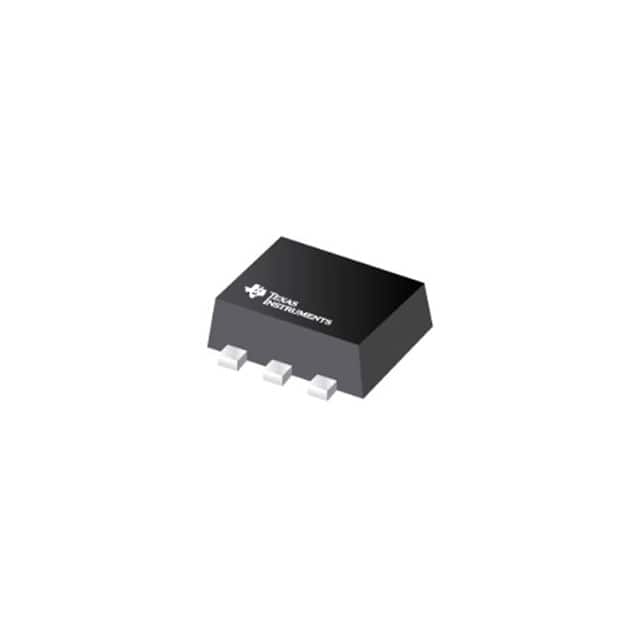
|
| Category | Linear - Amplifiers - Instrumentation, OP Amps, Buffer Amps | Linear - Amplifiers - Instrumentation, OP Amps, Buffer Amps |
| Manufacturer | Texas Instruments | Texas Instruments |
| Description | LOW POWER, RAIL-TO-RAIL INPUT AN | IC CURR SENSE 1 CIRCUIT SOT563 |
| Package | Cut Tape (CT) | Tape & Reel (TR) |
| Series | Zero-Drift | - |
| Operating Temperature | -40°C ~ 125°C (TA) | -40°C ~ 125°C (TA) |
| Mounting Type | Surface Mount | Surface Mount |
| Package / Case | 8-WFDFN Exposed Pad | SOT-563, SOT-666 |
| Supplier Device Package | 8-WSON (2x2) | SOT-563 |
| Current - Supply | 90µA | 200µA |
| Output Type | Rail-to-Rail | Rail-to-Rail |
| Number of Circuits | 2 | 1 |
| Voltage - Supply, Single/Dual (±) | 4.5V ~ 24V, ±2.25V ~ 12V | 2.7V ~ 5.5V |
| Current - Output / Channel | 20 mA | - |
| -3db Bandwidth | - | - |
| Amplifier Type | Zero-Drift | Current Sense |
| Current - Input Bias | 100 pA | 75 µA |
| Voltage - Input Offset | 10 µV | 25 µV |
| Slew Rate | 0.35V/µs | 2V/µs |
| Gain Bandwidth Product | 750 kHz | 150 kHz |
-
1. What is an instrumentation amplifier and what is it mainly used for?
An instrumentation amplifier is a high-precision amplifier designed to amplify low-level differential signals with high input impedance and high common mode rejection ratio (CMRR), and is commonly used in scenarios such as medical equipment, sensor signal processing, and industrial measurements.
-
2. How is the noise performance of instrumentation amplifiers optimized?
Select low-noise amplifiers in your design and use shielding, filters, and precise power management to minimize external noise. High-quality resistors should be used wherever possible and PCB layout should be optimized to reduce noise coupling.
-
3. What is a gain adjustable instrumentation amplifier?
Gain-adjustable instrumentation amplifiers allow the gain to be adjusted by external resistors or digital controls to accommodate the dynamic range of different signal sources. These amplifiers are commonly used in a variety of sensor systems.
-
4. What is the effect of the op amp's out-of-range voltage on accuracy?
An out-of-phase voltage is the difference in voltage at which the output is not zero when the signal at the input is zero. A large out-of-phase voltage reduces the accuracy of a system, especially in high-gain applications, and selecting an op amp with a low out-of-phase voltage can improve accuracy.
