
TZQ5244B-GS18 vs TZQ5239B-GS18
| Part Number |
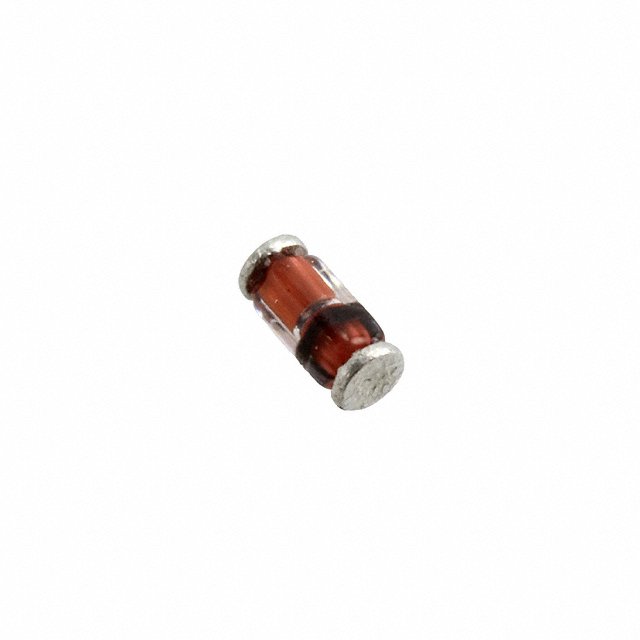
|
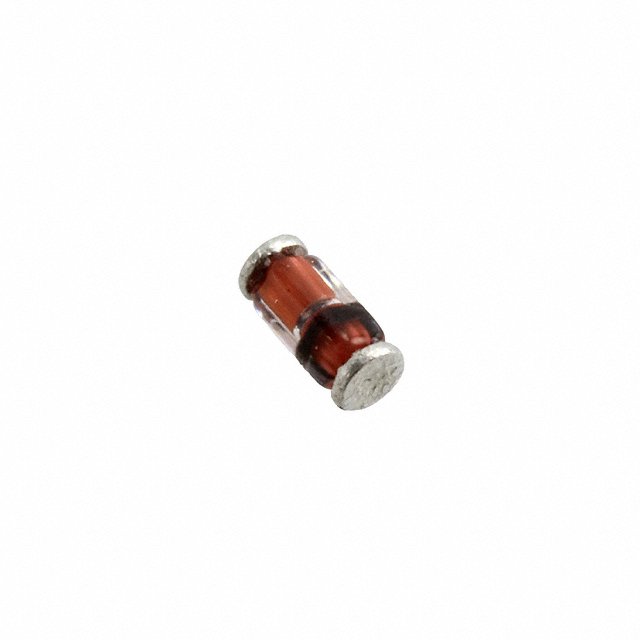
|
| Category | Diodes - Zener - Single | Diodes - Zener - Single |
| Manufacturer | Vishay Semiconductor - Diodes Division | Vishay Semiconductor - Diodes Division |
| Description | DIODE ZENER 14V 500MW SOD80 | DIODE ZENER 9.1V 500MW SOD80 |
| Package | Tape & Reel (TR) | Tape & Reel (TR) |
| Series | Automotive, AEC-Q101 | Automotive, AEC-Q101 |
| Operating Temperature | -65°C ~ 175°C | -65°C ~ 175°C |
| Mounting Type | Surface Mount | Surface Mount |
| Package / Case | SOD-80 Variant | SOD-80 Variant |
| Supplier Device Package | SOD-80 QuadroMELF | SOD-80 QuadroMELF |
| Tolerance | ±5% | ±5% |
| Power - Max | 500 mW | 500 mW |
| Voltage - Forward (Vf) (Max) @ If | 1.5 V @ 200 mA | 1.5 V @ 200 mA |
| Current - Reverse Leakage @ Vr | 100 nA @ 10 V | 3 µA @ 7 V |
| Voltage - Zener (Nom) (Vz) | 14 V | 9.1 V |
| Impedance (Max) (Zzt) | 15 Ohms | 10 Ohms |
-
1. Are Zener diodes unidirectional?
In normal operation mode, Zener diodes do exhibit unidirectional conductivity, but they start conducting when reverse biased to their Zener voltage.
-
2. What is the difference between a Zener diode and a Schottky diode?
Schottky diodes have a low forward voltage drop and fast switching speed, making them suitable for high-frequency applications. In contrast, Zener diodes are mainly used for voltage regulation and voltage stabilization.
-
3. How to tell if a diode is a Zener diode?
You can tell by looking at its symbol (which is slightly different from ordinary diodes), the description in the data sheet, or by testing its reverse characteristic curve. Using a multimeter, you can also measure its forward and reverse resistance values and the voltage drop under specific conditions.
-
4. What are the special uses of Zener diodes?
Special uses include precision voltage references, overvoltage protection circuits, etc.
