
TZQ5244B-GS18 vs TZQ5247B-GS18
| Part Number |
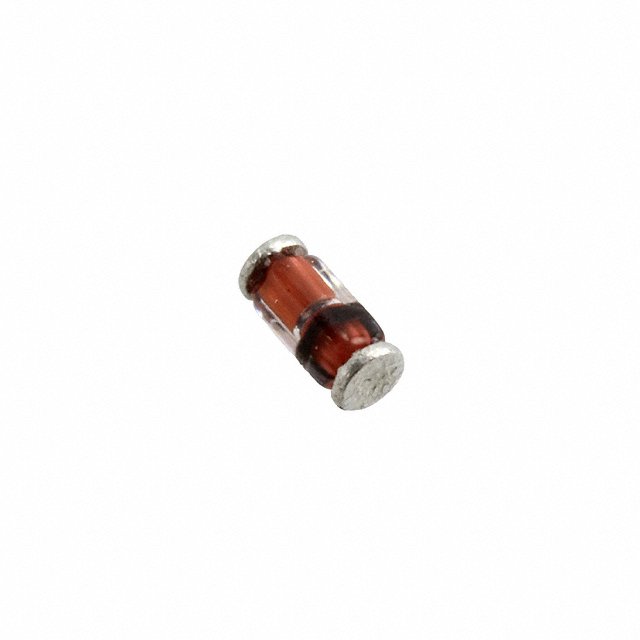
|
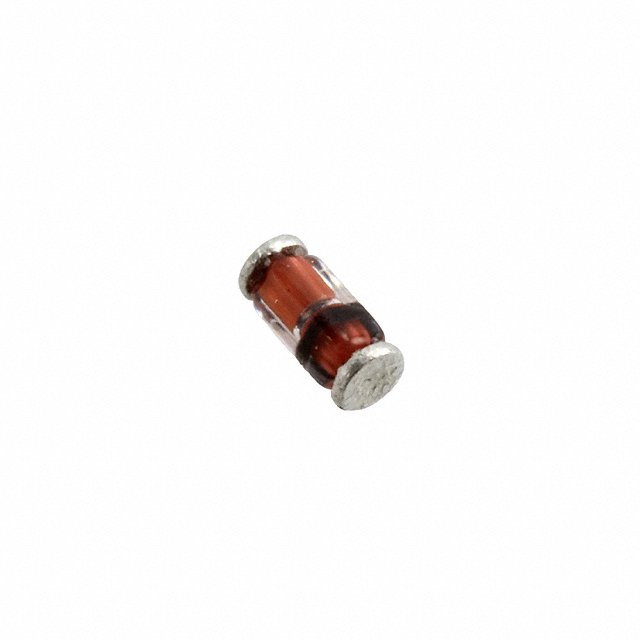
|
| Category | Diodes - Zener - Single | Diodes - Zener - Single |
| Manufacturer | Vishay Semiconductor - Diodes Division | Vishay Semiconductor - Diodes Division |
| Description | DIODE ZENER 14V 500MW SOD80 | DIODE ZENER 17V 500MW SOD80 |
| Package | Tape & Reel (TR) | Tape & Reel (TR) |
| Series | Automotive, AEC-Q101 | Automotive, AEC-Q101 |
| Operating Temperature | -65°C ~ 175°C | -65°C ~ 175°C |
| Mounting Type | Surface Mount | Surface Mount |
| Package / Case | SOD-80 Variant | SOD-80 Variant |
| Supplier Device Package | SOD-80 QuadroMELF | SOD-80 QuadroMELF |
| Tolerance | ±5% | ±5% |
| Power - Max | 500 mW | 500 mW |
| Voltage - Forward (Vf) (Max) @ If | 1.5 V @ 200 mA | 1.5 V @ 200 mA |
| Current - Reverse Leakage @ Vr | 100 nA @ 10 V | 100 nA @ 13 V |
| Voltage - Zener (Nom) (Vz) | 14 V | 17 V |
| Impedance (Max) (Zzt) | 15 Ohms | 19 Ohms |
-
1. What are the two types of Zener diodes?
Zener diodes are mainly divided into two types: one that works based on the avalanche effect (usually in high voltage applications) and the other that works based on the Zener breakdown mechanism (suitable for lower voltages).
-
2. What is the difference between a diode and a Zener diode?
While a normal diode is mainly used for unidirectional current flow, a Zener diode is designed to provide a stable voltage reference point when reverse biased. A normal diode conducts when forward biased and does not conduct or has only a small leakage current when reverse biased; a Zener diode can start conducting after reaching a specific reverse voltage (called the Zener voltage).
-
3. How to tell if a diode is a Zener diode?
You can tell by looking at its symbol (which is slightly different from ordinary diodes), the description in the data sheet, or by testing its reverse characteristic curve. Using a multimeter, you can also measure its forward and reverse resistance values and the voltage drop under specific conditions.
-
4. What are the disadvantages of Zener diodes?
Disadvantages include relatively high power consumption, sensitivity to temperature, and the need for proper heat dissipation.
