
UH10FT-E3/4W vs FMX-G16S
| Part Number |
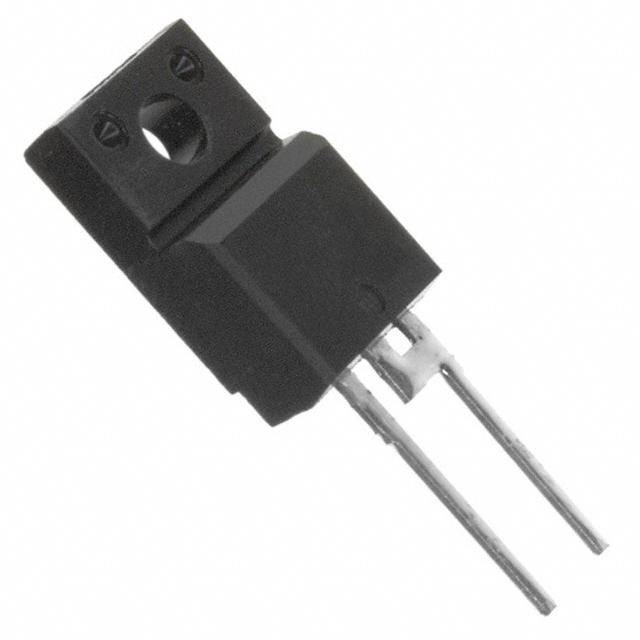
|

|
| Category | Diodes - Rectifiers - Single | Diodes - Rectifiers - Single |
| Manufacturer | Vishay Semiconductor - Diodes Division | Sanken |
| Description | DIODE GEN PURP 300V 10A TO220AC | DIODE GEN PURP 600V 5A TO220F-2L |
| Package | Cut Tape (CT) | Tape & Reel (TR) |
| Series | - | - |
| Mounting Type | Through Hole | Through Hole |
| Package / Case | TO-220-2 | TO-220-2 Full Pack |
| Supplier Device Package | TO-220AC | TO-220F-2L |
| Diode Type | Standard | Standard |
| Current - Average Rectified (Io) | 10A | 5A |
| Voltage - Forward (Vf) (Max) @ If | 1.2 V @ 10 A | 1.5 V @ 5 A |
| Current - Reverse Leakage @ Vr | 5 µA @ 300 V | 50 µA @ 600 V |
| Capacitance @ Vr, F | - | - |
| Voltage - DC Reverse (Vr) (Max) | 300 V | 600 V |
| Speed | Fast Recovery =< 500ns, > 200mA (Io) | Fast Recovery =< 500ns, > 200mA (Io) |
| Reverse Recovery Time (trr) | 35 ns | 30 ns |
| Operating Temperature - Junction | -55°C ~ 175°C | -40°C ~ 150°C |
-
1. What is a single rectifier diode?
A single rectifier diode is an electronic component used to convert alternating current (AC) to direct current (DC), typically used in power supplies, chargers, and other circuits that require DC power.
-
2. What is the working principle of a single rectifier diode?
A rectifier diode conducts current when forward biased, converting the positive half wave of alternating current into direct current. When reverse biased, the diode blocks the current, thereby preventing the negative half wave from passing through and achieving rectification effect.
-
3. What is the difference between a single rectifier diode and a bridge rectifier?
A single rectifier diode can only rectify the positive half wave of AC power (half wave rectification), while a bridge rectifier composed of four diodes can rectify the positive and negative half waves of AC power (full wave rectification), with higher efficiency and smoother output.
-
4. How to identify the polarity of a single rectifier diode?
Rectifying diodes usually have polarity markings, with the positive (anode) of the diode being "+" and the negative (cathode) being "-". On the packaging of diodes, there is usually a circular mark on the cathode side indicating the direction of the diode.
