
UH2DHE3_A/I vs UH2BHE3_A/I
| Part Number |

|
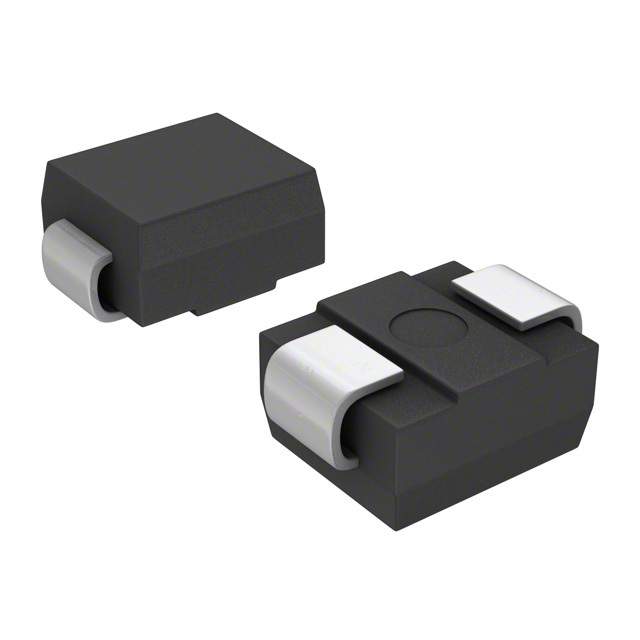
|
| Category | Diodes - Rectifiers - Single | Diodes - Rectifiers - Single |
| Manufacturer | Vishay Semiconductor - Diodes Division | Vishay Semiconductor - Diodes Division |
| Description | DIODE GEN PURP 200V 2A DO214AA | DIODE GEN PURP 100V 2A DO214AA |
| Package | Tape & Reel (TR) | Tape & Reel (TR) |
| Series | Automotive, AEC-Q101 | Automotive, AEC-Q101 |
| Mounting Type | Surface Mount | Surface Mount |
| Package / Case | DO-214AA, SMB | DO-214AA, SMB |
| Supplier Device Package | DO-214AA (SMB) | DO-214AA (SMB) |
| Diode Type | Standard | Standard |
| Current - Average Rectified (Io) | 2A | 2A |
| Voltage - Forward (Vf) (Max) @ If | 1.05 V @ 2 A | 1.05 V @ 2 A |
| Current - Reverse Leakage @ Vr | 2 µA @ 200 V | 2 µA @ 100 V |
| Capacitance @ Vr, F | 42pF @ 4V, 1MHz | 42pF @ 4V, 1MHz |
| Voltage - DC Reverse (Vr) (Max) | 200 V | 100 V |
| Speed | Fast Recovery =< 500ns, > 200mA (Io) | Fast Recovery =< 500ns, > 200mA (Io) |
| Reverse Recovery Time (trr) | 25 ns | 25 ns |
| Operating Temperature - Junction | -55°C ~ 175°C | -55°C ~ 175°C |
-
1. What is a single rectifier diode?
A single rectifier diode is an electronic component used to convert alternating current (AC) to direct current (DC), typically used in power supplies, chargers, and other circuits that require DC power.
-
2. How to choose the appropriate rectifier diode?
When making a choice, the following factors need to be considered:
Current capacity: Determine the maximum current that the diode needs to handle.
Reverse voltage: Ensure that the reverse voltage of the diode can withstand the highest voltage in the circuit.
Forward voltage drop: A lower forward voltage drop can improve circuit efficiency.
Recovery time: For high-frequency applications, choose fast recovery or Schottky diodes. -
3. What is the maximum reverse voltage (PIV) of a rectifier diode?
The Peak Inverse Voltage (PIV) is the maximum reverse voltage that a diode can withstand. When selecting a diode, the PIV must be higher than the maximum reverse voltage in the circuit, usually twice or more the input voltage.
-
4. Can a single rectifier diode be used for high-frequency applications?
Traditional silicon rectifier diodes are not suitable for high-frequency applications because their reverse recovery time is relatively long. For high-frequency applications, fast recovery diodes or Schottky diodes are typically used to reduce switching losses and improve efficiency.
