
VCP05US05 vs PBK-3-12-B
| Part Number |
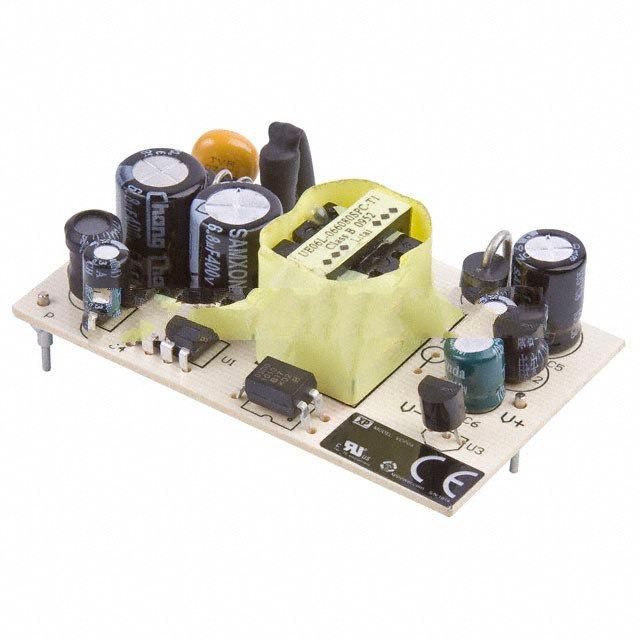
|
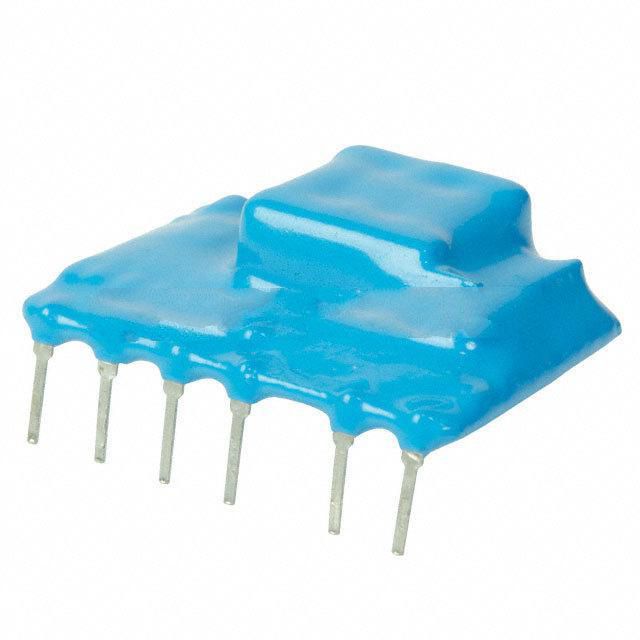
|
| Category | AC DC Converters | AC DC Converters |
| Manufacturer | XP Power | CUI Inc. |
| Description | AC/DC CONVERTER 5V 5W | AC/DC CONVERTER 12V 3W |
| Package | 5-DIP Module | 12-SIP Module, 6 Leads |
| Series | VCP | PBK-3 |
| Type | Open Frame | Enclosed |
| Features | OVP, SCP | OCP, SCP |
| Operating Temperature | 0°C ~ 70°C (With Derating) | -40°C ~ 85°C (With Derating) |
| Mounting Type | Through Hole | Through Hole |
| Package / Case | 5-DIP Module | 12-SIP Module, 6 Leads |
| Applications | ITE (Commercial) | ITE (Commercial) |
| Voltage - Input | 90 ~ 264 VAC | 85 ~ 264 VAC |
| Number of Outputs | 1 | 1 |
| Voltage - Output 1 | 5V | 12V |
| Current - Output (Max) | 1A | 250mA |
| Size / Dimension | 2.30" L x 1.40" W x 0.91" H (58.5mm x 35.5mm x 23.0mm) | 1.46" L x 0.98" W x 0.43" H (37.0mm x 25.0mm x 11.0mm) |
| Power (Watts) | 5W | 3W |
| Efficiency | 69% | 78% |
-
1. What is an AC/DC converter?
An AC/DC converter is a power conversion device that converts alternating current (AC) into direct current (DC). Its main function is to convert the alternating positive and negative current of AC into unidirectional DC current through a rectifier circuit. The rectifier circuit is usually composed of a diode, which only allows current to flow in one direction, thereby preventing reverse current and achieving AC to DC conversion.
Working Principle
The working principle of an AC/DC converter mainly includes the following steps:
Rectification: The alternating positive and negative current of AC is converted into unidirectional DC current through a diode. The diode only allows current to flow in one direction, thereby preventing reverse current.
Filtering: Since the DC current obtained by direct rectification is pulsating, the pulsating DC current needs to be smoothed into a constant DC current through a filtering circuit. The filtering circuit is usually composed of a capacitor, which smoothes the waveform through charging and discharging functions to obtain a pure DC voltage.
What is an AC to DC converter method?
The main methods of AC to DC converters include full-wave rectification and half-wave rectification. Both methods use the current forward flow characteristics of the diode for rectification. Full-wave rectification converts the negative voltage component of the input voltage into a positive voltage through a diode bridge circuit structure and then rectifies it into a DC voltage (pulse voltage), while half-wave rectification uses a diode to eliminate the negative voltage component of the input and then rectifies it into a DC voltage (pulse voltage). After that, the waveform is smoothed by the charging and discharging function of the capacitor, thereby converting it into a pure DC voltage. -
2. What is a DC to AC converter called?
A DC to AC converter is often called an inverter. An inverter is a device that converts DC power to AC power. It is mainly used to convert DC power sources such as batteries and solar panels into AC power for use in household, industrial or commercial electrical equipment.
There are many types of inverters, including stand-alone or single inverters and parallel inverters. Stand-alone inverters are usually used to convert DC power from battery packs into AC power with stable output voltage and frequency, while parallel inverters are suitable for occasions that require higher power output.
-
3. Why do you need an AC-DC converter?
The main reasons for the need for an AC-DC converter include device compatibility and power efficiency.
First of all, device compatibility is one of the important functions of an AC-DC converter. Many electronic devices, such as mobile phones, computers, chargers, etc., require stable direct current to work properly. The conversion of AC to DC can meet the power supply needs of these devices and ensure the stable operation of the equipment. In addition, many electronic devices in the car, such as control units, sensors, audio systems, etc., also require stable direct current to work properly. The conversion of AC to DC ensures the stable operation and efficient performance of automotive electronic equipment.
Secondly, power efficiency is also one of the reasons why AC-DC converters are indispensable. DC has less energy loss during energy conversion and higher transmission efficiency. Compared with AC, DC does not have transmission line loss and transformer loss, and the power factor is usually , which means higher system efficiency. Therefore, converting AC to DC can improve the utilization efficiency of power supply and reduce energy waste. -
4. What does AC/DC stand for?
AC/DC stands for Alternating Current/Direct Current, which is the abbreviation of Alternating Current/Direct Current. AC stands for alternating current and DC stands for direct current.
Basic concepts and uses of AC/DC
AC/DC power supply refers to the specification of the power supply is AC input DC output, which belongs to the classification of switching power supply. It converts AC to DC and is widely used in various electronic devices. For example, mobile phone chargers usually use AC/DC power supplies to convert household AC power into the DC power required by the device.
The difference between AC and DC
Alternating current (AC): Current whose direction changes periodically, commonly found in household circuits, such as 220V power supplies.
Direct current (DC): Current whose direction remains unchanged, commonly found in batteries (such as mobile phone lithium batteries) and some electronic devices, such as 1.5V batteries.
