
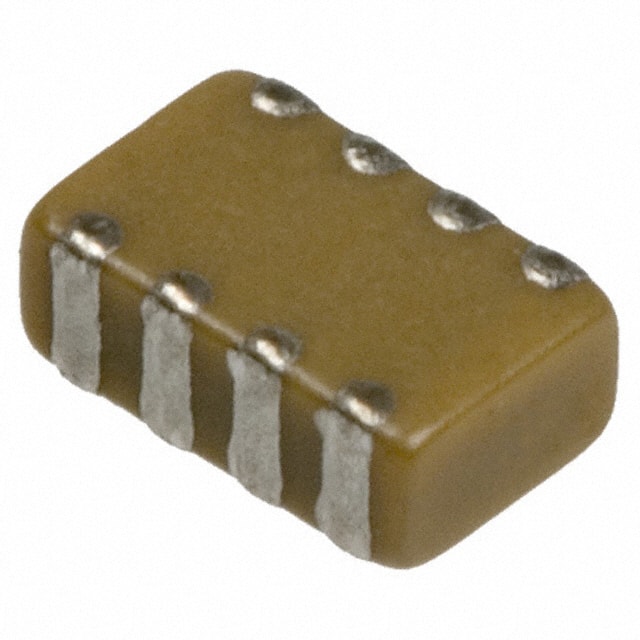
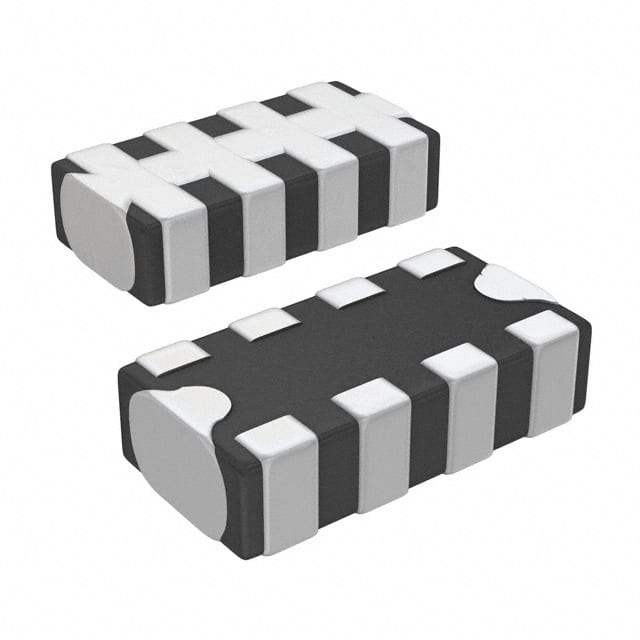
W2A45C103MAT2A vs NFA31CC221S1E4D
| Part Number |
|
|
| Category | Capacitor Networks, Arrays | Capacitor Networks, Arrays |
| Manufacturer | KYOCERA AVX | Murata Electronics |
| Description | CAP ARRAY 10000PF 50V X7R 0508 | CAP ARRAY 220PF 25V 1206 |
| Package | Tape & Reel (TR) | Tape & Reel (TR) |
| Series | IPC | EMIFIL®, NFA31 |
| Mounting Type | Surface Mount | Surface Mount |
| Package / Case | 0508 (1220 Metric) | 1206 (3216 Metric), 10 PC Pad |
| Supplier Device Package | 0508 (1220 Metric) | 1206 (3216 Metric) |
| Tolerance | ±20% | ±20% |
| Temperature Coefficient | X7R | - |
| Size / Dimension | 0.083" L x 0.051" W (2.10mm x 1.30mm) | 0.126" L x 0.063" W (3.20mm x 1.60mm) |
| Voltage - Rated | 50 V | 25 V |
| Ratings | - | - |
| Height - Seated (Max) | 0.037\" (0.95mm) | 0.039\" (1.00mm) |
| Capacitance | 10000pF | 220pF |
| Dielectric Material | Ceramic | - |
| Number of Capacitors | 4 | 4 |
| Circuit Type | Isolated | Bussed |
-
1. What is a capacitor array?
A capacitor array is a structure that packages multiple capacitor devices on a chip at the same time. Compared with a single capacitor, a capacitor array has the following characteristics and advantages:
Versatility: Capacitor arrays can achieve multiple capacitance values through different combinations to adapt to different circuit design requirements. This makes it particularly useful in circuit designs that require multiple capacitance values, such as clocks, data signals, power management, etc.
Miniaturization: Capacitor arrays have a smaller package size, which can achieve higher integration and more compact layouts. This is very important for applications that need to save space.
High reliability: Since multiple capacitor devices work at the same time, capacitor arrays generally have higher reliability and longer service life.
High performance: In systems with strict requirements for high-speed transmission and anti-interference capabilities, such as DDR4, HDMI, MIPI and other systems, capacitor arrays perform better. -
2. What is a capacitor network?
A capacitor network is a circuit system composed of multiple capacitor elements connected in series, parallel or mixed. Capacitor networks play an important role in electronic circuits, such as storing charge, filtering, and coupling.
Basic concepts and composition of capacitor networks
A capacitor network consists of one or more capacitor elements that can be connected to each other in series, parallel or mixed connection. The equivalent capacitance value of a series capacitor is less than the value of a single capacitor, while the equivalent capacitance value of a parallel capacitor is equal to the sum of the individual capacitance values. -
3. What are the three different types of capacitors?
The three different types of capacitors are fixed capacitors, variable capacitors and electrolytic capacitors.
Fixed capacitors: The capacitance of fixed capacitors is fixed and cannot be adjusted. Their basic structure is two conductive plates that are very close to each other, separated by an insulating medium such as air, paper or ceramic.
Variable capacitors: Variable capacitors can adjust their capacity manually. This type of capacitor is often used in circuits that require frequent adjustment of the capacitance value, such as tuning circuits for radios and televisions.
Electrolytic capacitors: Electrolytic capacitors are capacitors that use electrolytes as dielectrics. They usually have larger capacitance values and lower costs, and are widely used in circuits such as power supply filtering, coupling and decoupling.
In addition, capacitors can be classified in other ways, such as by electrolyte (organic dielectric capacitors, inorganic dielectric capacitors, electrolytic capacitors, etc.) or by different manufacturing materials (ceramic capacitors, polyester capacitors, tantalum capacitors, etc.).
-
4. What is a capacitor array?
A capacitor array refers to a structure in which multiple capacitor devices are packaged on a chip at the same time. Compared with a single capacitor, a capacitor array has the following characteristics and advantages:
Versatility: Capacitor arrays can achieve multiple capacitance values through different combinations to adapt to different circuit design requirements. This makes it particularly useful in circuit designs that require multiple capacitance values, such as clocks, data signals, power management, etc.
Miniaturization: Capacitor arrays have a smaller package size, which can achieve higher integration and more compact layout. This is very important for applications that need to save space.
High reliability: Since multiple capacitor devices work at the same time, capacitor arrays generally have higher reliability and longer service life.
High performance: In systems with strict requirements for high-speed transmission and anti-interference capabilities, such as DDR4, HDMI, MIPI, etc., capacitor arrays perform better.
