
W58-124-901991S vs 1261E504L
| Part Number |
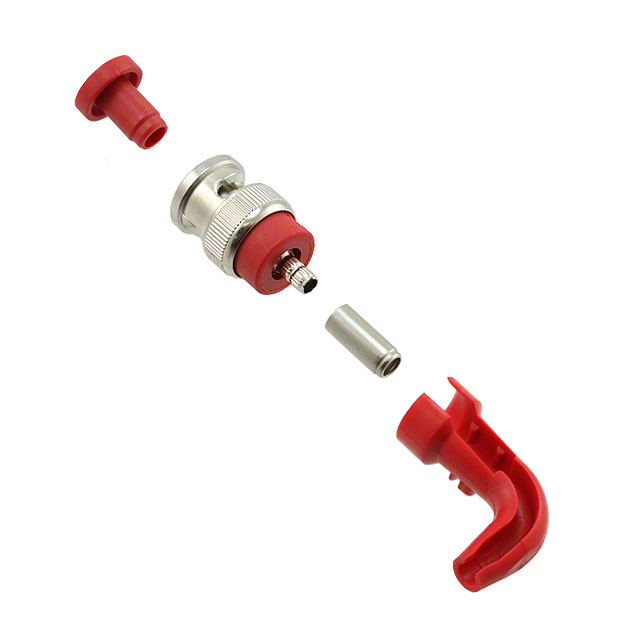
|
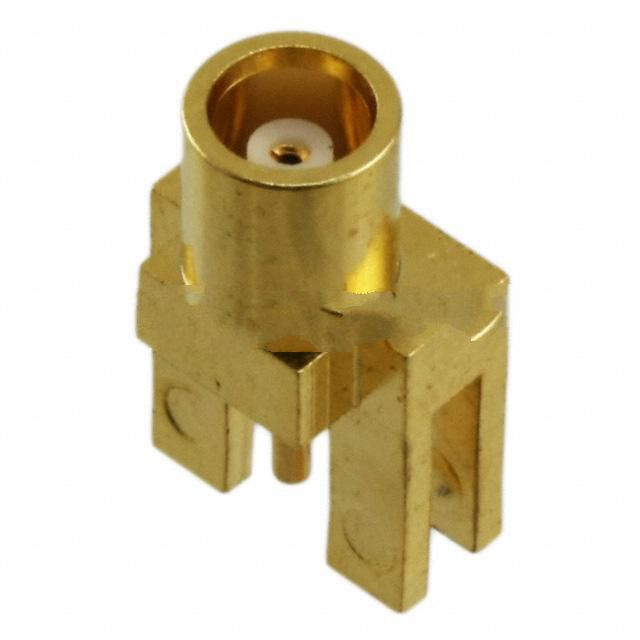
|
| Category | Coaxial Connectors (RF) | Coaxial Connectors (RF) |
| Manufacturer | ITT Cannon, LLC | Winchester Electronics |
| Description | CONN BNC PLUG R/A 75 OHM CRIMP | CONN MCX JACK STR 50OHM EDGE MNT |
| Package | - | - |
| Series | QT | E-Snap? |
| Mounting Type | Free Hanging (In-Line), Right Angle | Board Edge, End Launch |
| Frequency - Max | 2GHz | 6GHz |
| Impedance | 75 Ohm | 50 Ohm |
| Connector Type | Plug, Male Pin | Jack, Female Socket |
| Contact Termination | Crimp | Solder |
| Connector Style | BNC | MCX |
| Fastening Type | Bayonet Lock | Snap-On |
| Housing Color | Silver | Gold |
| Shield Termination | Crimp | Solder |
| Number of Ports | 1 | - |
| Cable Group | 735A | - |
-
1. What is a coaxial connector?
Device for connecting coaxial cables
A coaxial connector is a device used to connect coaxial cables or other electronic devices, primarily used in radio frequency (RF) and microwave communications systems. It effectively reduces signal loss and provides good shielding to prevent electromagnetic interference (EMI).
Basic structure and working principle
The basic structure of a coaxial connector includes an inner conductor, an insulator, an outer conductor and a shield. The inner conductor is usually needle-shaped or hole-shaped, the insulator isolates the inner and outer conductors, and the outer conductor and shielding layer provide electromagnetic shielding to prevent signal interference. -
2. What is coaxial cable in electrical?
Coaxial cable is a transmission medium consisting of an inner conductor, an insulation layer, an outer conductor and a sheath. The inner conductor is usually one or more copper wires, and the outer conductor is composed of a metal braid or metal foil, both located on the same axis. This structure enables coaxial cables to have lower losses and higher anti-interference capabilities when transmitting high-frequency signals.
Coaxial cable structure and characteristics
The structure of coaxial cable includes the following parts:
Inner conductor: usually consists of a single or multiple copper wires.
Insulating layer: Located outside the inner conductor, it acts as an isolation and dielectric.
Outer conductor: usually constructed of metal braid or metal foil to form a shield.
Jacket: The outer layer that protects a cable, usually made of PVC or Teflon material. -
3. Are coaxial connectors the same as RCA?
There are significant differences in appearance and purpose between coaxial connectors and RCA connectors.
Coaxial connector is a common connector used in electronic equipment and communication systems. It is mainly used to connect coaxial cables to equipment or other circuits. It has good shielding performance and low loss characteristics, and is widely used in wireless communications, television, radio, radar and other fields.
The RCA connector is an audio interface, usually used for the transmission of analog signals. There are two types of RCA interfaces: one is the RCA coaxial interface, which looks the same as the analog RCA interface, and the other is the BNC coaxial interface, which looks similar to the common signal interface on a TV and has a locking design. The impedance of RCA coaxial cable is 75 ohms. Although the appearance is the same as the analog RCA interface, mixed use will cause unstable sound transmission and affect the sound quality.
Coaxial connectors and RCA connectors also differ in application scenarios and transmission characteristics.
Coaxial cables are suitable for high-frequency signal transmission, such as television, Internet, and wireless communications, while RCA cables are suitable for low-frequency signal transmission, such as audio and standard-definition video3. In addition, the coaxial transmission impedance is constant and the transmission bandwidth is high, which can ensure the quality of the audio. However, the impedance of the RCA coaxial cable is also 75 ohms, and mixed use will lead to a decrease in sound quality.
-
4. What is a coaxial plug used for?
The main uses of coaxial plugs include the following aspects:
Signal transmission: Coaxial plugs are used to connect both ends of coaxial cables to ensure that electrical signals can be transmitted stably between cables. It provides a stable and reliable connection, ensuring that signals can be transmitted efficiently from one device to another.
Shielding protection: When connecting to a coaxial cable, the coaxial plug can provide good shielding protection to prevent interference from external interference signals. This can reduce signal attenuation and distortion and improve the quality and reliability of signal transmission.
Connecting devices: Coaxial plugs can connect different types of devices such as televisions, modems, antennas, etc. It provides a standardized interface that enables various devices to connect and communicate easily.
Maintenance and replacement: Coaxial plugs are easy to install and replace, making maintenance and replacement of coaxial cables simple and convenient. When a coaxial cable needs to be replaced or repaired, only the connector needs to be replaced rather than the entire cable.
Application in avionics equipment: Coaxial plugs play an important role in avionics equipment and are used to connect various sensors, controllers, displays, computers and other equipment to achieve signal transmission and electrical connection between equipment. It can provide stable signal transmission and good anti-interference performance to ensure the normal operation of the equipment.
Application in communication systems: In aviation communication systems, coaxial plugs are used to connect antennas and transceivers to realize the transmission and reception of wireless signals. It can provide high-frequency transmission capabilities and good signal quality to ensure stable and reliable communication.
