
WM0011ECS/R vs ADAU1401AWBSTZ-RL
| Part Number |
|
|
| Category | Embedded - DSP (Digital Signal Processors) | Embedded - DSP (Digital Signal Processors) |
| Manufacturer | Cirrus Logic Inc. | Analog Devices Inc. |
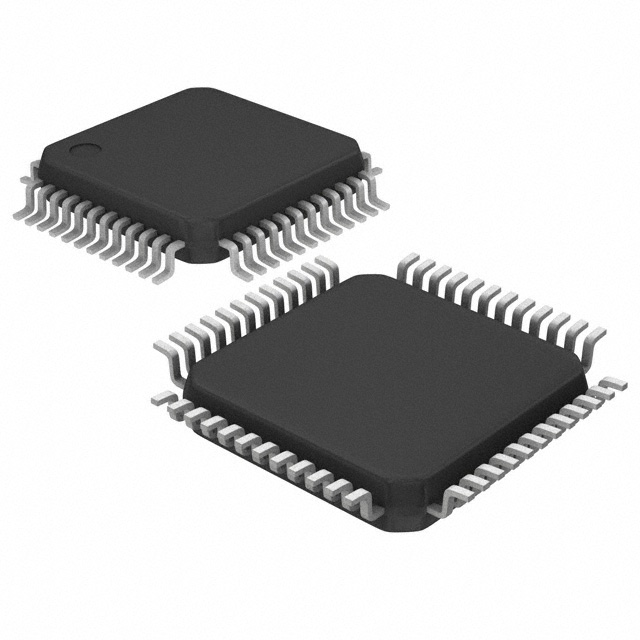
| Description | IC CODEC STEREO MULTI-CH 80BGA | IC AUDIO PROC 28/56BIT 48LQFP |
| Package | Tray | Tape & Reel (TR) |
| Series | - | Automotive, SigmaDSP® |
| Type | Floating Point | Sigma |
| Interface | AIF, I²C, I2S, SPI, TDM, UART | I²C, SPI |
| Operating Temperature | -40°C ~ 85°C (TA) | -40°C ~ 105°C (TA) |
| Mounting Type | Surface Mount | Surface Mount |
| Package / Case | 49-WFBGA, WLCSP | 48-LQFP |
| Supplier Device Package | - | 48-LQFP (7x7) |
| Clock Rate | 260MHz | 50MHz |
| Non-Volatile Memory | Boot ROM (32kB) | - |
| On-Chip RAM | 676 kB | 12kB |
| Voltage - I/O | 1.80V | 3.30V |
| Voltage - Core | 1.20V | 1.80V |
-
1. What is embedded DSP?
Embedded Digital Signal Processor (EDSP) is a processor specially used for signal processing. It has been specially designed in terms of system structure and instruction algorithm, and has high compilation efficiency and instruction execution speed. Embedded DSP processors are good at high-speed implementation of various digital signal processing operations, such as digital filtering, spectrum analysis, etc.
Embedded DSP processors have been specially designed for system structure and instructions, making them suitable for executing digital signal processing algorithms, with high compilation efficiency and high instruction execution speed. This special design includes the optimization of DSP hardware structure and instructions, so that it can efficiently handle complex signal processing tasks. -
2. What are the two types of DSP?
DSP (digital signal processor) is mainly divided into two types: fixed-point DSP and floating-point DSP. The main difference between fixed-point DSP and floating-point DSP is that they process data in different ways and formats.
Fixed-point DSP uses fixed-point number format for calculation. This format directly stores data and exponents in integer form in memory, eliminating multiplication and division operations in floating-point operations, thereby increasing the calculation speed. Fixed-point DSP chips are relatively low in price and power consumption, but the calculation accuracy is relatively low.
Floating-point DSP uses floating-point format for calculations. This format can represent large or small numbers, with high calculation accuracy, and is suitable for occasions that require high-precision calculations. However, floating-point DSP chips are expensive and consume a lot of power. -
3. What is built-in DSP?
Built-in DSP is a technology that combines digital signal processing (DSP) functions with power amplifiers. It not only has the power amplification function of traditional amplifiers, but also accurately processes and adjusts audio signals through DSP chips to provide a higher quality music experience.
The core advantage of built-in DSP lies in its powerful audio processing capabilities. Through DSP technology, audio signals can be optimized and managed to achieve active frequency division, delay processing, EQ debugging and other functions, thereby improving the performance of the audio system and making the sound clearer and more pleasant to listen to.In addition, DSP amplifiers also support parameter adjustment through computers, mobile phones and other devices, providing more flexible audio management solutions. -
4. What is DSP in microcontrollers?
DSP (Digital Signal Processor) is a microprocessor specifically used to process digital signals. It is different from the traditional CPU (Central Processing Unit). DSP is mainly used in occasions that require a large number of floating-point operations, such as communications, audio processing, image processing and other fields.
The working principle of DSP is to convert the received analog signal into a digital signal, and then process and analyze these digital signals. DSP chip adopts Harvard structure, that is, the program and data are stored separately, and has a dedicated hardware multiplier, which can quickly implement various digital signal processing algorithms.
