
ZL30263LDF1 vs AD9516-5BCPZ-REEL7
| Part Number |
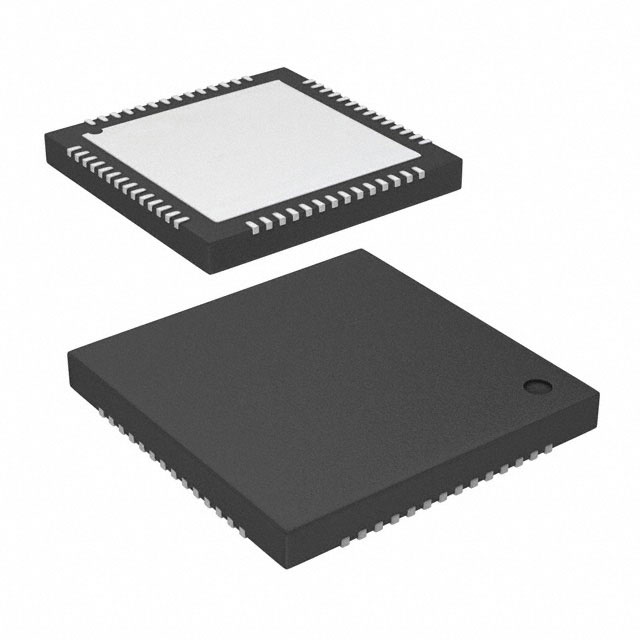
|
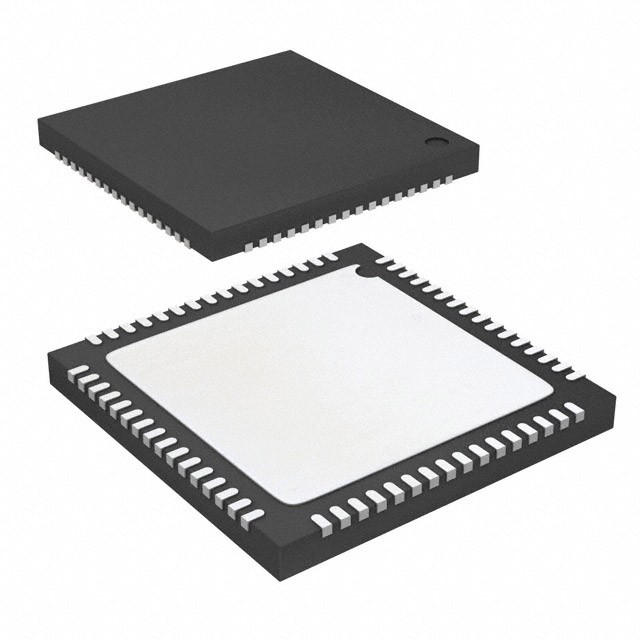
|
| Category | Clock/Timing - Clock Generators, PLLs, Frequency Synthesizers | Clock/Timing - Clock Generators, PLLs, Frequency Synthesizers |
| Manufacturer | Microchip Technology | Analog Devices Inc. |
| Description | IC CLOCK MULTI/FREQ SYNTH 56QFN | IC CLOCK GEN W/PLL 64-LFCSP |
| Package | Tape & Reel (TR) | Tape & Reel (TR) |
| Series | - | - |
| Type | Clock Multiplier, Frequency Synthesizer | Clock Generator, Fanout Distribution |
| Voltage - Supply | 1.71V ~ 3.465V | 3.135V ~ 3.465V |
| Operating Temperature | -40°C ~ 85°C (TA) | -40°C ~ 85°C |
| Mounting Type | Surface Mount | Surface Mount |
| Package / Case | 56-VFQFN Exposed Pad | 64-VFQFN Exposed Pad, CSP |
| Supplier Device Package | 56-QFN (8x8) | 64-LFCSP-VQ (9x9) |
| Output | CMOS, HCSL, HSTL, LVDS, LVPECL | CMOS, LVDS, LVPECL |
| Frequency - Max | 1.045GHz | 2.4GHz |
| Number of Circuits | 1 | 1 |
| Input | CMOS, Crystal | CMOS, LVDS, LVPECL |
| PLL | Yes with Bypass | Yes |
| Ratio - Input:Output | 4:10 | 1:14 |
| Differential - Input:Output | Yes/Yes | Yes/Yes |
| Divider/Multiplier | Yes/No | Yes/No |
-
1. What is a PLL frequency synthesizer?
A PLL frequency synthesizer is a device that generates multiple output frequencies using phase-locked loop technology. Its core function is to generate different multiples of frequencies from a single reference frequency. This method is widely used in radio frequency (RF) communication systems, especially in generating local oscillator (LO) signals for up-conversion and down-conversion of RF signals.
The working principle of a PLL frequency synthesizer is based on phase-locked loop technology, which includes key components such as phase/frequency detector (PFD), loop filter, and voltage-controlled oscillator (VCO). -
2. What is the difference between a PLL and a synthesizer?
The main difference between a PLL (phase-locked loop) and a synthesizer lies in their functions and application scenarios. PLL is mainly used to achieve phase locking of the output signal with the input signal, while a synthesizer is used to generate output signals of multiple frequencies.
PLL (Phase Locked Loop) is a circuit used to lock the phase. It consists of three main parts: a phase detector (PD), a low-pass filter (LPF), and a voltage-controlled crystal oscillator (VCO).
A synthesizer is a device used to generate output signals of multiple frequencies. It realizes the frequency synthesis function by adding a frequency divider on the basis of PLL. Synthesizers can be divided into integer frequency synthesizers and fractional frequency synthesizers. -
3. What are frequency synthesizers used for?
The main purpose of frequency synthesizers is to provide specific frequency signals for radio and communication systems. It is an important component of modern electronic systems and is widely used in communication, radar, navigation and other equipment.
Frequency synthesizers generate a large number of discrete frequencies with the same stability and accuracy from one or more reference signal sources with high frequency stability and accuracy through linear operations in the frequency domain. Specifically, frequency synthesizers use techniques such as frequency multiplication, frequency division, and mixing to obtain discrete frequency signals with the same stability as the reference signal. -
4. What are frequency synthesizers used for?
Frequency synthesizers have a wide range of applications in many fields, mainly including the following aspects:
Communication systems: In communication systems, frequency synthesizers are used to generate carrier frequencies and modulation signals to ensure the normal operation of communication equipment and the stability of signal transmission. It can provide high-precision and stable frequency signals to meet the requirements of communication systems for frequency accuracy and stability.
Radar systems: Radar systems require accurate frequency synthesis to ensure functions such as beam pointing and target tracking. Frequency synthesizers play a key role in radar systems, providing precise frequency control to ensure the performance and accuracy of radar systems.
Radio equipment: Radio equipment requires frequency synthesizers to generate signals of different frequencies for modulation and demodulation, signal transmission and reception, etc., to ensure effective communication between devices. The high accuracy and stability of frequency synthesizers enable radio equipment to work efficiently.
Instrumentation and test equipment: Frequency synthesizers are used in test and measurement applications as standard signal sources. It can generate high-precision and stable frequency signals to meet the signal quality requirements of laboratory test and measurement equipment.
Electronic countermeasure equipment: In electronic countermeasures, frequency synthesizers can be used as jammers to interfere with enemy communications and radar systems by generating signals of multiple frequencies. Its high flexibility and rapid response make it important in electronic countermeasures.
Other applications: Frequency synthesizers are also widely used in remote control and telemetry communications, navigation, and radio and television. For example, in shortwave frequency hopping communications, frequency synthesizers can quickly switch frequencies and phases to meet the requirements of fast frequency hopping communications.
