
ZTX560STOA vs ZTX557STZ
| Part Number |
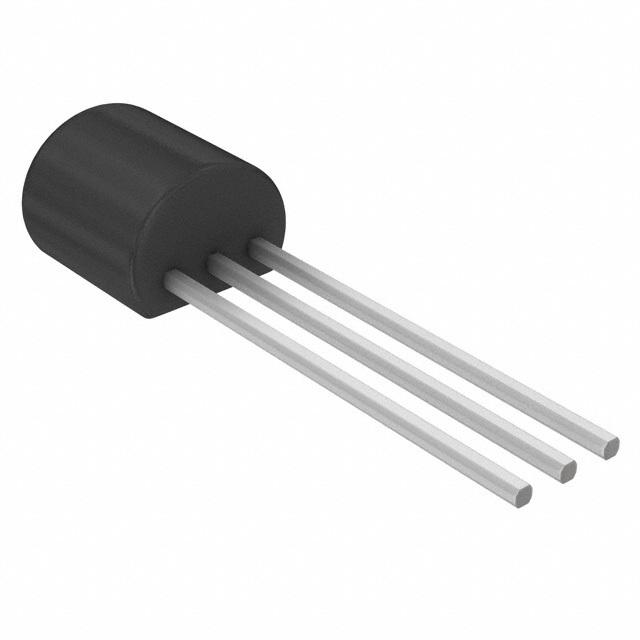
|
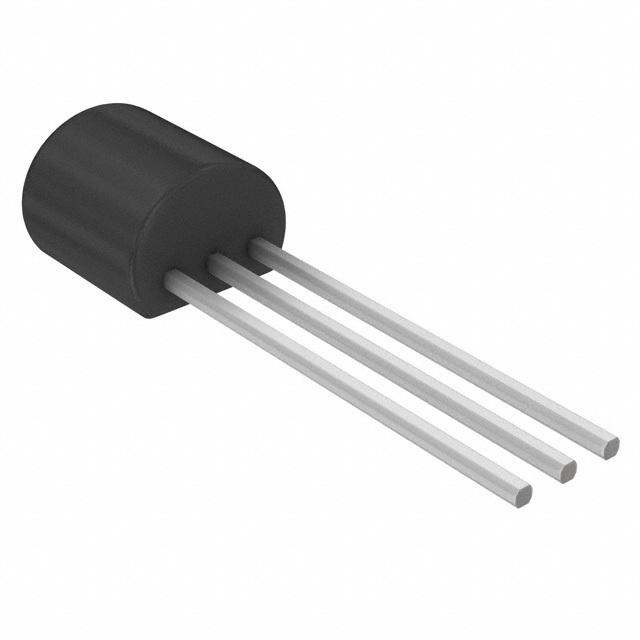
|
| Category | Transistors - Bipolar (BJT) - Single | Transistors - Bipolar (BJT) - Single |
| Manufacturer | Diodes Incorporated | Diodes Incorporated |
| Description | TRANS PNP 500V 0.15A E-LINE | TRANS PNP 300V 0.5A E-LINE |
| Package | Tape & Reel (TR) | Tape & Box (TB) |
| Series | - | - |
| Operating Temperature | -55°C ~ 150°C (TJ) | -55°C ~ 200°C (TJ) |
| Mounting Type | Through Hole | Through Hole |
| Package / Case | E-Line-3, Formed Leads | E-Line-3, Formed Leads |
| Supplier Device Package | E-Line (TO-92 compatible) | E-Line (TO-92 compatible) |
| Power - Max | 1 W | 1 W |
| Transistor Type | PNP | PNP |
| Current - Collector (Ic) (Max) | 150 mA | 500 mA |
| Voltage - Collector Emitter Breakdown (Max) | 500 V | 300 V |
| Vce Saturation (Max) @ Ib, Ic | 500mV @ 10mA, 50mA | 300mV @ 5mA, 50mA |
| Current - Collector Cutoff (Max) | 100nA | 100nA (ICBO) |
| DC Current Gain (hFE) (Min) @ Ic, Vce | 80 @ 50mA, 10V | 50 @ 50mA, 10V |
| Frequency - Transition | 60MHz | 75MHz |
-
1. What is a bipolar transistor?
A bipolar transistor, or bipolar junction transistor (BJT), is an electronic device with three terminals, consisting of three semiconductors with different doping levels. It was successfully developed by William Shockley, John Bardeen and Walter Brattain of Bell Labs in 1947, marking the birth of semiconductor device technology.
-
2. What is the difference between bipolar transistors and CMOS transistors?
The main differences between bipolar transistors and CMOS transistors are in working principles, structures, application scenarios, and power consumption.
Working principle
Bipolar transistor: Bipolar transistors have two types of carriers (holes and electrons) involved in conduction, and they are made of three parts of semiconductors with different doping levels. In bipolar transistors, the emitter emits free electrons, the collector receives holes, and the base controls the on and off of the current.
CMOS transistor: CMOS transistors have only one type of carrier (electrons or holes) involved in conduction, usually using a combination of P-type semiconductors and N-type semiconductors. In CMOS transistors, when the gate voltage is zero, the current does not flow. Only when the gate voltage reaches a certain value, the current will flow, which makes the CMOS transistor consume almost no power when static.
-
3. Are bipolar transistors still in use?
Bipolar transistors are still in use and play an important role in many fields. Bipolar transistors, the full name of which is bipolar junction transistor (BJT), commonly known as triode, are electronic devices with three terminals, made of three parts of semiconductors with different doping levels. Its working principle involves the flow of two carriers, electrons and holes, so it is called bipolar.
-
4. Is BJT transistor a bipolar device?
BJT transistor is a bipolar junction transistor (Bipolar Junction Transistor, referred to as BJT), which is a bipolar device. BJT is composed of two PN junctions, divided into PNP and NPN types, and works through two PN junctions to achieve current amplification.
The working principle of BJT is to amplify the collector current by controlling the base current. When the base potential is higher than the emitter potential, the emitter junction is in a forward biased state, and the collector junction is in a reverse biased state. Since the majority carrier concentration in the emitter region is greater than that in the base region, most of the electrons injected into the base region pass over the collector junction and enter the collector region, forming a collector current, thereby achieving current amplification.
BJT is widely used in electronic circuits, such as amplifiers, switches, oscillators, etc., with amplification capabilities, linear amplification characteristics and high frequency response.
