Bel Fuse Inc. 5MFP 3.5-R
The picture is for reference only, please refer to the product specification
- 5MFP 3.5-R
- Bel Fuse Inc.
- FUSE GLASS 3.5A 125VAC 5X20MM
- Fuses
- 5MFP 3.5-R Datasheet
- 5mm x 20mm (Axial)
- 5mm x 20mm (Axial)
-
 Lead free / RoHS Compliant
 - 2320
- Spot Inventory / Athorized Dstributor / Factory Excess Stock
- 1 year quality assurance 》
- Click to get rates


What is 5MFP 3.5-R
Bel Fuse Inc. Part Number 5MFP 3.5-R(Fuses), developed and manufactured by Bel Fuse Inc., distributed globally by Jinftry. We distribute various electronic components from world-renowned brands and provide one-stop services, making us a trusted global electronic component distributor.
5MFP 3.5-R is one of the part numbers distributed by Jinftry, and you can learn about its specifications/configurations, package/case, Datasheet, and other information here. Electronic components are affected by supply and demand, and prices fluctuate frequently. If you have a demand, please do not hesitate to send us an RFQ or email us immediately [email protected] Please inquire about the real-time unit price, Data Code, Lead time, payment terms, and any other information you would like to know. We will do our best to provide you with a quotation and reply as soon as possible.
5MFP 3.5-R Specifications
- Part Number5MFP 3.5-R
- CategoryFuses
- ManufacturerBel Fuse Inc.
- DescriptionFUSE GLASS 3.5A 125VAC 5X20MM
- Package5mm x 20mm (Axial)
- Series5MFP
- Operating Temperature-55°C ~ 125°C
- Mounting TypeThrough Hole
- Package / Case5mm x 20mm (Axial)
- Size / Dimension0.217" Dia x 0.827" L (5.50mm x 21.00mm)
- Current Rating3.5A
- Fuse TypeCartridge, Glass
- Voltage Rating - AC125V
- Breaking Capacity @ Rated Voltage10kA
- Response TimeFast
- ApprovalsCE, CSA, PSE
- Melting I²t17
Application of 5MFP 3.5-R
5MFP 3.5-R Datasheet
5MFP 3.5-R Datasheet , 5mm x 20mm (Axial),5MFP,-55°C ~ 125°C,Through Hole,5mm x 20mm (Axial),0.217" Dia x 0.827" L (5.50mm x 21.00mm),3.5A,Cartridge, Glass,125V,10kA,Fast,CE, CSA, PSE,17
5MFP 3.5-R Classification
Fuses
FAQ about Fuses
-
1. What are the three types of fuses?
There are three main types of fuses: current fuse, temperature fuse and self-recovery fuse.
Current fuse
The main function of the current fuse is to provide overcurrent protection in the circuit. When the current in the circuit exceeds the predetermined value, the current fuse will quickly melt and cut off the circuit to protect the electrical appliances and circuits from damage. Common current fuses include chip fuses, miniature fuses, plug-in fuses and tubular fuses. Chip fuses are often used in space-constrained applications such as handheld electronic devices and instrumentation due to their small size. Miniature fuses are suitable for smaller spaces, plug-in fuses are more commonly used in automobiles, and tubular fuses are widely used in the power supply field, especially switching power supplies.
Temperature fuse
The temperature fuse is an irreversible one-time thermal protection device, which is mainly used to automatically disconnect the circuit after reaching the set temperature to provide protection. The temperature fuse is divided into RH square, RP resistor type and RY metal shell series. RH square temperature fuse is usually made of low melting point alloy material, with plastic square shell design, suitable for various electrical appliances. RP resistor type temperature fuse is also made of low melting point alloy material, with unique temperature insurance function. RY metal shell temperature fuse combines metal shell and organic chemical heat sensor, with high induction sensitivity and action accuracy, widely used in rice cookers, hair dryers and other equipment.
Resettable fuse
The resettable fuse can automatically recover when the current is too large and the circuit is open. It is a multiple-use fuse, especially suitable for overload protection circuit. The resettable fuse will automatically deform and cut off the current when the temperature exceeds the preset safety threshold, and will automatically restore power when the temperature drops to a safe range without manual intervention. This fuse can be reused and is suitable for various occasions requiring overload protection. -
2. Is the fuse AC or DC?
Alternating current
Fuses can be used for both AC and DC. The design and application of fuses depend on their specific type and purpose.
Application of fuses in AC and DC
AC fuses: suitable for AC circuits, using the current zero-crossing characteristics to extinguish arcs, commonly found in household appliances and industrial equipment. The frequency of AC (such as 60Hz or 50Hz) makes it easier to extinguish arcs, so the size of AC fuses is relatively small.
DC fuse: Designed for DC circuits. Since DC has no zero point, it is more difficult to break the arc. Usually, special structures (such as filling with quartz sand) are required to force the arc to extinguish. DC fuses are usually larger in size to reduce arcing. -
3. What is the main function of a fuse?
Overload protection
The main function of a fuse is overload protection. After the fuse is properly placed in the circuit, when the current abnormally rises to a certain height and temperature, the fuse will melt itself to cut off the current, thereby protecting the safe operation of the circuit. The working principle of the fuse is based on the fact that heat is generated when current flows through a conductor. When the heat generated exceeds the speed at which the conductor dissipates heat, the fuse will melt.
We are a professional PCB manufacturer who offers comprehensive PCB manufacturing services including: professional Ceramic PCB HDI PCB Heavy Copper PCB High-TG PCB High Speed PCB High Frequency PCB Metal Core PCB PCB fabrication and PCB assembly, providing fast turnaround prototypes for high-end products.



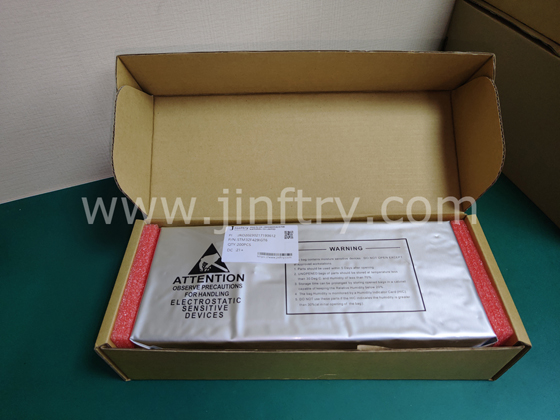
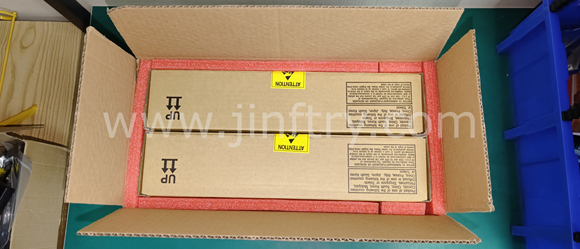
• Prompt Responsiveness
• Guaranteed Quality
• Global Access
• Competitive Market Price
• One-Stop support services of supply chain
Jinftry, Your most trustworthy component supplier, welcome to send us the inquiry, thank you!
Do you have any questions about 5MFP 3.5-R ?
Feel free to contact us: