
Amphenol ICC (FCI) 61835-5441LF

The picture is for reference only, please refer to the product specification
- 61835-5441LF
- Amphenol ICC (FCI)
- CONN MOD JACK 4P4C VERT UNSHLD
- Modular Connectors - Jacks
- 61835-5441LF Datasheet
- -
- -
-
 Lead free / RoHS Compliant
 - 1382
- Spot Inventory / Athorized Dstributor / Factory Excess Stock
- 1 year quality assurance 》
- Click to get rates


What is 61835-5441LF
Amphenol ICC (FCI) Part Number 61835-5441LF(Modular Connectors - Jacks), developed and manufactured by Amphenol ICC (FCI), distributed globally by Jinftry. We distribute various electronic components from world-renowned brands and provide one-stop services, making us a trusted global electronic component distributor.
61835-5441LF is one of the part numbers distributed by Jinftry, and you can learn about its specifications/configurations, package/case, Datasheet, and other information here. Electronic components are affected by supply and demand, and prices fluctuate frequently. If you have a demand, please do not hesitate to send us an RFQ or email us immediately [email protected] Please inquire about the real-time unit price, Data Code, Lead time, payment terms, and any other information you would like to know. We will do our best to provide you with a quotation and reply as soon as possible.
61835-5441LF Specifications
- Part Number61835-5441LF
- CategoryModular Connectors - Jacks
- ManufacturerAmphenol ICC (FCI)
- DescriptionCONN MOD JACK 4P4C VERT UNSHLD
- Package-
- Series61835
- FeaturesBoard Lock, Panel Stops
- Mounting TypeThrough Hole
- TerminationSolder
- Contact MaterialCopper Alloy
- Contact FinishGold
- OrientationVertical
- RatingsCat3
- Connector TypeJack
- ShieldingUnshielded
- Number of Rows1
- Number of Positions/Contacts4p4c (RJ9, RJ10, RJ22)
- Number of Ports1
- LED ColorDoes Not Contain LED
- Tab DirectionUser Selectable
Application of 61835-5441LF
61835-5441LF Datasheet
61835-5441LF Datasheet , 61835,Board Lock, Panel Stops,Through Hole,Solder,Copper Alloy,Gold,Vertical,Cat3,Jack,Unshielded,1,4p4c (RJ9, RJ10, RJ22),1,Does Not Contain LED,User Selectable
61835-5441LF Classification
Modular Connectors - Jacks
FAQ about Modular Connectors - Jacks
-
1. What are the different types of RJ45 modular jacks?
There are two main types of RJ45 modular jacks, namely DTE (data terminal equipment) type and DCE (digital communication equipment) type.
The difference between these two types lies in the way they are connected to different devices.
The DTE type is mainly used in Ethernet network cards, routers and other devices. When two DTE type devices use RJ45 interface connection for communication, they must be connected using a crossover cable. This is because the data sending and receiving pins of the DTE type interface cannot perform normal data communication if they are not cross-connected.
The DCE type is usually used in devices such as switches. When connected to a DTE type device, the DCE type device can automatically negotiate with the other party. At this time, a straight-through line or a parallel line can be used for connection, depending on the automatic negotiation capability of the device. -
2. What is the difference between RJ50 and RJ45 connectors?
The main differences between RJ50 and RJ45 connectors are transmission rate, application scenarios, number of pins, line sequence, transmission distance, and anti-interference ability.
Transmission rate and application scenarios:
The transmission rate of the RJ50 interface is low, and it can usually only transmit voice and low-speed data signals. It is mainly used for telephone lines and low-speed network devices such as modems and routers.
The transmission rate of the RJ45 interface is high, and it can transmit high-speed data signals. It is mainly used for Ethernet and high-speed network devices such as computers, switches and routers.
Number of pins and line sequence:
The RJ50 interface has 4 pins, and the line sequence is 1-2-3-4.
The RJ45 interface has 8 pins, and the line sequence is 1-2-3-4-5-6-7-8.
Transmission distance and anti-interference ability:
The transmission distance of the RJ50 interface is short, and it can usually only be used within a few dozen meters. It h -
3. What is the difference between plugs and connector jacks?
Plugs, connectors, jacks and ports are different concepts, each of which has its own specific functions and uses in electronic equipment and electrical systems.
A plug is a physical or logical part used to plug into a jack or port, a connector is a broader connection solution that includes plugs and jacks, while a jack is the part that provides an interface, and a port is a specific area on a device for receiving a plug.
A plug generally refers to a physical connection part that can be inserted into a socket or other port for connecting power or transmitting data. Plugs are designed to fit with specific jacks or ports so that current or data can be transmitted through them. For example, a power plug is used to connect to a power socket, while a network plug is used to connect to a network port.
Connectors are a broader concept that includes plugs, jacks, and the connecting parts between them. Connectors are used to transfer current or signals between two active devices. They can b
We are a professional PCB manufacturer who offers comprehensive PCB manufacturing services including: professional Ceramic PCB HDI PCB Heavy Copper PCB High-TG PCB High Speed PCB High Frequency PCB Metal Core PCB PCB fabrication and PCB assembly, providing fast turnaround prototypes for high-end products.



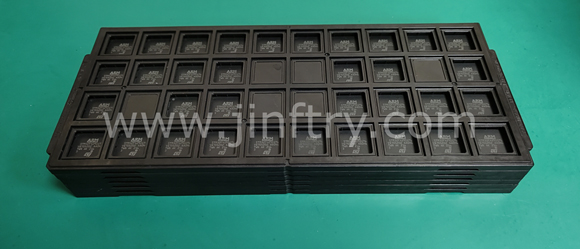
• Prompt Responsiveness
• Guaranteed Quality
• Global Access
• Competitive Market Price
• One-Stop support services of supply chain
Jinftry, Your most trustworthy component supplier, welcome to send us the inquiry, thank you!
Do you have any questions about 61835-5441LF ?
Feel free to contact us:
61835-5441LF Related Products

MOD JACK,SINGLE,TOP ENTRY,6P4C,6


CONN MOD JACK 8P8C R/A UNSHLD


