
Bel Power Solutions BK1001-7R
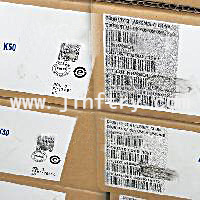
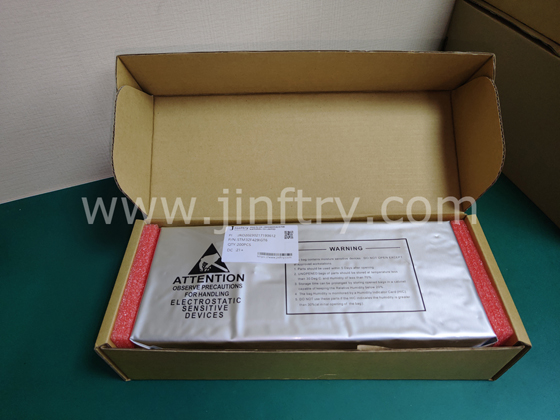
The picture is for reference only, please refer to the product specification
- BK1001-7R
- Bel Power Solutions
- DC/DC CONVERT 5.1V 25A
- DC DC Converters
- BK1001-7R Datasheet
- Module
- Module
-
 Lead free / RoHS Compliant
 - 2138
- Spot Inventory / Athorized Dstributor / Factory Excess Stock
- 1 year quality assurance 》
- Click to get rates


What is BK1001-7R
Bel Power Solutions Part Number BK1001-7R(DC DC Converters), developed and manufactured by Bel Power Solutions, distributed globally by Jinftry. We distribute various electronic components from world-renowned brands and provide one-stop services, making us a trusted global electronic component distributor.
BK1001-7R is one of the part numbers distributed by Jinftry, and you can learn about its specifications/configurations, package/case, Datasheet, and other information here. Electronic components are affected by supply and demand, and prices fluctuate frequently. If you have a demand, please do not hesitate to send us an RFQ or email us immediately [email protected] Please inquire about the real-time unit price, Data Code, Lead time, payment terms, and any other information you would like to know. We will do our best to provide you with a quotation and reply as soon as possible.
BK1001-7R Specifications
- Part NumberBK1001-7R
- CategoryDC DC Converters
- ManufacturerBel Power Solutions
- DescriptionDC/DC CONVERT 5.1V 25A
- PackageModule
- SeriesMelcher K
- TypeEnclosed, Conformal Coated
- Operating Temperature-25°C ~ 71°C
- Mounting TypeChassis Mount
- Package / CaseModule
- ApplicationsITE (Commercial), Railway
- Number of Outputs1
- Voltage - Input (Min)14V
- Voltage - Input (Max)70V
- Voltage - Output 15.1V
- Current - Output (Max)25A
- Size / Dimension6.73" L x 4.37" W x 3.15" H (171.0mm x 111.0mm x 80.0mm)
- Power (Watts)150W
- Efficiency80%
Application of BK1001-7R
BK1001-7R Datasheet
BK1001-7R Datasheet , Module,Melcher K,Enclosed, Conformal Coated,-25°C ~ 71°C,Chassis Mount,Module,ITE (Commercial), Railway,1,14V,70V,5.1V,25A,6.73" L x 4.37" W x 3.15" H (171.0mm x 111.0mm x 80.0mm),150W,80%
BK1001-7R Classification
DC DC Converters
FAQ about DC DC Converters
-
1. What is a DC-DC converter?
A DC-DC converter is an electronic circuit that converts a DC voltage or current level to another DC voltage or current level. Its main function is to convert the input DC voltage to the required output voltage. It is usually used in different electronic devices to meet the voltage requirements of different circuits.
Working Principle
The DC-DC converter performs high-frequency switching through a controllable switch (such as MOSFET), and uses the energy storage characteristics of capacitors and inductors to store the input electrical energy in the capacitor (inductor). When the switch is disconnected, the electrical energy is released to the load to provide the required voltage. Its output power or voltage capacity is related to the duty cycle (the ratio of the switch on time to the entire switching cycle). By adjusting the duty cycle, functions such as boost, buck or inversion can be achieved.
Classification
DC-DC converters can be divided into the following categories:
Linear DC-DC converter: The output voltage is reduced through a resistive load. A transistor is connected between the input and output. The input voltage is reduced by the voltage across the transistor, resulting in a drop in the output voltage. This converter is suitable for low-power devices that require high-quality output voltage and low output voltage ripple, but its efficiency is low.
Switching DC-DC converter: uses switching elements to charge the storage capacitor through electrical pulses, and then the voltage is smoothed by the capacitor and transmitted to the load. This converter has a high efficiency of 85-90%. -
2. What are the three types of DC-DC converters?
There are three main types of DC-DC converters:
Buck DC-DC converter: This converter converts high voltage to low voltage. Its working principle is to control the output of voltage through a switching element. When the input voltage is higher than the required voltage, the switching element will be disconnected, causing the output voltage to decrease.
Boost DC-DC converter: This converter converts low voltage to high voltage. It works through the cooperation of inductors and switching elements. When the input voltage is lower than the required voltage, the voltage is increased by storing and releasing the energy of the inductor.
Boost-boost DC-DC converter: This converter can both buck and boost, and is suitable for applications with a wide voltage range. It combines the functions of bucking and boosting, and realizes flexible voltage conversion by intelligently controlling the working state of the switching element.
Working principle
The basic working principle of the DC-DC converter is to control the output of voltage through a switching element. The buck DC-DC converter disconnects the switch when the input voltage is higher than the required voltage, reducing the output voltage; the boost DC-DC converter increases the output voltage by storing and releasing the energy of the inductor; and the buck-boost DC-DC converter intelligently switches the working mode according to the needs to achieve flexible voltage regulation. -
3. Where are DC-DC converters used?
DC-DC converters (DC-DC converters) are widely used in many fields, mainly including consumer electronics, industrial control, automotive electronics, medical equipment, communication systems and renewable energy systems.
Consumer electronics
In consumer electronic devices, DC-DC converters are used to convert battery voltage to a voltage suitable for processors, displays and other components. For example, in smartphones, tablets and laptops, DC-DC converters can provide high-efficiency and low-noise power management to ensure the performance and battery life of the device.
Industrial control
In industrial control systems, DC-DC converters provide precise power for robots, sensors and other industrial equipment. For example, in automated production lines and robotics, DC-DC converters provide stable voltages for servo motors and control systems, ensuring precise operation of robots.
Automotive electronics
In the automotive electronics field, DC-DC converters are used in electric and hybrid vehicles to convert high-voltage DC power from batteries into low-voltage DC power suitable for on-board electronic devices. For example, DC-DC converters in electric vehicles are not only used to drive motors, but also provide stable power for various low-voltage electrical devices in the car, ensuring the stable operation of the vehicle's electrical system.
Medical equipment
In medical equipment, DC-DC converters are used in medical imaging equipment and portable medical devices. For example, X-ray machines and MRI machines require precise power supplies to ensure the clarity of images, while portable medical devices such as heart monitors and blood glucose monitors require lightweight, efficient DC-DC converters to extend battery life and ensure the portability of the equipment.
Communication systems
In communication systems, DC-DC converters are used in equipment such as mobile communication base stations to provide stable power to support the normal operation of communication equipment.
Renewable energy systems
In renewable energy systems, DC-DC converters are used in applications such as solar energy systems to convert DC power generated by solar panels into voltages suitable for use by the grid or load.
We are a professional PCB manufacturer who offers comprehensive PCB manufacturing services including: professional Ceramic PCB HDI PCB Heavy Copper PCB High-TG PCB High Speed PCB High Frequency PCB Metal Core PCB PCB fabrication and PCB assembly, providing fast turnaround prototypes for high-end products.



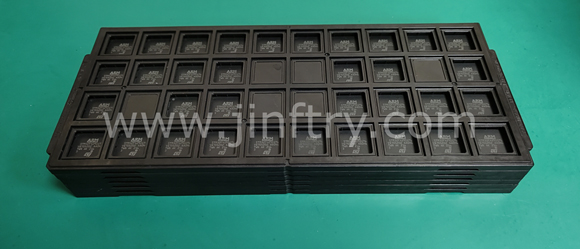
• Prompt Responsiveness
• Guaranteed Quality
• Global Access
• Competitive Market Price
• One-Stop support services of supply chain
Jinftry, Your most trustworthy component supplier, welcome to send us the inquiry, thank you!
Do you have any questions about BK1001-7R ?
Feel free to contact us:


