
Amphenol Anytek KI2230510000G
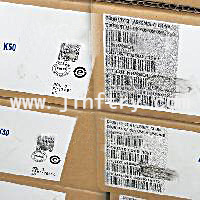
The picture is for reference only, please refer to the product specification
- KI2230510000G
- Amphenol Anytek
- TERM BLOCK PLUG 22POS STR 3.81MM
- Terminal Blocks - Headers, Plugs and Sockets
- KI2230510000G Datasheet
- -
- -
-
 Lead free / RoHS Compliant
 - 21682
- Spot Inventory / Athorized Dstributor / Factory Excess Stock
- 1 year quality assurance 》
- Click to get rates


What is KI2230510000G
Amphenol Anytek Part Number KI2230510000G(Terminal Blocks - Headers, Plugs and Sockets), developed and manufactured by Amphenol Anytek, distributed globally by Jinftry. We distribute various electronic components from world-renowned brands and provide one-stop services, making us a trusted global electronic component distributor.
KI2230510000G is one of the part numbers distributed by Jinftry, and you can learn about its specifications/configurations, package/case, Datasheet, and other information here. Electronic components are affected by supply and demand, and prices fluctuate frequently. If you have a demand, please do not hesitate to send us an RFQ or email us immediately [email protected] Please inquire about the real-time unit price, Data Code, Lead time, payment terms, and any other information you would like to know. We will do our best to provide you with a quotation and reply as soon as possible.
KI2230510000G Specifications
- Part NumberKI2230510000G
- CategoryTerminal Blocks - Headers, Plugs and Sockets
- ManufacturerAmphenol Anytek
- DescriptionTERM BLOCK PLUG 22POS STR 3.81MM
- Package-
- SeriesKI
- TypePlug Housing for Female Sockets
- Mounting TypeFree Hanging (In-Line)
- Termination StyleCrimp
- ColorGreen
- Number of Positions22
- Pitch0.150" (3.81mm)
- Wire Gauge or Range - mm²1-1.2mm²
- Current - UL8A
- Voltage - UL160V
- Number of Levels1
- Positions Per Level22
- Plug Wire Entry180°
Application of KI2230510000G
KI2230510000G Datasheet
KI2230510000G Datasheet , KI,Plug Housing for Female Sockets,Free Hanging (In-Line),Crimp,Green,22,0.150" (3.81mm),1-1.2mm²,8A,160V,1,22,180°
KI2230510000G Classification
Terminal Blocks - Headers, Plugs and Sockets
FAQ about Terminal Blocks - Headers, Plugs and Sockets
-
1. What role does the terminal play in the circuit?
The terminal mainly plays the following roles in the circuit:
Electrical connection: The terminal can reliably connect the wire to the circuit equipment electrically to ensure that the current is correctly transmitted. It provides a safe contact point to prevent the wire from falling off due to excessive force or external factors, thereby ensuring the normal operation of the circuit.
Convenient maintenance: The use of terminal blocks can easily repair and replace the circuit. When a device needs to be replaced or repaired, you only need to loosen the terminal block to remove the wire without changing the connection of other parts, which greatly reduces the difficulty and workload of maintenance.
Prevent contact corrosion: The terminal block is usually made of metal material with good conductivity. Through the connection of the terminal block, corrosion and oxidation at the contact point of the wire can be effectively prevented, and a good electrical connection state can be maintained.
Fixing the wire: The terminal block usually also has the function of fixing the wire. Through the loose and tight contact points, the wire is fixed to the terminal to prevent the wire from loosening or falling off due to external factors, ensuring the stability and safety of the circuit.
Improve system safety: Through the terminal block, the risk of short circuit of exposed wires can be effectively avoided, the occurrence of electrical accidents can be reduced, and the overall safety of the system can be improved.
Support multiple connection methods: The terminal block design is flexible and can support multiple types of connections, such as threaded connection, crimping, welding, etc., to adapt to different application scenarios.
The use scenarios of the terminal block include:
Distribution box and control cabinet: In the power distribution equipment and control cabinet, the terminal block is used to connect the power supply, load and various control equipment to form an electrical control circuit.
Home appliances: In home appliances such as air conditioners and refrigerators, the terminal block is used to connect the power cord to ensure the normal operation of the equipment.
Industrial equipment: In various automation equipment, sensors and actuators, the terminal block is used to transmit signals and power to ensure precise control.
Electrical system: In the power supply system of a building, the terminal block is used to connect cables to ensure the safety and stability of the power supply.
Automotive electrical system: In a car, the terminal block is used to connect batteries, control modules, lights and other electrical equipment to ensure the normal operation of the overall electrical system.
What is a terminal socket?
A terminal socket refers to the metal contact part of a socket used to connect an electrical appliance or a power plug. These terminals are connected to the power line or other electrical equipment through wires or wires, enabling electrical energy to be transmitted to or taken from the equipment in the plug.
Composition and function of terminal sockets
Terminal sockets are usually made of conductive materials such as copper to ensure good electrical conductivity. There are usually multiple terminals on the socket, including active jacks and fixed wiring screws or clips. The jack terminal is a soft metal sheet that can be inserted and fixed to the pins of the plug, while the wiring screw or clip is used to fix the wire by tightening or clamping to ensure a stable electrical connection.
Standards and specifications for terminal sockets
Different countries and regions may have different socket terminal standards and specifications. For example, China's socket terminal standards mainly include national standards GB 2099.3 and GB 1002. GB 2099.3 standard applies to low-voltage household appliance sockets, and specifies the socket's dimensions, terminal form, rated current and voltage and other parameters. GB 1002 standard applies to fixed power sockets, and specifies the socket's installation requirements and electrical connection methods.
-
2. What is the difference between a terminal and a connector?
The main differences between terminals and connectors are in their definitions, scope of application, and application scenarios.
Definition
Connector: Connector is a general term, usually referring to an electrical connector, which transmits current or signals through the male and female poles to achieve electrical connection. The connector consists of two major parts: a plastic shell and a terminal. The plastic shell is plastic and plays a protective role; the terminal is metal and plays a conductive role.
Terminal: Terminals are also called "wiring terminals" and are an accessory product used to achieve electrical connections. It is usually a piece of metal sealed in insulating plastic with holes at both ends for inserting wires. Terminals are a type of connector, generally a rectangular connector.
Scope
Connector: Connector is a general term, including many types of connectors, such as rectangular connectors, circular connectors, and stepped connectors.
Terminal: The terminal is a part of the connector. Common connectors usually include two parts: the plastic shell and the terminal. The plastic shell is plastic and plays a protective role; the terminal is metal and plays a conductive role. -
3. What is a motor terminal block?
A motor terminal block is a device that connects the internal cables of a motor with the external power cables, and is mainly used for motor control and operation. The motor terminal block can connect multiple power cables inside the motor together, and then connect them to the external power cable, so as to facilitate the control and operation of the motor.
Definition and function of the motor terminal block
The main function of the motor terminal block is to connect the cables inside the motor with the external power cable to realize the control and operation of the motor. Through the terminal block, the motor can be easily maintained and replaced to ensure the safety and reliability of the circuit.
Types of motor terminal blocks
Motor terminal blocks have various forms and specifications to meet different application requirements:
Fixed terminal blocks: directly installed in the equipment, cannot be removed or replaced.
Plug-in terminal blocks: can be easily inserted or unplugged, convenient for maintenance and replacement.
Screw terminal blocks: fixed by screws.
Spring terminal blocks: fixed by spring structure.
Crimp terminal blocks: fixed by crimping.
We are a professional PCB manufacturer who offers comprehensive PCB manufacturing services including: professional Ceramic PCB HDI PCB Heavy Copper PCB High-TG PCB High Speed PCB High Frequency PCB Metal Core PCB PCB fabrication and PCB assembly, providing fast turnaround prototypes for high-end products.



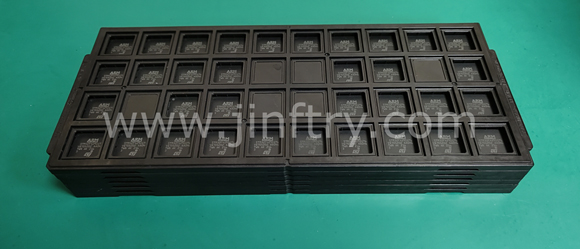
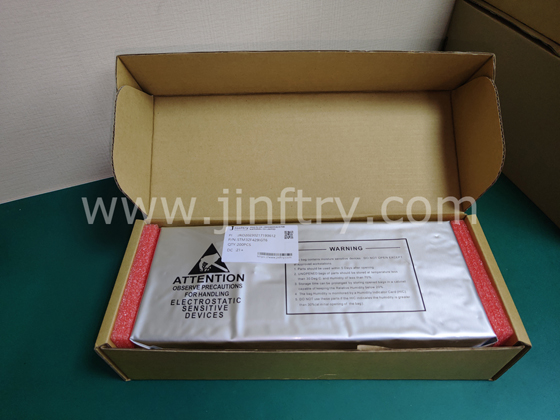
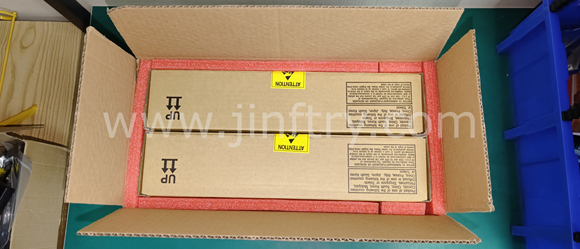
• Prompt Responsiveness
• Guaranteed Quality
• Global Access
• Competitive Market Price
• One-Stop support services of supply chain
Jinftry, Your most trustworthy component supplier, welcome to send us the inquiry, thank you!
Do you have any questions about KI2230510000G ?
Feel free to contact us:


