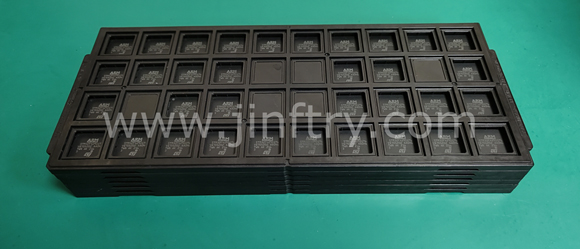
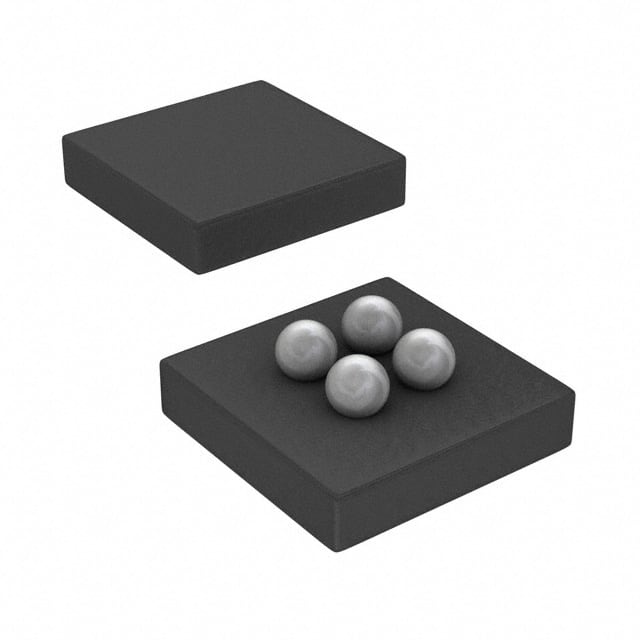
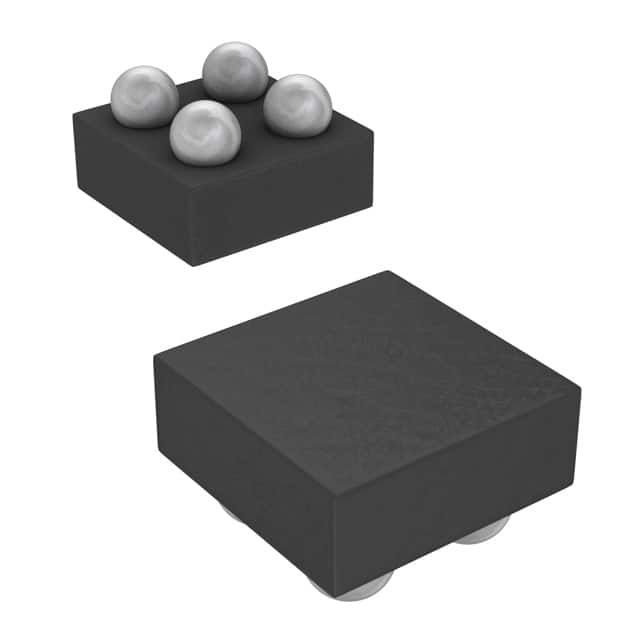
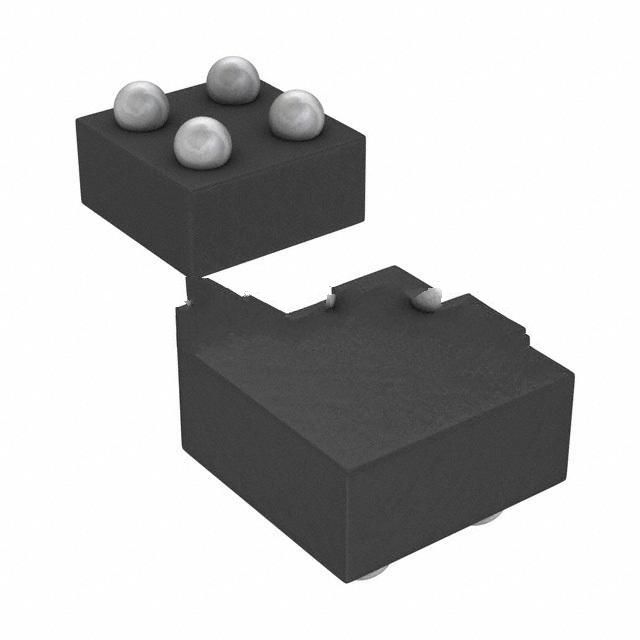
LP5910-1.8YKAR Product Introduction:
Texas Instruments Part Number LP5910-1.8YKAR(PMIC - Voltage Regulators - Linear), developed and manufactured by Texas Instruments, distributed globally by Jinftry. We distribute various electronic components from world-renowned brands and provide one-stop services, making us a trusted global electronic component distributor.
LP5910-1.8YKAR is one of the part numbers distributed by Jinftry, and you can learn about its specifications/configurations, package/case, Datasheet, and other information here. Electronic components are affected by supply and demand, and prices fluctuate frequently. If you have a demand, please do not hesitate to send us an RFQ or email us immediately sales@jinftry.com Please inquire about the real-time unit price, Data Code, Lead time, payment terms, and any other information you would like to know. We will do our best to provide you with a quotation and reply as soon as possible.
Introducing the Texas Instruments LP5910-1.8YKAR, a cutting-edge voltage regulator designed to meet the demands of today's advanced electronic devices. With its exceptional performance and versatile features, this regulator is the perfect solution for a wide range of applications.
The LP5910-1.8YKAR boasts an ultra-low dropout voltage of only 200mV at 150mA, ensuring stable and reliable power supply even in the most demanding conditions. Its low quiescent current of just 45µA further enhances efficiency, making it ideal for battery-powered devices where power consumption is a critical factor.
This regulator also features a wide input voltage range of 2.5V to 5.5V, allowing it to be used with a variety of power sources. Its fixed output voltage of 1.8V eliminates the need for external resistors, simplifying the design process and reducing overall system cost.
The LP5910-1.8YKAR finds its application in a multitude of fields, including portable consumer electronics, industrial automation, and automotive systems. Whether it's powering a smartphone, a sensor module, or a control circuit, this regulator delivers consistent and precise voltage regulation, ensuring optimal performance and reliability.
In summary, the Texas Instruments LP5910-1.8YKAR is a high-performance voltage regulator that offers exceptional efficiency, a wide input voltage range, and a fixed output voltage of 1.8V. With its versatile features and wide range of applications, this regulator is the perfect choice for powering advanced electronic devices.
Voltage Regulators-Linear is an electronic device used to convert an unstable DC voltage into a stable DC voltage. It regulates the voltage through an active component (such as a transistor or field effect tube) and a feedback network to ensure that the output voltage remains constant within a certain range. Linear regulators usually operate under low input voltage changes and load changes, and are able to provide a very clean and smooth output voltage.
Application
Voltage Regulators-Linear has a wide range of applications, covering almost all electronic devices requiring a stable DC power supply. In the field of consumer electronics, linear voltage regulators are widely used in mobile phones, tablets, laptops and other portable devices to provide stable voltage support for core components such as processors, memory and display screens. In the field of industrial automation and instrumentation, linear voltage regulators are often used in precision measuring instruments, sensor signal processing and other occasions because of their low noise and high precision characteristics. In addition, linear regulators also play an indispensable role in areas such as medical equipment, aerospace, and automotive electronics, where the quality of the power supply is extremely high. For example, in medical equipment, linear regulators ensure the power stability of devices such as pacemakers and monitors, ensuring the safety of patients.
FAQ about PMIC - Voltage Regulators - Linear
-
1. What is the difference between linear regulators and switching regulators?
There are significant differences between linear regulators and switching regulators in terms of working principles, efficiency, stability, cost and application range.
Working principle:
Linear regulators achieve the function of stabilizing the output at a set value by adjusting the voltage difference between the output voltage and the input voltage. It achieves stable output voltage by controlling the conductivity state of the power transistor.
The switching regulator converts the input voltage into a pulse signal transmission and smoothes the output through a filter by quickly switching between the input and output ends to achieve the function of stabilizing the output at the set value. The switching regulator uses PWM (pulse width modulation) control to control the output voltage by adjusting the time duty ratio of the high and low levels within a cycle.
Efficiency:
The efficiency of the linear regulator is relatively low, usually between 60% and 70%. When the voltage differenc
-
2. Which is better, switching power supply or linear regulator?
Switching power supply and linear regulator each have their advantages and disadvantages, and choosing which one is better depends on the specific application requirements.
The main advantages of switching power supply include:
High efficiency: The conversion efficiency of switching power supply can reach 90%~95%, which is much higher than the 30% or so of linear regulator.
Small size and light weight: Due to the high efficiency and high-efficiency transformer of switching power supply, large heat sink can be omitted, and high-frequency transformer replaces power frequency transformer, greatly reducing volume and weight.
Wide voltage regulation range: The output voltage of switching power supply can compensate for the change of input voltage by adjusting the duty cycle to ensure stable output voltage.
Various circuit forms: Designers can design switching power supplies that meet the needs according to different application scenarios.
However, switching power supplies also have so
-
3. What are the two main categories of linear and switching stabilizers?
The two main categories of linear and switching stabilizers are linear voltage voltage power and switching voltage power supply.
Linear voltage voltage power has achieved the advantages of transformer, rectification, filtering, and voltage voltage. It has the advantages of good stability, fast transient response speed, high reliability, and high output voltage accuracy. However, its transformation efficiency is low, especially when the output voltage difference is large, if the output current is also large, there will be obvious fever and hot phenomenon, and may even burn the regulator. The linear voltage voltage power supply includes two types: fixed output voltage and adjustable output voltage. According to the selection of the output current and the difference in the input output voltage difference, the design of the linear regulator needs to pay attention to the heat dissipation problem and the choice of bypass capacitors.
The switching voltage voltage power supply, also known as


 Lead free / RoHS Compliant