Vishay Sfernice RCME0512401BYS14
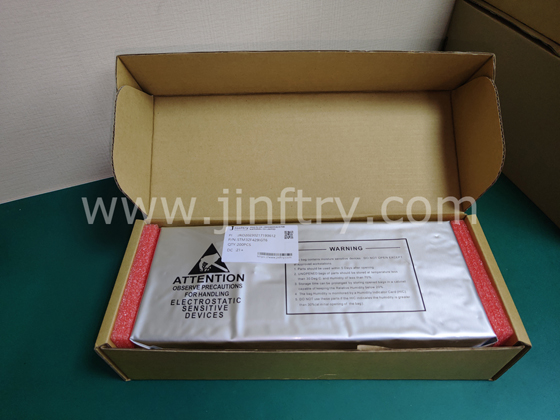
The picture is for reference only, please refer to the product specification
- RCME0512401BYS14
- Vishay Sfernice
- SFERNICE FIXED RESISTORS
- Through Hole Resistors
- RCME0512401BYS14 Datasheet
- -
- Bag
-
 Lead free / RoHS Compliant
 - 4081
- Spot Inventory / Athorized Dstributor / Factory Excess Stock
- 1 year quality assurance 》
- Click to get rates


What is RCME0512401BYS14
Vishay Sfernice Part Number RCME0512401BYS14(Through Hole Resistors), developed and manufactured by Vishay Sfernice, distributed globally by Jinftry. We distribute various electronic components from world-renowned brands and provide one-stop services, making us a trusted global electronic component distributor.
RCME0512401BYS14 is one of the part numbers distributed by Jinftry, and you can learn about its specifications/configurations, package/case, Datasheet, and other information here. Electronic components are affected by supply and demand, and prices fluctuate frequently. If you have a demand, please do not hesitate to send us an RFQ or email us immediately [email protected] Please inquire about the real-time unit price, Data Code, Lead time, payment terms, and any other information you would like to know. We will do our best to provide you with a quotation and reply as soon as possible.
RCME0512401BYS14 Specifications
- Part NumberRCME0512401BYS14
- CategoryThrough Hole Resistors
- ManufacturerVishay Sfernice
- DescriptionSFERNICE FIXED RESISTORS
- PackageBag
- Series-
- Features-
- Operating Temperature-
- Package / Case-
- Supplier Device Package-
- Tolerance-
- Temperature Coefficient-
- Size / Dimension-
- Power (Watts)-
- Height - Seated (Max)-
- Failure Rate-
- Resistance-
- Composition-
- Number of Terminations-
Application of RCME0512401BYS14
RCME0512401BYS14 Datasheet
RCME0512401BYS14 Datasheet , Bag
RCME0512401BYS14 Classification
Through Hole Resistors
FAQ about Through Hole Resistors
-
1. How to identify color ring resistors
1. Four-color ring resistors
Four-color ring resistors refer to resistors that use four color rings to indicate resistance, counting from left to right, as shown in the figure. The first color ring indicates the largest digit of the resistance; the second color ring indicates the second digit of the resistance; the third color ring indicates the number of times the resistance is multiplied; the fourth color ring indicates the allowable deviation (accuracy) of the resistance.
For example, if the first ring of a resistor is red (representing 2), the second ring is purple (representing 7), the third ring is brown (representing 10 times), and the fourth ring is gold (representing ±5%), then the resistance of this resistor should be 270Ω, and the error range of the resistance is ±5%.
2. Five-color ring resistor
Five-color ring resistor refers to a resistor that uses five color rings to represent the resistance, counting from left to right, as shown in the figure. The first color ring represents the largest digit of the resistance; the second color ring represents the second digit of the resistance; the third color ring represents the third digit of the resistance; the fourth color ring represents the multiplier of the resistance; the fifth color ring represents the error range.
For example, if a five-color ring resistor, the first ring is red (representing 2), the second ring is red (representing 2), the third ring is black (representing 0), the fourth ring is black (representing 1 times), and the fifth ring is brown (representing ±1%), then its resistance is 220Ω×1=220Ω, and the error range is ±1%.
3. Six-color ring resistors
Six-color ring resistors refer to resistors that use six color rings to represent resistance values. As shown in Figure 1, the first five color rings of the six-color ring resistor are the same as the five-color ring resistor, and the sixth color ring represents the temperature coefficient of the resistor. -
2. What are the classifications of through-hole resistors?
1. Unidirectional through-hole resistors
Unidirectional through-hole resistors are one of the simplest through-hole resistors. It has only one through-hole aperture, and current can only enter and flow through the resistor body in one direction. Unidirectional through-hole resistors are characterized by simple structure and low manufacturing cost.
2. Bidirectional through-hole resistors
Bidirectional through-hole resistors have the characteristics of bidirectional current flow and can be used as voltage dividers, RC couplers, inductive couplers, etc. It has a bidirectional cutting process and requires higher precision and technical requirements during the manufacturing process.
3. Multi-circular hole resistors
Multi-circular hole resistors are a type of multi-hole through-hole resistor with higher power carrying capacity and lower inductance value. It is suitable for use in high frequency and high temperature environments, such as power supplies and switching circuits.
4. Multi-rectangular through-hole resistors
Multi-rectangular through-hole resistors have multiple rectangular through-hole apertures and can be used in the manufacture of high-power devices. It has stronger resistance to mechanical stress and better heat dissipation performance, and can be used in power tools, aerospace and other fields. -
3. What are the applications of through-hole resistors?
Voltage division: The required voltage is distributed through series resistors. It is often used for voltage sampling and current sampling. It is connected in series through precision resistors with small resistance. After voltage division, the voltage needs to be amplified by an amplifier.
Shunting: When the current in the loop is large and the power of one resistor is insufficient, the current is shunted through parallel resistors to play a protective role.
Current limiting: Limit the current passing through components to protect components, such as the current limiting resistor of LED light-emitting diodes.
Decoupling: In circuit operation, resistors are used to form a path to remove excess energy, which is used for inductive components.
Filtering: Together with capacitors, a filter circuit is formed. The cutoff frequency of the filter is calculated according to the resistance value and the capacitance value to achieve low-pass filtering or high-pass filtering.
Pull-up and pull-down: The pull-up resistor is connected to the positive end of the power supply, and the pull-down resistor is connected to the negative end of the power supply. It is used for signal output or input to prevent false operation caused by signal interference.
Dummy load: Connect a resistor in parallel with the output end of the power supply so that the output end does not form an empty load, which clamps the output voltage.
Jumper function: Mainly the use of 0 ohm resistors, used for debugging and compatibility, convenient wiring, reserved resistor positions, convenient current testing, noise suppression, safety protection and other occasions.
We are a professional PCB manufacturer who offers comprehensive PCB manufacturing services including: professional Ceramic PCB HDI PCB Heavy Copper PCB High-TG PCB High Speed PCB High Frequency PCB Metal Core PCB PCB fabrication and PCB assembly, providing fast turnaround prototypes for high-end products.



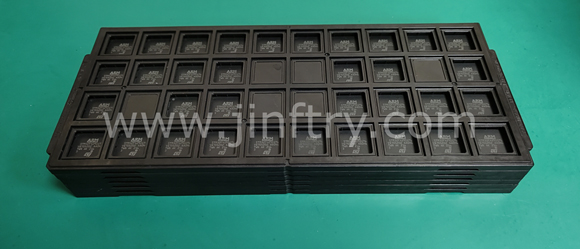
• Prompt Responsiveness
• Guaranteed Quality
• Global Access
• Competitive Market Price
• One-Stop support services of supply chain
Jinftry, Your most trustworthy component supplier, welcome to send us the inquiry, thank you!
Do you have any questions about RCME0512401BYS14 ?
Feel free to contact us:
RCME0512401BYS14 Related Products

RES 10K OHM 0.01% 1/5W AXIAL

RES 10K OHM 0.01% 1/5W AXIAL


RES 10.21 OHM 0.1% 0.6W RADIAL