Vishay Sfernice TA33-115KG270KD016

The picture is for reference only, please refer to the product specification
- TA33-115KG270KD016
- Vishay Sfernice
- SFERNICE THIN FILMS
- Resistor Networks, Arrays
- TA33-115KG270KD016 Datasheet
- -
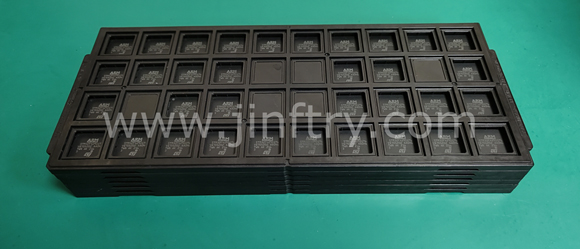
- Tray
-
 Lead free / RoHS Compliant
 - 4506
- Spot Inventory / Athorized Dstributor / Factory Excess Stock
- 1 year quality assurance 》
- Click to get rates


What is TA33-115KG270KD016
Vishay Sfernice Part Number TA33-115KG270KD016(Resistor Networks, Arrays), developed and manufactured by Vishay Sfernice, distributed globally by Jinftry. We distribute various electronic components from world-renowned brands and provide one-stop services, making us a trusted global electronic component distributor.
TA33-115KG270KD016 is one of the part numbers distributed by Jinftry, and you can learn about its specifications/configurations, package/case, Datasheet, and other information here. Electronic components are affected by supply and demand, and prices fluctuate frequently. If you have a demand, please do not hesitate to send us an RFQ or email us immediately [email protected] Please inquire about the real-time unit price, Data Code, Lead time, payment terms, and any other information you would like to know. We will do our best to provide you with a quotation and reply as soon as possible.
TA33-115KG270KD016 Specifications
- Part NumberTA33-115KG270KD016
- CategoryResistor Networks, Arrays
- ManufacturerVishay Sfernice
- DescriptionSFERNICE THIN FILMS
- PackageTray
- Series-
- Operating Temperature-
- Mounting Type-
- Package / Case-
- Supplier Device Package-
- Applications-
- Tolerance-
- Temperature Coefficient-
- Size / Dimension-
- Resistance (Ohms)-
- Height - Seated (Max)-
- Circuit Type-
- Number of Resistors-
- Number of Pins-
- Power Per Element-
- Resistor Matching Ratio-
- Resistor-Ratio-Drift-
Application of TA33-115KG270KD016
TA33-115KG270KD016 Datasheet
TA33-115KG270KD016 Datasheet , Tray
TA33-115KG270KD016 Classification
Resistor Networks, Arrays
FAQ about Resistor Networks, Arrays
-
1. How to solve a resistor network?
The basic methods for solving resistor networks include using Kirchhoff equations, symmetry simplification, current distribution method, limit method, etc.
Kirchhoff's Equations
Kirchhoff's equations are a general method for solving complex circuits, which include two types of equations:
Node current law: The sum of the outflow currents at any node in the circuit is equal to the sum of the inflow currents.
Loop voltage law: The sum of the voltage drops in any closed loop in the circuit is equal to zero.
Symmetry simplification
Use the symmetry in the network structure to simplify the calculation of equivalent resistance. If there are completely symmetrical points in the circuit, the potentials of these points are equal, and the circuit can be simplified by connecting or disconnecting these points.
Current distribution method
By analyzing the distribution of current in the circuit, the law of current distribution is used to simplify the calculation. For example, after finding the law of current distribution in a complex circuit, the circuit can be simplified by merging or disconnecting certain parts.
Limit method
In some cases, a specific problem is solved by taking the limit. For example, assuming that when a voltage is applied between two points, the voltage drop of some resistors is zero, thereby simplifying the circuit.
-
2. What is a SIP resistor network?
SIP resistor network usually refers to a resistor network using SIP (System-in-Package) technology. SIP technology is a system-in-package technology that packages multiple electronic components with different functions (including active and passive components) in a standard package to form a system or subsystem. Specifically, the SIP resistor network integrates multiple resistors and other electronic components in a package to achieve specific circuit functions.
Definition and application of SIP technology
SIP (System-in-Package) technology is to package multiple active electronic components with different functions and passive devices (such as resistors, capacitors, etc.) in a standard package to form a system or subsystem. This technology can significantly improve the integration of equipment, reduce the number of components, thereby reducing the volume and cost of the system, while improving the reliability and performance of the system. -
3. What is an array in a semiconductor?
The array in a semiconductor mainly refers to a memory cell array. The memory cell array is the core part of a semiconductor memory, which is composed of a large number of memory cells arranged in a certain pattern. Each memory cell can store one or more bits of data.
Structure and function of memory cell array
The memory cell array is a key component of semiconductor memory, which specifically includes the following parts:
Address decoder: translates the address signal into the selection signal of the corresponding memory cell, and cooperates with the read/write circuit to complete the read/write operation.
Read/write circuit: includes read amplifier and write circuit, used to complete read/write operation.
Control logic: determines the read/write operation of the chip.
We are a professional PCB manufacturer who offers comprehensive PCB manufacturing services including: professional Ceramic PCB HDI PCB Heavy Copper PCB High-TG PCB High Speed PCB High Frequency PCB Metal Core PCB PCB fabrication and PCB assembly, providing fast turnaround prototypes for high-end products.



• Prompt Responsiveness
• Guaranteed Quality
• Global Access
• Competitive Market Price
• One-Stop support services of supply chain
Jinftry, Your most trustworthy component supplier, welcome to send us the inquiry, thank you!
Do you have any questions about TA33-115KG270KD016 ?
Feel free to contact us: