
Vishay Semiconductor - Diodes Division TPSMC9.1HE3_A/H
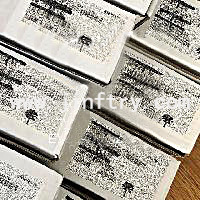
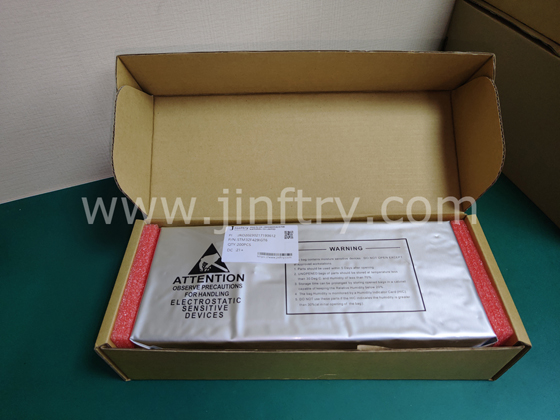
The picture is for reference only, please refer to the product specification
- TPSMC9.1HE3_A/H
- Vishay Semiconductor - Diodes Division
- TVS DIODE 13.8VC 109A DO214AB
- TVS - Diodes
- TPSMC9.1HE3_A/H Datasheet
- DO-214AB, SMC
- DO-214AB, SMC
-
 Lead free / RoHS Compliant
 - 4225
- Spot Inventory / Athorized Dstributor / Factory Excess Stock
- 1 year quality assurance 》
- Click to get rates


What is TPSMC9.1HE3_A/H
Vishay Semiconductor - Diodes Division Part Number TPSMC9.1HE3_A/H(TVS - Diodes), developed and manufactured by Vishay Semiconductor - Diodes Division, distributed globally by Jinftry. We distribute various electronic components from world-renowned brands and provide one-stop services, making us a trusted global electronic component distributor.
TPSMC9.1HE3_A/H is one of the part numbers distributed by Jinftry, and you can learn about its specifications/configurations, package/case, Datasheet, and other information here. Electronic components are affected by supply and demand, and prices fluctuate frequently. If you have a demand, please do not hesitate to send us an RFQ or email us immediately [email protected] Please inquire about the real-time unit price, Data Code, Lead time, payment terms, and any other information you would like to know. We will do our best to provide you with a quotation and reply as soon as possible.
TPSMC9.1HE3_A/H Specifications
- Part NumberTPSMC9.1HE3_A/H
- CategoryTVS - Diodes
- ManufacturerVishay Semiconductor - Diodes Division
- DescriptionTVS DIODE 13.8VC 109A DO214AB
- PackageDO-214AB, SMC
- SeriesAutomotive, AEC-Q101, PAR?
- TypeZener
- Operating Temperature-65°C ~ 185°C (TJ)
- Mounting TypeSurface Mount
- Package / CaseDO-214AB, SMC
- Supplier Device PackageDO-214AB (SMC)
- ApplicationsAutomotive
- Unidirectional Channels1
- Voltage - Reverse Standoff (Typ)7.37V
- Voltage - Breakdown (Min)8.19V
- Voltage - Clamping (Max) @ Ipp13.8V
- Current - Peak Pulse (10/1000µs)109A
- Power - Peak Pulse1500W (1.5kW)
- Power Line ProtectionNo
Application of TPSMC9.1HE3_A/H
TPSMC9.1HE3_A/H Datasheet
TPSMC9.1HE3_A/H Datasheet , DO-214AB, SMC,Automotive, AEC-Q101, PAR?,Zener,-65°C ~ 185°C (TJ),Surface Mount,DO-214AB, SMC,DO-214AB (SMC),Automotive,1,7.37V,8.19V,13.8V,109A,1500W (1.5kW),No
TPSMC9.1HE3_A/H Classification
TVS - Diodes
FAQ about TVS - Diodes
-
1. What is the difference between TVS and ordinary diodes?
The main difference between TVS diodes and ordinary diodes lies in their working principle, application scenarios and characteristics.
Working principle and application scenarios
TVS diode: TVS diode (Transil Voltage Suppressor) is a high-efficiency protection device that stabilizes and suppresses overvoltage based on the breakdown effect of PN junction. When the voltage exceeds its breakdown voltage, the TVS diode will conduct quickly and release the overvoltage to ground, thus protecting the precision components in the circuit from damage by surge pulses. TVS diodes are widely used in computer systems, communication equipment, automotive electronics, household appliances and other fields to suppress transient overvoltage and electromagnetic interference.
Ordinary Diode: The main function of an ordinary diode is unidirectional conductivity, allowing current to pass in one direction and blocking reverse current. They are widely used in rectification, signal modulation, power management and other scenarios.
Feature comparison
Current size: The Zener breakdown current of TVS diodes is small, usually around 1mA, while the breakdown current of ordinary diodes is larger.
Classification: TVS diodes are divided into unipolar and bipolar according to polarity; ordinary diodes are divided into low-voltage and high-voltage types according to the level of voltage regulation, as well as N-type and P-type materials.
Voltage regulation characteristics: The voltage characteristics of TVS diodes are nonlinear, the resistance before breakdown is high, and the voltage remains constant after breakdown; the voltage of ordinary diodes remains constant at the critical reverse breakdown point, realizing the voltage stabilization function.
-
2. Are TVS diodes and Zener diodes the same?
TVS diodes and Zener diodes have significant differences in functionality and characteristics, so they are not identical.
Definition and purpose
Zener diode: Zener diode is a diode that uses a PN junction for reverse breakdown. It is mainly used to ensure voltage stability. It has a high resistance state before the reverse breakdown voltage and is in a low resistance state after exceeding this critical point. It is widely used in various voltage stabilizing circuits and reference voltage components.
TVS Diode: TVS diode (Transient Suppression Diode) has surge absorption capability and is mainly used to protect circuits from damage caused by transient high voltages such as surges and electrostatic discharge (ESD). It can absorb a large amount of instantaneous current and voltage in a short period of time, protecting the subsequent equipment or circuits from damage.
-
3. How do TVS diodes fail?
The failure modes of TVS diodes mainly include short circuit failure, open circuit failure and performance degradation. These failure modes can have a serious impact on the normal operation and protection functions of the circuit.
short circuit fault
Short circuit failure is one of the most common failure modes of TVS diodes. When a TVS diode is short-circuited, it changes to a low-impedance state, allowing a large amount of current to pass through, which may cause the circuit to not function properly and may even damage other circuit components. Causes of short circuit faults include:
Thermal breakdown: In a high temperature environment or when subjected to excessive transient energy impact, the PN junction of the TVS diode may undergo thermal breakdown, resulting in a short circuit.
Over-electrical stress: When the transient pulse energy exceeds the energy that the TVS can withstand, it will cause over-electrical stress damage and even directly cause burnout.
Manufacturing process issues: Such as chip bonding interface voids, mesa defects, strong accumulation layer or strong inversion layer on the surface, chip cracks, uneven impurity diffusion, etc., which may cause short circuit failures of TVS diodes during manufacturing or use.
We are a professional PCB manufacturer who offers comprehensive PCB manufacturing services including: professional Ceramic PCB HDI PCB Heavy Copper PCB High-TG PCB High Speed PCB High Frequency PCB Metal Core PCB PCB fabrication and PCB assembly, providing fast turnaround prototypes for high-end products.



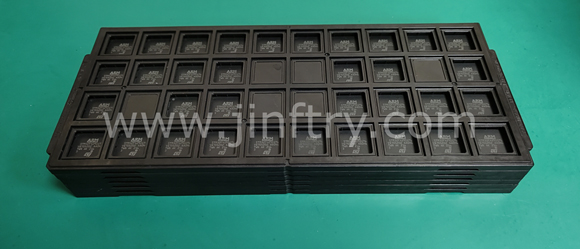
• Prompt Responsiveness
• Guaranteed Quality
• Global Access
• Competitive Market Price
• One-Stop support services of supply chain
Jinftry, Your most trustworthy component supplier, welcome to send us the inquiry, thank you!
Do you have any questions about TPSMC9.1HE3_A/H ?
Feel free to contact us:
TPSMC9.1HE3_A/H Related Products


TVS DIODE 37.5VC 10.7A DO220AA

TVS DIODE 12.5VC 120A DO214AB

TVS DIODE 11.7VC 128A DO214AB

TVS DIODE 10.8VC 139A DO214AB

TVS DIODE 10.5VC 143A DO214AB

TVS DIODE 67.8VC 22.1A DO214AB


