Do you know what a photodiode is?
Introduction
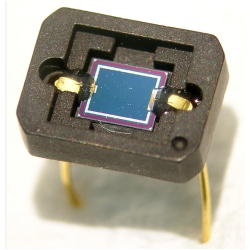
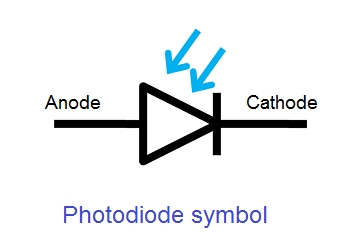
A photodiode is a semiconductor device that converts light signals into electrical signals. Like ordinary diodes, photodiodes also have a PN junction, but the difference is that the purpose of photodiodes is to detect light using the photoelectric effect rather than for rectification.

Working principle
When light shines on the PN junction of a photodiode, the photons are absorbed by the semiconductor material. Each photon energy is transferred to the electrons in the valence band. If the energy is sufficient, the electrons are excited from the valence band to the conduction band to form an electron-hole pair. In this way, the light signal is converted into an electrical signal.

Features
High sensitivity: Photodiodes can detect very weak light signals.Fast response: The response time of photodiodes is very short and can be used to detect rapidly changing light signals.
Low noise: Photodiodes produce almost no current in the absence of light, so they have a very low dark current.
Wide spectral response range: Depending on the semiconductor material used, photodiodes can respond to a wide range of wavelengths of light from infrared to ultraviolet.
Types of photodiodes
PIN photodiodes:
In a PIN photodiode, a thin intrinsic (I) region is sandwiched between P-type and N-type semiconductors. This intrinsic region increases the probability of photons interacting with the material, thereby increasing the sensitivity of the photodiode.
Avalanche photodiodes (APDs):
Avalanche photodiodes operate under reverse bias, which means that electrons and holes are accelerated by the electric field and then collide with other carriers to produce more electron-hole pairs. This effect can significantly increase the sensitivity of the photodiode by increasing the gain of the photocurrent.
Junction photodiodes:
Junction photodiodes have a PN junction, which is sensitive to light and is suitable for detection at low light intensities. This type of photodiode is often used in spectroscopy and optical measurements.
Surface photodiode:
Surface photodiode has a large PN junction area, which can receive more light signals and is suitable for applications that require a large light receiving area, such as fiber optic communication systems.
Back-illuminated photodiode:
The semiconductor material of this photodiode is metallized so that light can be irradiated from the back. This can reduce the material's absorption loss of light and improve the utilization of light.
Each type of photodiode has its specific application scenarios and advantages. The choice of which type of photodiode depends on the specific application requirements.
Application of photodiode
Photodetection
Photodiodes are widely used in photodetection systems, such as night vision equipment, surveillance cameras, and various spectrometers.
Optical communication
In fiber optic communication systems, photodiodes are key components for receiving optical signals. At the receiving end, photodiodes convert optical signals carrying information into electrical signals, thereby completing the transmission of information.
Photoelectric switch
Photodiodes are also often used as photoelectric switches, which are devices that use optical signals to control the on and off of circuits. When light is irradiated on the photodiode, the circuit is turned on; when there is no light irradiation, the circuit is disconnected.
Solar cells
In addition to the above applications, an important application area of photodiodes is solar cells. Solar cells convert solar energy directly into electrical energy through the photoelectric effect.
Conclusion
As an important component of optoelectronic devices, photodiodes play an irreplaceable role in modern science and technology and industrial production. Its working principle is based on simple physical effects, but it can meet the needs of a variety of complex application scenarios. With the continuous development of science and technology, the application areas of photodiodes will continue to expand, and their importance will become increasingly prominent.
Statement
All articles (images, texts, audio) on this site are uploaded and shared by users, or integrated from relevant internet sources, only for user's learning. If your rights are violated, please contact the administrator to delete! Link to this article: https://www.jinftry.com