What is an AC capacitor and what are its uses?
What is an AC capacitor and what are its uses?
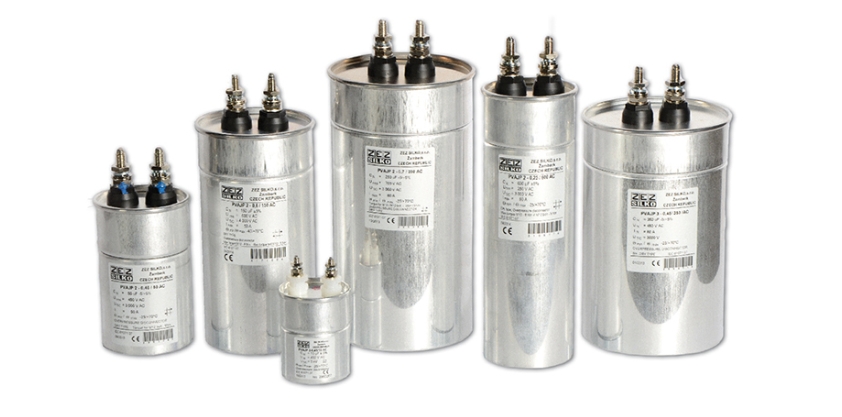
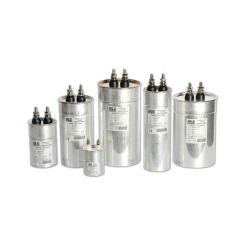
An AC capacitor is a capacitor designed for use in an AC circuit. AC capacitors and DC capacitors differ in structure and performance because they need to cope with different current types and voltage fluctuations.
AC capacitors are commonly used in power systems, electronic equipment, and various household appliances to improve power factor, store energy, filter, tune, couple or decouple signals, etc. In power systems, AC capacitors may be used to compensate for reactive power, reduce line losses, and improve the stability of the power grid.
AC capacitors are designed to withstand the constant changes in AC voltage, which means that they must have a certain withstand voltage, usually the effective value of the AC voltage. In addition, AC capacitors may require additional protection measures, such as discharge resistors, to ensure that the residual voltage on the capacitor can be quickly reduced to a safe level after power failure.
There are many types of AC capacitors, including paper capacitors, oil-immersed capacitors, metallized film capacitors, ceramic capacitors, etc., and each type of capacitor has its specific application range and performance characteristics. When selecting an AC capacitor, you need to consider its rated voltage, capacity, withstand voltage, frequency response, and other related parameters to ensure that it can work properly in a specific application scenario.

Do AC capacitors need to be tested?
As one of the important equipment in the power system, AC capacitors are mainly used to improve power factor, compensate for reactive power, filter, and regulate voltage. In order to ensure the safe and stable operation of capacitors, it is necessary to test them. The following are some common AC capacitor test items:Capacitance measurement: By measuring the capacitance of the capacitor, it can be evaluated whether it is within the normal range and whether there is a large deviation, so as to judge the quality of the internal components of the capacitor.
Dielectric loss tangent measurement: This test can reflect the loss degree of the capacitor's insulating medium and help to find insulation defects such as partial discharge and moisture.
Leakage current measurement: For high-voltage capacitors, leakage current tests can detect possible conductive paths or insulation defects inside the capacitor.
AC withstand voltage test: Apply an AC voltage higher than the rated voltage to the capacitor for a certain period of time to assess the electrical strength and insulation performance of the capacitor.
Temperature rise test: By monitoring the temperature rise of the capacitor under the rated current, its heat dissipation performance and overall efficiency are evaluated.
Mechanical strength test: Including vibration, impact and other tests to test the performance stability of the capacitor under a specific mechanical environment.
Durability test: Run the capacitor under rated conditions for a long time to evaluate its life.
Protection device verification: Check whether the overvoltage, overcurrent and unbalance protection of the capacitor bank can operate correctly.
Performing these tests helps to timely discover potential problems with the capacitor, prevent failures, and ensure the safe and reliable operation of the power system. Specific test items and standards may be determined based on the type of capacitor, the use environment, operating conditions, and the specifications and standards of the relevant power industry.
How to test AC capacitors with a multimeter
To measure AC capacitors with a multimeter, you need to follow these steps:Prepare tools: Make sure you have a functioning digital multimeter or pointer multimeter, and a screwdriver or other suitable tool to contact the capacitor.
Disconnect power: If you are measuring a capacitor in a running circuit, first disconnect the AC power to ensure safety.
Select the multimeter range: Set the multimeter's function knob or dial to the appropriate range of AC voltage (AC). Select a range that is higher than the estimated voltage to ensure that you can measure accurately without exceeding the safety limit of the multimeter.
Measure voltage: Connect the two probes of the multimeter to the two pins of the capacitor. If the capacitor has polarity, make sure the positive and negative polarity correspond to the red and black probes of the multimeter (usually the red probe corresponds to the positive pole and the black probe corresponds to the negative pole).
Read the value: After a stable reading, you can read the voltage value displayed by the multimeter. This value should be the voltage across the AC capacitor.
Check the result: Compare the measured value with the nominal rated voltage of the capacitor. If the measured voltage is much lower than the rated voltage, there may be a problem of leakage or damage to the capacitor.
Safe handling: After completing the measurement, the capacitor should be discharged to avoid accidents caused by the stored charge. You can discharge it by shorting the two pins of the capacitor, or use a special capacitor discharge device.
Note: Be sure to ensure safety during the operation, especially for large-capacity capacitors, which may store a lot of electrical energy and may cause electric shock or damage even if the power is disconnected. Therefore, before performing any operation, make sure to correctly judge and deal with potential risks.
Common problems and solutions of capacitors
Capacitors play a key role in the circuit, and their failure may have a negative impact on the performance of the circuit. Here are some common capacitor failures and their solutions:
Leakage:
Solution: Replace the capacitor; if leakage is caused by environmental factors, the humidity or cleanliness of the working environment may need to be improved.
Solution: Adjust circuit parameters to adapt to the capacitance change of the capacitor, or replace the capacitor directly.
Solution: Resolder the pins, or replace the capacitor in severe cases.
Solution: Replace the capacitor and check if there are problems such as overvoltage or overheating in the circuit.
Solution: Resolder the capacitor to ensure that it is firmly connected to the circuit board.
Solution: Replace the capacitor; check if there is any error in circuit design or working conditions.
Conclusion
AC capacitors are one of the key components in electronic and power systems. Correctly understanding and selecting suitable AC capacitors is essential to ensure the performance and reliability of the circuit. With the continuous development of technology, new AC capacitor materials and technologies are constantly emerging, bringing more possibilities for future power electronics applications.