
EP3C55F484I7 vs 5CEBA9F31C8N
| Part Number |
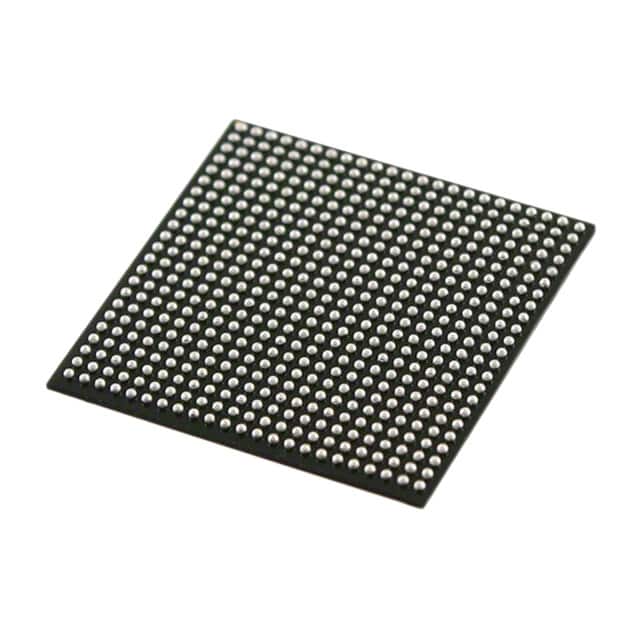
|
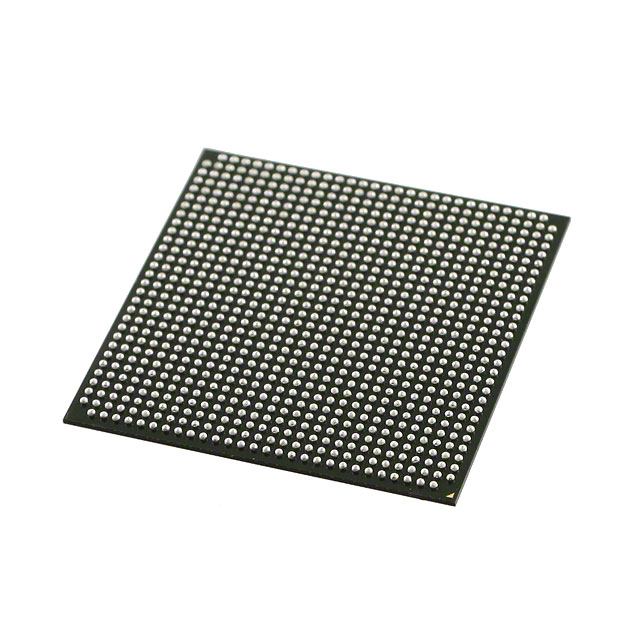
|
| Category | Embedded - FPGAs (Field Programmable Gate Array) | Embedded - FPGAs (Field Programmable Gate Array) |
| Manufacturer | Intel | Intel |
| Description | IC FPGA 327 I/O 484FBGA | IC FPGA 480 I/O 896FBGA |
| Package | 484-BGA | 896-BGA |
| Series | Cyclone® III | Cyclone® V E |
| Voltage - Supply | 1.15 V ~ 1.25 V | 1.07 V ~ 1.13 V |
| Operating Temperature | -40°C ~ 100°C (TJ) | 0°C ~ 85°C (TJ) |
| Mounting Type | Surface Mount | Surface Mount |
| Package / Case | 484-BGA | 896-BGA |
| Supplier Device Package | 484-FBGA (23x23) | 896-FBGA (31x31) |
| Number of I/O | 327 | 480 |
| Number of LABs/CLBs | 3491 | 113560 |
| Number of Logic Elements/Cells | 55856 | 301000 |
| Total RAM Bits | 2396160 | 14251008 |
-
1. What is the hardware of FPGA?
FPGA (Field-Programmable Gate Array) is a hardware device, not software. FPGA is a programmable hardware device consisting of a large number of logic units, storage units and interconnection resources, which can realize complex digital circuits and system designs.
The hardware structure of FPGA mainly includes the following parts:
Logic unit: FPGA contains programmable logic blocks that can perform logical and arithmetic operations.
Interconnection resources: These resources act as connections between logic blocks, allowing data to be transferred between different logic blocks.
Memory unit: Used to store configuration information and temporary data, supporting FPGA operations and logic processing.
The characteristics and application scenarios of FPGA include:
Programmability: FPGA can change the structure of its internal circuits by loading configuration information to achieve different functions.
High-speed execution: FPGA performs logic operations at the hardware level, which is usually several orders of magnitude faster than software execution.
Wide application: FPGA is widely used in many fields such as communications, medical, automotive, aerospace, industrial automation, etc. to implement complex digital circuits and algorithms, improve equipment performance, reduce power consumption or achieve specific functional requirements. -
2. What is FPGA in embedded systems?
FPGA in embedded system is a solution that integrates FPGA technology into embedded system. An embedded system is a computer system designed for a specific application, which usually includes components such as processor, memory, peripheral interface, etc., which are used to control, monitor or perform specific tasks. Combining FPGA with embedded system can bring a series of significant advantages.
FPGA (Field Programmable Gate Array) is a programmable logic device, which consists of a large number of programmable logic units and programmable interconnection resources. It has the characteristics of flexibility and reconfigurability, and is widely used in communication, digital signal processing, embedded systems and other fields. The basic structure of FPGA includes programmable input and output units, configurable logic blocks, digital clock management modules, embedded block RAM, wiring resources, embedded dedicated hard cores and bottom embedded functional units. The design of FPGA can be implemented through hardware description language, which has high flexibility. -
3. Is FPGA a microcontroller?
FPGA is not a microcontroller. There are significant differences between FPGA and microcontroller in terms of function and use.
FPGA is a programmable integrated circuit, which is programmed through hardware description language and can customize the circuit according to needs. It is very suitable for application scenarios that require flexible configuration and high performance. In contrast, microcontrollers (MCUs) are integrated circuits with preset functions, usually used for single tasks and requiring efficient execution.
FPGAs and MCUs also differ in structure and application scenarios. FPGAs offer great flexibility and are suitable for complex applications that require rapid prototyping and reconfigurability. On the other hand, MCUs combine processor cores, memory, and various peripherals in a single chip, designed for specific tasks, and provide cost-effective solutions. -
4. Why use FPGA as a digital controller?
The main reason for using FPGA as a digital controller is its flexibility and programmability. FPGA (Field Programmable Gate Array) is a chip whose internal structure can be changed through programming. It has high flexibility and programmability, which makes FPGA widely used in the field of digital controllers.
The flexibility of FPGA is reflected in the fact that its logic units can be configured to implement different logic functions. Users can use hardware description languages (such as VHDL or Verilog) to write programs to map logic functions to lookup tables (LUTs) and logic units inside FPGA. This flexibility allows FPGAs to adapt to different application requirements and can be reprogrammed as needed to adapt to new application scenarios.
In addition, FPGAs also have high-performance parallel computing capabilities and high-speed data processing capabilities, which makes it play an important role in digital signal processing, image processing, network communication and other fields. The parallel processing capabilities of FPGAs enable it to handle multiple tasks at the same time, improving overall processing efficiency.
