
IRF510STRRPBF vs AOB414
| Part Number |
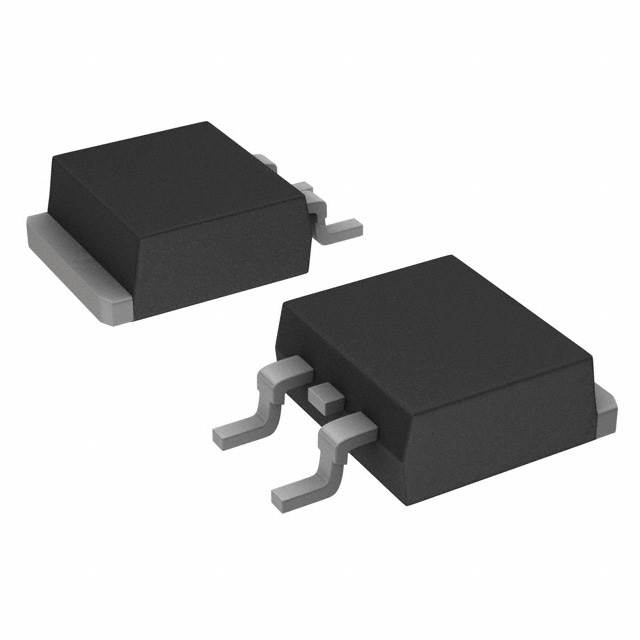
|
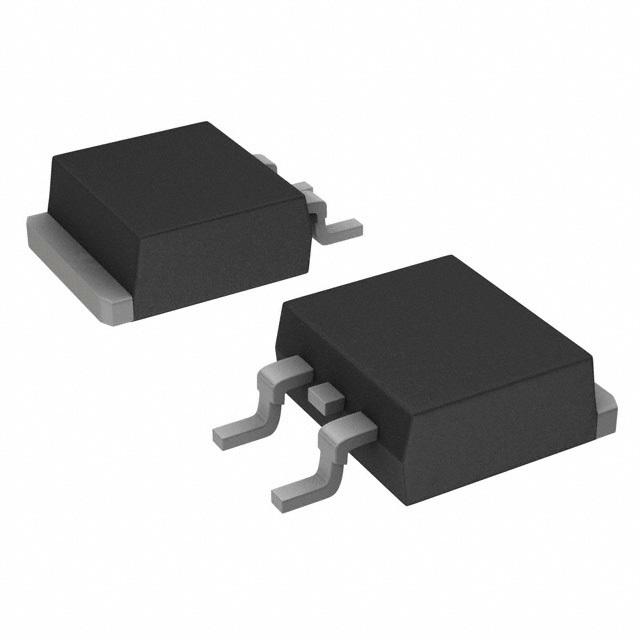
|
| Category | Transistors - FETs, MOSFETs - Single | Transistors - FETs, MOSFETs - Single |
| Manufacturer | Vishay Siliconix | Alpha & Omega Semiconductor Inc. |
| Description | MOSFET N-CH 100V 5.6A TO263 | MOSFET N-CH 100V 6.6A/51A TO263 |
| Package | Cut Tape (CT) | Bulk |
| Series | - | SDMOS™ |
| Operating Temperature | -55°C ~ 175°C (TJ) | -55°C ~ 175°C (TJ) |
| Mounting Type | Surface Mount | Surface Mount |
| Package / Case | TO-263-3, D²Pak (2 Leads + Tab), TO-263AB | TO-263-3, D²Pak (2 Leads + Tab), TO-263AB |
| Supplier Device Package | D²PAK (TO-263) | TO-263 (D2Pak) |
| Technology | MOSFET (Metal Oxide) | MOSFET (Metal Oxide) |
| Power Dissipation (Max) | 3.7W (Ta), 43W (Tc) | 2.5W (Ta), 150W (Tc) |
| FET Type | N-Channel | N-Channel |
| FET Feature | - | - |
| Drain to Source Voltage (Vdss) | 100 V | 100 V |
| Current - Continuous Drain (Id) @ 25°C | 5.6A (Tc) | 6.6A (Ta), 51A (Tc) |
| Rds On (Max) @ Id, Vgs | 540mOhm @ 3.4A, 10V | 25mOhm @ 20A, 10V |
| Vgs(th) (Max) @ Id | 4V @ 250µA | 4V @ 250µA |
| Gate Charge (Qg) (Max) @ Vgs | 8.3 nC @ 10 V | 34 nC @ 10 V |
| Input Capacitance (Ciss) (Max) @ Vds | 180 pF @ 25 V | 2200 pF @ 50 V |
| Vgs (Max) | ±20V | ±25V |
| Drive Voltage (Max Rds On, Min Rds On) | 10V | 7V, 10V |
-
1. How does a MOSFET work?
When a sufficient forward voltage is applied to the gate relative to the source, a conductive channel is formed on the silicon surface under the insulating layer, allowing current to flow from the source to the drain. For an N-channel enhancement MOSFET, the channel begins to conduct when Vgs (gate-source voltage) exceeds the threshold voltage Vth; for a P-channel MOSFET, the opposite is true.
-
2. What are the main uses of MOSFETs?
As a switch: used to quickly turn a circuit on or off.
As an amplifier: amplifies signals in analog circuits.
As a power switch in applications such as power management, motor control, inverters, etc. -
3. What role does a MOSFET play in a motor?
MOSFETs are often used for functions such as speed control, direction control, and soft start/stop of motors. They can respond quickly to control signals and provide precise current control.
-
4. What are the advantages of MOSFETs?
High input impedance.
Low noise.
Low power consumption.
Fast switching characteristics.
Easy to integrate.
High reliability and durability.
