
MCP6292-H/MS vs TLV2186IDSGT
| Part Number |
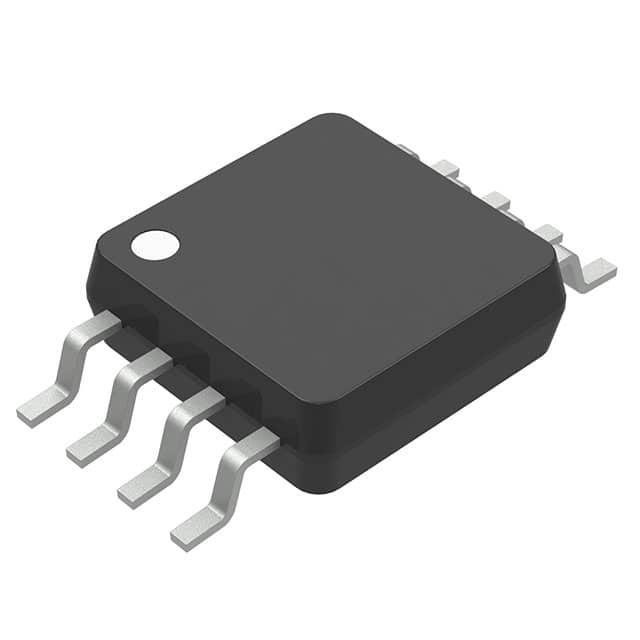
|

|
| Category | Linear - Amplifiers - Instrumentation, OP Amps, Buffer Amps | Linear - Amplifiers - Instrumentation, OP Amps, Buffer Amps |
| Manufacturer | Microchip Technology | Texas Instruments |
| Description | IC OPAMP GP 2 CIRCUIT 8MSOP | LOW POWER, RAIL-TO-RAIL INPUT AN |
| Package | Tape & Reel (TR) | Cut Tape (CT) |
| Series | - | Zero-Drift |
| Operating Temperature | -40°C ~ 150°C (TA) | -40°C ~ 125°C (TA) |
| Mounting Type | Surface Mount | Surface Mount |
| Package / Case | 8-TSSOP, 8-MSOP (0.118\", 3.00mm Width) | 8-WFDFN Exposed Pad |
| Supplier Device Package | 8-MSOP | 8-WSON (2x2) |
| Current - Supply | 1mA (x2 Channels) | 90µA |
| Output Type | Rail-to-Rail | Rail-to-Rail |
| Number of Circuits | 2 | 2 |
| Voltage - Supply, Single/Dual (±) | 2.4V ~ 6V | 4.5V ~ 24V, ±2.25V ~ 12V |
| Current - Output / Channel | 25 mA | 20 mA |
| -3db Bandwidth | - | - |
| Amplifier Type | General Purpose | Zero-Drift |
| Current - Input Bias | 1 pA | 100 pA |
| Voltage - Input Offset | 3 mV | 10 µV |
| Slew Rate | 7V/µs | 0.35V/µs |
| Gain Bandwidth Product | 10 MHz | 750 kHz |
-
1. How do instrumentation amplifiers handle sensor signals?
Instrumentation amplifiers are used to extract low-level signals from sensors (e.g. thermocouples, pressure sensors) to provide high-precision amplification, and are particularly suited to applications that require accurate reading and amplification of weak signals, such as medical and industrial monitoring.
-
2. How is the noise performance of instrumentation amplifiers optimized?
Select low-noise amplifiers in your design and use shielding, filters, and precise power management to minimize external noise. High-quality resistors should be used wherever possible and PCB layout should be optimized to reduce noise coupling.
-
3. How to choose the right operational amplifier?
Parameters such as input offset voltage, input bias current, gain bandwidth product, slew rate, noise characteristics, supply voltage, and power consumption should be considered when selecting an operational amplifier to meet the needs of a particular application.
-
4. What is the effect of the op amp's out-of-range voltage on accuracy?
An out-of-phase voltage is the difference in voltage at which the output is not zero when the signal at the input is zero. A large out-of-phase voltage reduces the accuracy of a system, especially in high-gain applications, and selecting an op amp with a low out-of-phase voltage can improve accuracy.
