
MPX2010DP vs MPX5500DP
| Part Number |
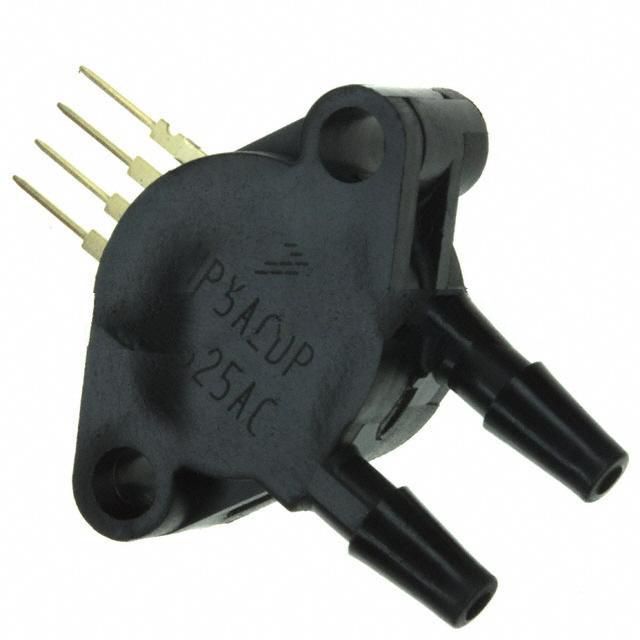
|
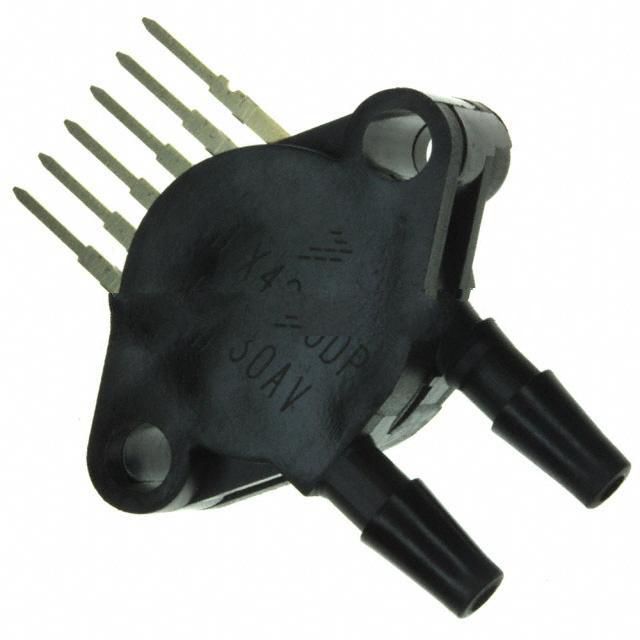
|
| Category | Pressure Sensors, Transducers | Pressure Sensors, Transducers |
| Manufacturer | NXP USA Inc. | NXP USA Inc. |
| Description | SENSOR PRESSURE 1.45PSI MAX | IC SENSOR PRESS GAUGE 75PSI RANG |
| Package | 4-SIP Module | 6-SIP Module |
| Series | MPX2010 | MPX5500 |
| Features | Temperature Compensated | Temperature Compensated |
| Voltage - Supply | 10 V ~ 16 V | 4.75 V ~ 5.25 V |
| Operating Temperature | -40°C ~ 125°C | -40°C ~ 125°C |
| Package / Case | 4-SIP Module | 6-SIP Module |
| Output | 0 mV ~ 25 mV (10V) | 0.2 V ~ 4.7 V |
| Accuracy | ±1% | ±2.5% |
| Output Type | Wheatstone Bridge | Analog Voltage |
| Termination Style | PCB | PCB |
| Pressure Type | Differential | Differential |
| Operating Pressure | 1.45 PSI (10 kPa) | 72.52 PSI (500 kPa) |
| Port Style | Barbed | Barbed |
| Maximum Pressure | 10.88 PSI (75 kPa) | 406.11 PSI (2800 kPa) |
| Port Size | Male - 0.19" (4.93mm) Tube, Dual | Male - 0.19" (4.93mm) Tube, Dual |
-
1. What is a pressure sensor?
A pressure sensor is a device that can convert a pressure signal into an electrical signal and is widely used in various industrial automatic control environments. It usually consists of a pressure sensitive element and a signal processing unit, which can sense the pressure signal and convert it into a usable output electrical signal according to a certain rule.
Definition and function
The basic concept of a pressure sensor is to convert a pressure signal into an electrical signal for subsequent signal processing and control. The working principle of a pressure sensor is mainly based on physical phenomena such as piezoelectric effect, strain effect and capacitance effect. The piezoelectric effect refers to the fact that certain materials generate electric charge when subjected to pressure; the strain effect refers to the deformation of the material when subjected to pressure, thereby changing the resistance value; the capacitance effect refers to the change in capacitance value caused by pressure change.
Classification
According to the working principle and structural characteristics, pressure sensors can be divided into the following categories:
Piezoresistive pressure sensor: based on the strain effect, usually made of semiconductor materials.
Piezoelectric pressure sensor: based on the piezoelectric effect, usually made of crystal or ceramic materials.
Capacitive pressure sensor: based on the capacitance effect, composed of two conductors and an insulating medium.
Fiber optic pressure sensor: uses the light transmission characteristics of optical fiber to convert pressure signals into optical signals. -
2. Application field
Sensor: Mainly used for industrial process control and monitoring, equipment control and monitoring in the fields of automobiles, machinery, electronics, medical equipment, aerospace, etc., as well as environmental monitoring and weather forecasting.
Transducers: Mainly used in exploration and production processes in the fields of ocean, petroleum, aviation, energy, etc., engineering measurement and control fields (such as monitoring and control of structures such as buildings, bridges and tunnels), scientific research fields (such as physics, chemistry, biology, etc.), and music and art fields (such as electronic musical instruments and sound amplifiers). -
3. What sensors can be used to measure pressure?
Sensors that can be used to measure pressure mainly include pressure sensors. Pressure sensors can sense pressure signals and convert them into usable electrical signals for output. This type of sensor is usually composed of a pressure sensitive element and a signal processing unit, and is widely used in various industrial automatic control environments, such as water conservancy and hydropower, railway transportation, intelligent buildings, production automatic control, aerospace, military industry, petrochemicals, oil wells, electricity, ships, machine tools, pipelines and other fields.
Application fields of pressure sensors
Industrial field: In industrial production, pressure sensors are used to monitor and control the operating status of various equipment, such as boilers, pipelines, reactors, etc., to ensure production efficiency and product quality, and avoid equipment damage and production accidents.
Medical field: Pressure sensors can accurately measure physiological parameters such as blood pressure and heart rate of patients, and are used in equipment such as ventilators and infusion pumps to ensure patient safety and comfort.
Environmental protection field: Pressure sensors are used in sewage treatment plants, meteorological monitoring, etc. to monitor pipeline pressure conditions, avoid environmental pollution and waste of resources, and provide accurate data for weather forecasts.
Aerospace field: Pressure sensors monitor the cylinder pressure, engine intake pressure and atmospheric pressure of aircraft and spacecraft to ensure the safe and stable operation of aircraft and spacecraft.
What are the four types of pressure sensors?
There are four main types of pressure sensors:
Strain pressure sensor: Strain pressure sensors measure pressure mainly by measuring the strain of elastic elements. Depending on the material, strain elements are divided into metals and semiconductors. When conductors and semiconductor materials are mechanically deformed, their resistance values change.
Piezo-resistive pressure sensor: Piezoresistive pressure sensors are made of piezoresistive effect of single-crystal silicon materials and integrated circuits. When single-crystal silicon materials are subjected to force, the resistivity changes, and an electrical signal proportional to the force change is output through the measuring circuit.
Capacitive pressure sensor: Capacitive pressure sensors use changes in capacitance to measure pressure. When the electrode senses pressure deformation, the capacitance changes, forming an electrical signal output.
Piezoelectric pressure sensor: Piezoelectric pressure sensors use the piezoelectric effect to convert pressure into electrical quantity for measurement. This sensor does not require an external power supply, and directly reflects the pressure by measuring the amount of charge generated, with extremely high sensitivity and fast response time.
-
4. What is the difference between a transducer and a sensor?
Sensors and transducers are two different concepts. A sensor is a device that converts non-electrical signals into electrical signals, while a transducer is a device that converts one form of energy into another form.
1. Definition of sensors and transducers
Both sensors and transducers are devices that measure physical quantities.
A sensor is a device that converts non-electrical signals into electrical signals, and is usually used to convert physical quantities into electrical signals, such as temperature, pressure, humidity, light intensity, etc. Sensors are widely used in industry, medical care, environmental monitoring and other fields.
A transducer is a device that converts one form of energy into another. A transducer can convert any form of physical quantity (such as pressure, force, torque, displacement, sound, light, heat, etc.) into electrical signals or other forms of energy output. The application field of transducers is also very wide, and they are often used to detect, control and measure various industrial processes.
2. The difference between sensors and transducers
The main difference between sensors and transducers is which signal they convert into which signal. Sensors mainly convert non-electrical signals into electrical signals, while transducers can convert any form of signal into other forms of energy, such as electrical signals or mechanical motion.
In addition, the application fields of sensors and transducers are also different. Sensors are mainly used to detect, monitor and measure various physical quantities, such as temperature, pressure, humidity, light intensity, etc.; while transducers are widely used to control, measure and detect various industrial processes, such as flow, speed, force, pressure and displacement, etc.
3. Application fields of sensors and transducers
Sensors and transducers have a wide range of applications. Sensors are usually used in the following fields:
1. Industrial process control and monitoring.
2. Equipment control and monitoring in the fields of automobiles, machinery, electronics, medical equipment, aerospace, etc.
3. Environmental monitoring and weather forecasting.
4. Home automation and smart home fields.
Transducers are mainly used in the following fields:
1. Exploration and production processes in the fields of ocean, petroleum, aviation, energy, etc.
2. Engineering measurement and control fields, such as monitoring and control of structures such as buildings, bridges and tunnels.
3. Scientific research fields, such as physics, chemistry, biology, etc.
4. Music and art fields, such as electronic musical instruments and sound amplifiers, etc.
