
NJ28KA0202F-- vs NTHS1012N02N2001KF
| Part Number |
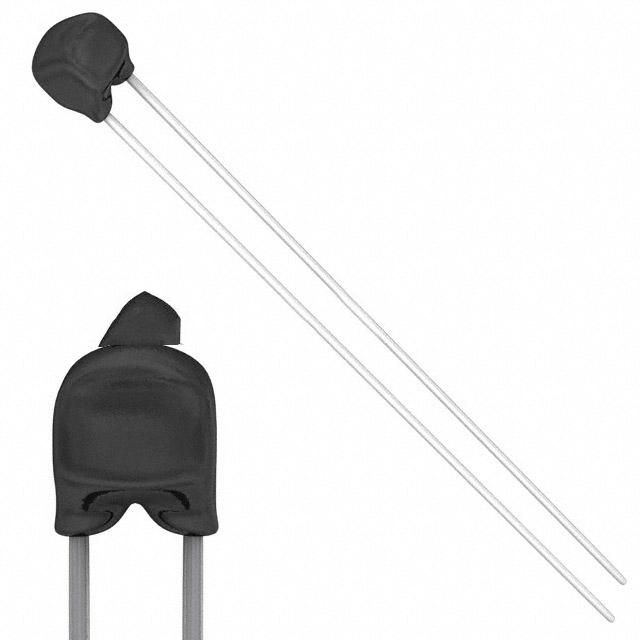
|

|
| Category | Temperature Sensors - NTC Thermistors | Temperature Sensors - NTC Thermistors |
| Manufacturer | KYOCERA AVX | Vishay Dale |
| Description | NTC THERMISTOR 2K OHM 1% DISC | NTC THERMISTOR 2K OHM 10% 1012 |
| Package | Disc, 2.8mm Dia x 2.8mm W | 1012 (2532 Metric) |
| Series | NJ28 | NTHS |
| Operating Temperature | -55°C ~ 150°C | -40°C ~ 125°C |
| Mounting Type | Through Hole | Surface Mount |
| Package / Case | Disc, 2.8mm Dia x 2.8mm W | 1012 (2532 Metric) |
| Power - Max | 16mW | - |
| Resistance Tolerance | ±1% | ±10% |
| Resistance in Ohms @ 25°C | 2k | 2k |
| B Value Tolerance | ±1% | ±3% |
| B25/85 | 3625K | 3486K |
| Length - Lead Wire | 1.38" (35.00mm) | - |
| B25/75 | - | 3477K |
-
1. What is the difference between NTC and RTD temperature sensors?
NTC thermistor and RTD (resistance temperature detector) are two common temperature sensors. They have significant differences in principles, characteristics, application scenarios, etc.
Working principle
NTC thermistor: The resistance value of an NTC thermistor decreases as the temperature increases, exhibiting a negative temperature coefficient of resistance (NTC). The relationship between its resistance and temperature is non-linear. For every 1 degree Celsius change in temperature, the resistance value changes almost exponentially.
RTD: The working principle of RTD is based on the resistance of metal changing with temperature. Materials such as platinum, nickel, copper and so on are usually used. Unlike NTC thermistors, the resistance versus temperature relationship of RTDs is almost linear or nearly linear over a wide temperature range, and a commonly used material is platinum because of its good stability and repeatability. -
2. What are NTC and PTC temperature sensors?
Both NTC and PTC temperature sensors are thermistors, and their main differences lie in the temperature coefficient and the change characteristics of resistance value with temperature.
Working principle and materials
NTC temperature sensor: Based on the temperature characteristics of semiconductor materials, its core material is usually one or more layers of ceramic materials, with the main components being metal oxides such as manganese, cobalt, nickel and copper. When the temperature increases, the electronic activity inside the conductive material increases, causing the resistance value to decrease, showing a negative temperature coefficient characteristic.
PTC temperature sensor: It is a thermistor whose core is a polymer material (such as polymer ceramic). When an electric current passes through it, the material generates heat, which increases the resistance. When the current decreases, the resistance value decreases. Therefore, by measuring the change in resistance value, the change in temperature can be calculated, showing a positive temperature coefficient characteristic. -
3. What is the difference between NTC and PT100 temperature sensors?
Both NTC and PTC temperature sensors are thermistors, and their main differences lie in the temperature coefficient and the change characteristics of resistance value with temperature.
Working principle and materials
NTC temperature sensor: Based on the temperature characteristics of semiconductor materials, its core material is usually one or more layers of ceramic materials, with the main components being metal oxides such as manganese, cobalt, nickel and copper. When the temperature increases, the electronic activity inside the conductive material increases, causing the resistance value to decrease, showing a negative temperature coefficient characteristic.
PTC temperature sensor: It is a thermistor whose core is a polymer material (such as polymer ceramic). When an electric current passes through it, the material generates heat, which increases the resistance. When the current decreases, the resistance value decreases. Therefore, by measuring the change in resistance value, the change in temperature can be calculated, showing a positive temperature coefficient characteristic. -
4. Which is more accurate, RTD or thermistor?
Thermistor: Thermistor has higher accuracy and is usually more accurate than RTD. Its temperature coefficient is more than 10 to 100 times larger than that of metal, and it can detect temperature changes of 10^-6℃1. However, the thermistor's accuracy is limited by its operating temperature range, which is typically a maximum of 100 or 200°C.
RTD: RTD has relatively low accuracy, but its temperature measurement range is wider and it can measure over a wider temperature range. RTD has high accuracy and stability and is suitable for use in applications requiring high reliability and stability.
