
RN73R2ATTD1381F100 vs RN73R2ATTD1174F25
| Part Number |

|
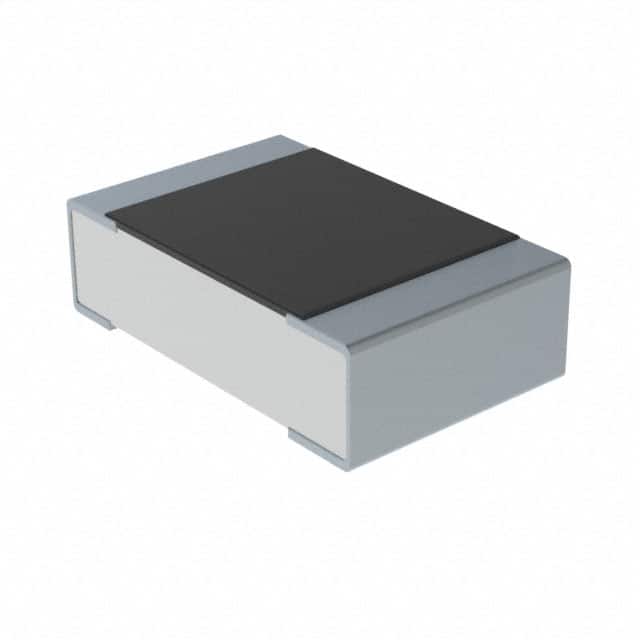
|
| Category | Chip Resistor - Surface Mount | Chip Resistor - Surface Mount |
| Manufacturer | KOA Speer Electronics, Inc. | KOA Speer Electronics, Inc. |
| Description | RES 1.38K OHM 1% 1/8W 0805 | RES 1.17M OHM 1% 1/8W 0805 |
| Package | Tape & Reel (TR) | Tape & Reel (TR) |
| Series | RN73R | RN73R |
| Features | Automotive AEC-Q200, Moisture Resistant | Automotive AEC-Q200, Moisture Resistant |
| Operating Temperature | -55°C ~ 155°C | -55°C ~ 155°C |
| Package / Case | 0805 (2012 Metric) | 0805 (2012 Metric) |
| Supplier Device Package | 0805 | 0805 |
| Tolerance | ±1% | ±1% |
| Temperature Coefficient | ±100ppm/°C | ±25ppm/°C |
| Size / Dimension | 0.079" L x 0.049" W (2.00mm x 1.25mm) | 0.079" L x 0.049" W (2.00mm x 1.25mm) |
| Power (Watts) | 0.125W, 1/8W | 0.125W, 1/8W |
| Ratings | AEC-Q200 | AEC-Q200 |
| Height - Seated (Max) | 0.024\" (0.60mm) | 0.024\" (0.60mm) |
| Failure Rate | - | - |
| Resistance | 1.38 kOhms | 1.17 MOhms |
| Composition | Thin Film | Thin Film |
| Number of Terminations | 2 | 2 |

-
1. What is a Chip Resistor?
Chip Resistor, also known as chip fixed resistors, are resistors designed for surface mounting. They can be mounted directly to the surface of a printed circuit board (PCB) without drilling holes like traditional through-hole components.
Such resistors are usually much smaller than traditional resistors, so they take up much less space on the circuit board. The use of SMD resistors is due to the invention of surface mount technology (SMT), which not only reduces the size of components, but also greatly reduces the time to manufacture circuits. SMD resistors are mainly used in professionally manufactured PCBs, while through-hole resistors are more commonly used in most homemade circuits because they are more convenient to install and do not require specialized equipment.
There are many ways to express the resistance value of SMD resistors, including direct marking, three-digit digital representation, four-digit digital representation, EIAJ code representation, etc. These methods enable the resistance value of the resistor to be clearly marked on the resistor for easy identification and use. In addition, SMD resistors are also resistant to moisture and high temperatures, and have a small temperature coefficient, which allows them to maintain good performance in various environments. -
2. Chip fixed resistor classification?
1. Conventional series thick film chip resistors: including general-purpose resistors in sizes from 0201 to 0805, and resistors in sizes from 1206 to 2512.
2. High-precision and high-stability chip resistors: These resistors have high precision and high stability, with sizes ranging from 0201 to 0603, 0805 to 1210, and 2010 to 2512.
3. Conventional series thin film chip resistors: This refers to general-purpose thin film chip resistors with a wide range of sizes from 0201 to 2512.
4. Low resistance chip resistors: Suitable for circuit applications requiring low resistance values, with sizes ranging from 0402 to 1206, and 2010 to 2512.
5. Chip resistor arrays: Including raised and recessed chip resistor arrays, used in circuits that require multiple resistance values to work simultaneously.
6. Chip current sensor: used to detect the current in the circuit, with low temperature coefficient (TCR) characteristics. -
3. What is the number of chip resistors?
Chip resistors are one of the commonly used components in electronic circuits, and their digital identification is an important basis for identifying resistance values and accuracy. The digital identification is usually printed on the surface of the resistor and consists of several digits. These digits not only indicate the specific resistance value of the resistor, but also imply the tolerance accuracy information of the resistor.
-
4. Resistor tolerance accuracy representation method
The tolerance accuracy of chip resistors refers to the allowable deviation range between the actual value of the resistor and the nominal value. In the digital identification, the tolerance accuracy is usually indicated by the last one or two digits. These numbers correspond to different accuracy levels, for example, 1% accuracy is usually indicated by the number "1", while 0.1% accuracy is indicated by the number "01".
