
RN73R2ATTD2230D50 vs RN73R2ATTD2640D50
| Part Number |

|
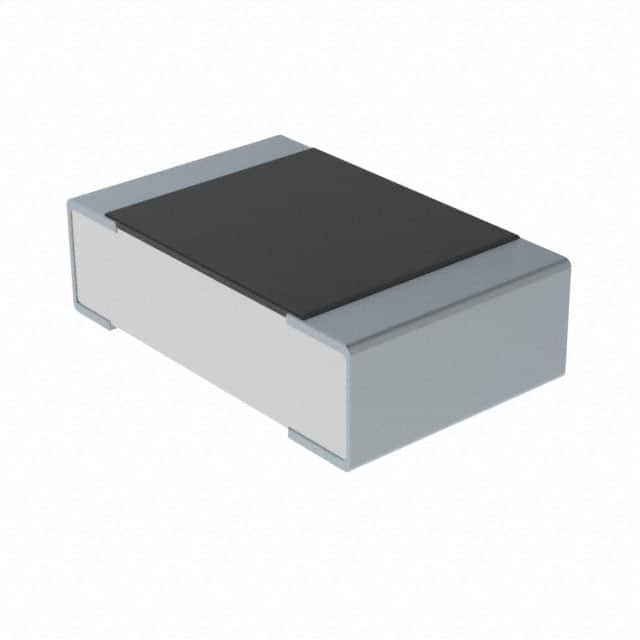
|
| Category | Chip Resistor - Surface Mount | Chip Resistor - Surface Mount |
| Manufacturer | KOA Speer Electronics, Inc. | KOA Speer Electronics, Inc. |
| Description | RES 223 OHM 0.5% 1/8W 0805 | RES 264 OHM 0.5% 1/8W 0805 |
| Package | Tape & Reel (TR) | -Reel® |
| Series | RN73R | RN73R |
| Features | Automotive AEC-Q200, Moisture Resistant | Automotive AEC-Q200, Moisture Resistant |
| Operating Temperature | -55°C ~ 155°C | -55°C ~ 155°C |
| Package / Case | 0805 (2012 Metric) | 0805 (2012 Metric) |
| Supplier Device Package | 0805 | 0805 |
| Tolerance | ±0.5% | ±0.5% |
| Temperature Coefficient | ±50ppm/°C | ±50ppm/°C |
| Size / Dimension | 0.079" L x 0.049" W (2.00mm x 1.25mm) | 0.079" L x 0.049" W (2.00mm x 1.25mm) |
| Power (Watts) | 0.125W, 1/8W | 0.125W, 1/8W |
| Ratings | AEC-Q200 | AEC-Q200 |
| Height - Seated (Max) | 0.024\" (0.60mm) | 0.024\" (0.60mm) |
| Failure Rate | - | - |
| Resistance | 223 Ohms | 264 Ohms |
| Composition | Thin Film | Thin Film |
| Number of Terminations | 2 | 2 |

-
1. Chip fixed resistor classification?
1. Conventional series thick film chip resistors: including general-purpose resistors in sizes from 0201 to 0805, and resistors in sizes from 1206 to 2512.
2. High-precision and high-stability chip resistors: These resistors have high precision and high stability, with sizes ranging from 0201 to 0603, 0805 to 1210, and 2010 to 2512.
3. Conventional series thin film chip resistors: This refers to general-purpose thin film chip resistors with a wide range of sizes from 0201 to 2512.
4. Low resistance chip resistors: Suitable for circuit applications requiring low resistance values, with sizes ranging from 0402 to 1206, and 2010 to 2512.
5. Chip resistor arrays: Including raised and recessed chip resistor arrays, used in circuits that require multiple resistance values to work simultaneously.
6. Chip current sensor: used to detect the current in the circuit, with low temperature coefficient (TCR) characteristics. -
2. What are the functions of chip fixed resistors?
Chip fixed resistors (chip resistors) play a vital role in electronic devices and systems.
Chip fixed resistors, also known as Chip Resistor, are one of the passive electronic components widely used in the modern electronic manufacturing industry.
1. Voltage division and current shunting: When the chip resistor is in series or parallel with other components such as light bulbs in the circuit, it can play the role of voltage division and current shunting. In a series circuit, the chip resistor shares the voltage with another component; in a parallel circuit, the chip resistor shares the current with other components.
2. Impedance matching: During the signal transmission process, the chip resistor helps to achieve the matching of the load impedance and the internal impedance of the excitation source by adjusting the impedance, thereby optimizing the signal transmission efficiency.
3. Filtering: In the RC charging and discharging circuit composed of a resistor and a capacitor in series, the chip resistor plays a filtering role, helping to stabilize the voltage and current in the circuit and reduce fluctuations and interference.
4. Special resistor functions: Special types of chip resistors, such as resistors made of semiconductor materials, have variable resistance values and are used to achieve more complex circuit functions, such as impedance control.
5. Save space and improve reliability: Due to the small size and light weight of chip resistors, circuit space costs can be greatly saved, making the design more refined. At the same time, its ability to adapt to reflow soldering and wave soldering improves the reliability and efficiency of production. -
3. What is the number of chip resistors?
Chip resistors are one of the commonly used components in electronic circuits, and their digital identification is an important basis for identifying resistance values and accuracy. The digital identification is usually printed on the surface of the resistor and consists of several digits. These digits not only indicate the specific resistance value of the resistor, but also imply the tolerance accuracy information of the resistor.
-
4. Resistor digital identification interpretation example
To better understand the interpretation method of chip resistor digital identification, let's look at an example. Assuming that the digital identification on a chip resistor is "1001", what is the resistance value of this resistor? What is the accuracy?
First, we interpret the first three digits "100", indicating that the resistance value is 100 ohms. Next, we look at the last digit "1", which indicates that the tolerance accuracy of the resistor is 1%. Therefore, the resistance of this chip resistor is 100 ohms and the tolerance accuracy is ±1%.
