
TRS5-70BLRU vs TRS5-80BLRVU
| Part Number |
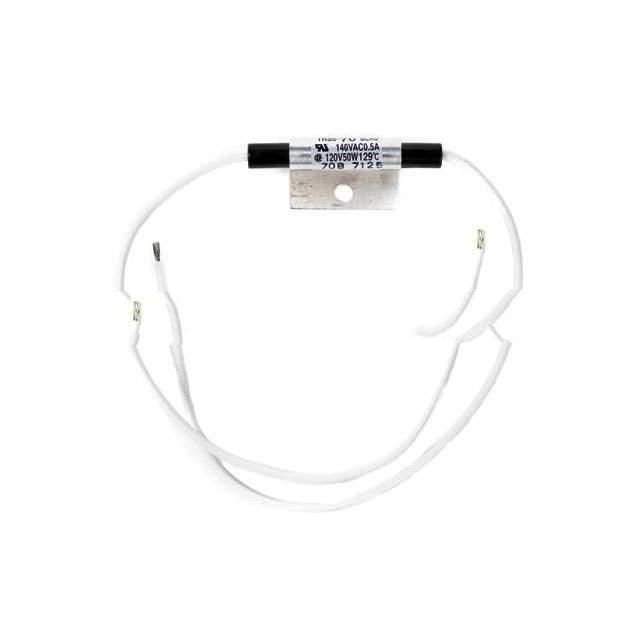
|
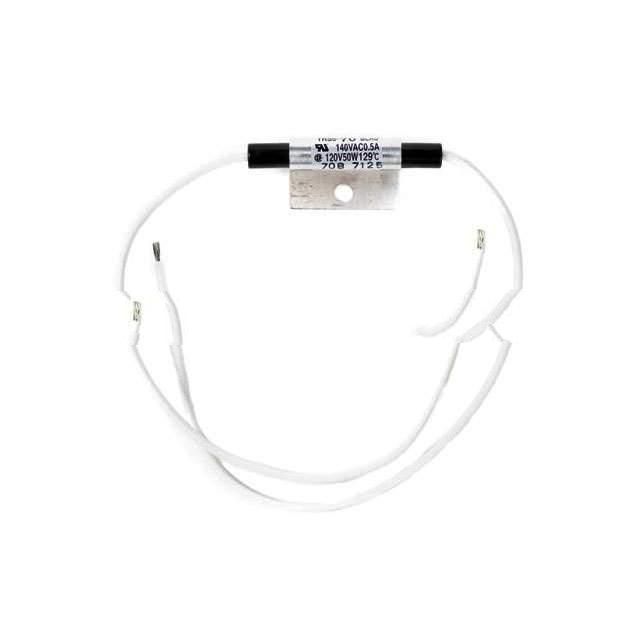
|
| Category | Temperature Sensors - Thermostats - Mechanical | Temperature Sensors - Thermostats - Mechanical |
| Manufacturer | KEMET | KEMET |
| Description | THERMAL REED SWITCH 70C 100V BRE | THERMAL REED SWITCH 80C 200V BRE |
| Package | Module | Module |
| Series | TRS5? | TRS5? |
| Mounting Type | Chassis Mount | Chassis Mount |
| Package / Case | Module | Module |
| Tolerance | ±4.5°F (±2.5°C) | ±4.5°F (±2.5°C) |
| Circuit | SPST-NC | SPST-NC |
| Termination Style | Wire Leads - 8" (203.2mm) | Wire Leads - 8" (203.2mm) |
| Switching Temperature | 158°F (70°C) | 176°F (80°C) |
| Reset Temperature | 140°F (60°C) | 158°F (70°C) |
-
1. What temperature sensor does the thermostat use?
The thermostat mainly uses thermocouples and PT100 temperature sensors. Thermocouple sensors are usually packaged in a stainless steel shell, filled with thermal conductive materials and sealing materials. They are suitable for a variety of temperature measurement scenarios, have a fast response speed, and are suitable for medical, HVAC, refrigeration, environmental experiments and other fields. 1. The PT100 sensor is a high-precision temperature sensor, often used in precision thermostat equipment.
-
2. Which temperature sensor is the most accurate?
Platinum resistance temperature sensor is one of the most accurate temperature sensors. Platinum resistance temperature sensor has high accuracy and stability, and is usually used for high-precision temperature measurement. Its measurement range is wide, from -200℃ to +850℃ can be accurately measured.
In addition, integrated temperature sensors also have high accuracy and stability, suitable for occasions requiring high-precision measurement. However, the integrated temperature sensor has a narrow range, is more troublesome to calibrate, has a large error, and is expensive.
When choosing a temperature sensor, in addition to considering accuracy, it is also necessary to choose according to specific application scenarios, measurement range, response time and other factors.
-
3. Is a thermostat a mechanical or electrical component?
Thermostats contain both mechanical and electrical components.
A thermostat is an electronic component that controls temperature. Its working principle is to control the start and stop of heating or cooling equipment by detecting temperature signals and comparing them with set values, thereby maintaining a stable temperature. The core components of a thermostat include temperature sensors and control circuits, which are both electrical components 1. In addition, thermostats may also contain mechanical components. For example, mechanical thermostats use bimetallic strips or temperature media (such as kerosene or glycerin) and the principle of thermal expansion and contraction to convert temperature changes into mechanical force to drive the thermostat control mechanism to operate.
There are many types of thermostats, including mechanical, electronic, touch and smart thermostats. Mechanical thermostats control temperature through mechanical means, which are common in home appliances, ovens and other occasions; electronic thermostats achieve temperature control through electronic components, which are common in laboratories, industrial production and other occasions; touch thermostats achieve temperature control through touch screens, which are common in home appliances such as air conditioners and electric water heaters; smart thermostats achieve temperature control through intelligent control algorithms, which can automatically adjust according to user habits and environmental changes, and are common in home decoration projects such as central air conditioning and floor heating. -
4. How does a thermostat sensor work?
The working principle of a thermostat sensor is to detect the ambient temperature and adjust the temperature accordingly to keep it constant. Thermostat sensors usually consist of two main parts: temperature detection circuit and temperature compensation for the detection circuit.
Working principle
Temperature detection: The core component inside the thermostat sensor is a resistor, whose resistance changes with the change of the measured ambient temperature. When the ambient temperature rises, the resistance of the resistor changes, and this change can be converted into an electrical signal through the circuit.
Signal processing: After the changing resistance value is processed by the circuit, a voltage signal related to temperature can be generated. This signal is amplified and processed, and finally outputs a current signal to control the temperature adjustment of the thermostat.
Types
There are two main types of thermostat sensors:
Thermal resistors: Thermistors are usually used to achieve temperature detection, and their resistance changes with temperature.
Thermocouples: They are composed of two metal wires of different materials, and obtain temperature information by measuring the potential difference between the two metals.
